Portuguese
  Spanish


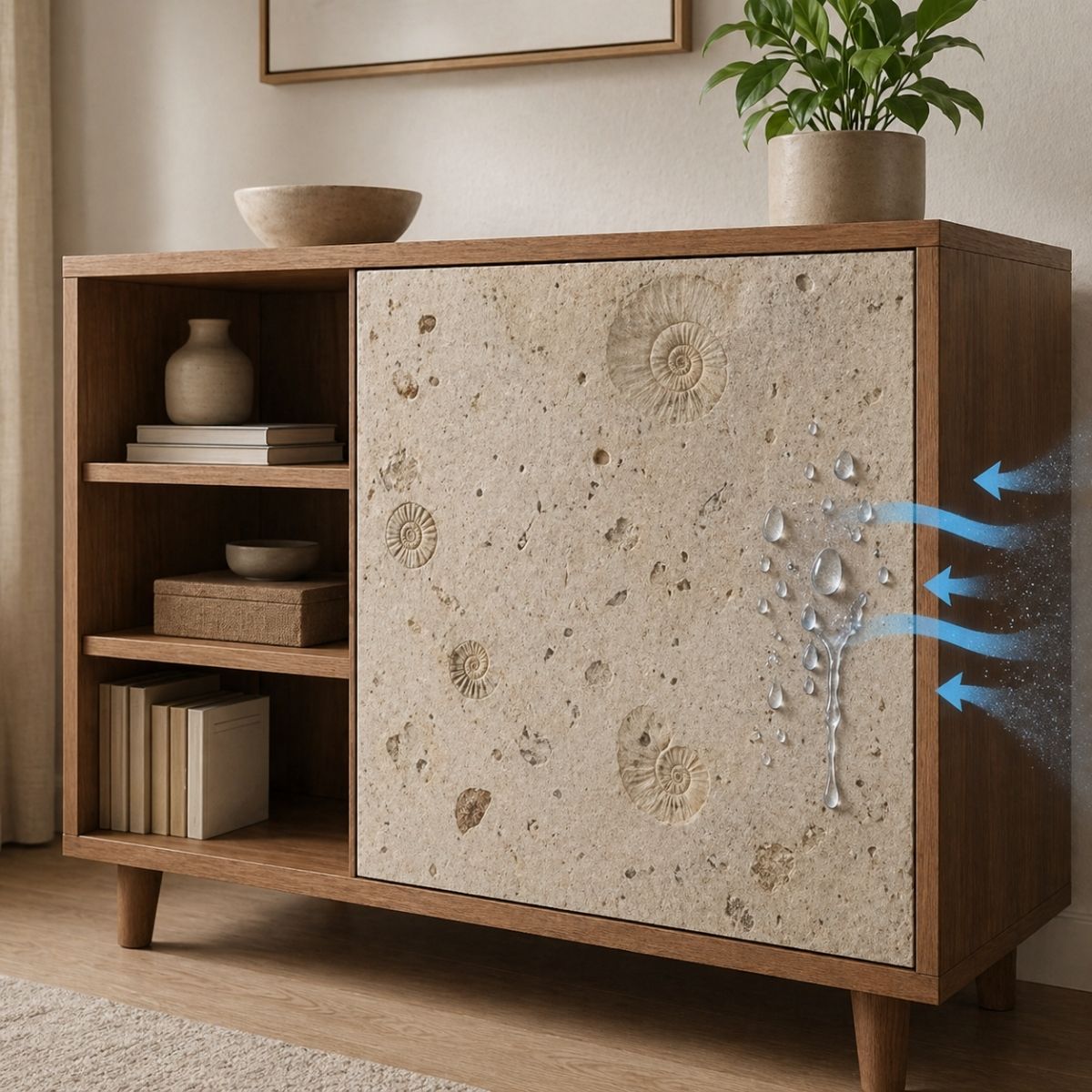

Diatomaceous earth, a material composed of millions-of-years-old microalgae fossils with a microporous structure that rapidly absorbs water, is gaining ground in the manufacturing of bathroom and kitchen furniture, with designers betting on its matte look to create pieces that keep surfaces dry and help eliminate mold indoors.
A material carrying millions-of-years-old fossils is moving from geology books into the kitchens and bathrooms of those seeking a natural solution against humidity. Diatomaceous earth is composed of fossilized shells of microalgae called diatoms, organisms that lived in aquatic environments during the Cenozoic Era and whose remains accumulated in sedimentary deposits that are now extracted and processed for various applications, including the manufacturing of furniture that rapidly absorbs water thanks to the network of micro-cavities present in the fossil structure. What started with smaller items like bath mats and trays is now expanding to niches, countertop supports, and functional design accessories that combine minimalist aesthetics with real humidity control capability.
The science behind its operation is straightforward. The porous shells of diatom fossils function like a microscopic sponge: each micro-cavity on the material’s surface captures water molecules from the environment and temporarily retains them, later releasing them through natural evaporation when the surrounding humidity decreases. In practice, furniture produced with diatomaceous earth keeps surfaces drier than equivalents made with conventional materials, a condition that reduces the accumulation of moisture that fuels the growth of mold-causing fungi, a problem affecting homes in practically all regions of Brazil, especially in coastal and subtropical climate areas.
How millions-of-years-old fossils transform into functional furniture

The process that connects microscopic fossils to decorative objects involves the extraction and processing of diatomaceous earth. The sedimentary deposits where the fossilized shells of microalgae accumulated over geological eras are found in various regions of the world, and the extracted material is purified, ground, and combined with other components that provide mechanical resistance and durability, resulting in rigid surfaces with a matte finish and a permanently dry touch. The combination of the fossil base and structural additives produces pieces that do not easily deform, support weight, and maintain their absorption properties for an extended period.
-
118-Year-Old Brazilian Man, Living in a Care Home for 55 Years, May Become World’s Oldest Man Pending Guinness Validation

-
Ferrari, BMW, Tesla, and Chinese Automakers Shift from Copper to Aluminum Wiring to Reduce Weight and Costs in Electric Vehicles

-
Understanding Plastic Codes: Numbers 1 to 7 on Packaging Aid Efficient Recycling and Boost Circular Economy
-
400 km² of Greenhouses in Almería, Spain, Astonish American Visitor by Producing Millions of Tons of Produce for Cold-Weather Markets



The texture and appearance of the material appeal to designers looking for alternatives to excessive plastic and conventional ceramics. Diatomaceous earth offers a neutral appearance that integrates into minimalist environments without drawing excessive attention, and the dry touch that the surface maintains even in humid environments conveys a sense of cleanliness that complements its practical function of humidity control. The fossils that make up the material’s base are invisible to the naked eye, but their presence is perceived every time a drop of water falls on the surface and disappears in seconds, absorbed by the network of micropores that millions of years of compaction created.
Why Diatom Fossils Are So Efficient at Water Absorption
The absurd absorption efficiency originates from the geometry of the fossilized shells. Each diatom, in life, possessed a silica structure perforated by nanometer-sized pores, and when millions of these shells accumulate and fossilize, they create a material whose internal surface area is enormously superior to that of any conventional sponge. One cubic centimeter of diatomaceous earth contains enough micro-cavities to capture a volume of water proportionally much larger than its own size, a capacity that no factory-produced synthetic material can replicate with the same energy efficiency.
In addition to absorbing, the material releases captured water when conditions change. The fossils do not retain moisture permanently: when the surrounding air becomes drier, natural evaporation removes water from the micro-cavities, and the surface returns to its original dry state, a cycle that repeats indefinitely without loss of capacity. This property is what differentiates diatomaceous earth from materials that absorb but need to be manually dried or periodically replaced: furniture made with the fossil base regenerates itself and maintains its function for years without special maintenance.
What furniture and accessories are already made with diatomaceous earth fossils


The most well-known application is bathroom mats, items that replace traditional fabric mats with rigid plates that dry instantly when the user steps on them after showering. But the use of processed fossils in the form of diatomaceous earth has already expanded to countertop trays that keep the area around sinks dry, toothbrush and soap holders, wall niches for bathrooms and kitchens, and even coasters that eliminate condensation marks left by cold glasses on wooden tables. Each application explores the same fundamental property: the ability of the fossils to capture moisture before it accumulates on the surface where it would normally cause stains, deterioration, or fungal growth.
The versatility of the material also appears in kitchen accessories. Countertop holders made with diatomaceous earth keep the area around the sink drier, absorbing splashes that on conventional surfaces would form puddles where bacteria and mold quickly settle. Designers bet on the matte look and neutral palette as an aesthetic advantage that complements the practical function, a strategy that positions fossil-based products as a sophisticated alternative to common plastic and ceramic that dominate the home accessories segment.
What fossil furniture doesn’t do and what its limits are
It’s important to calibrate expectations. Diatomaceous earth helps control surface moisture and reduces conditions favorable to mold in specific areas of the house, but it does not replace structural solutions such as adequate ventilation, wall waterproofing, and treatment of infiltrations, which are root causes of moisture problems in residential environments. Processed fossils combat the symptom (water accumulation on surfaces) with impressive efficiency, but if the origin of moisture and mold is structural, no diatomaceous earth furniture will solve what a renovation needs to correct on its own.
Not all products on the market are composed exclusively of natural material. Many use diatomaceous earth as a base combined with additives that provide strength and shape, and the proportion varies between manufacturers, which affects both absorption capacity and durability. For those seeking maximum functionality from fossils in each piece, it’s worth checking the composition before purchase and prioritizing products that declare a high percentage of diatomaceous earth in the formulation, information that serious manufacturers make available on the packaging or in the product’s technical data sheet.
And you, have you ever used a diatomaceous earth product? Did you know it was made from millions of years old fossils? Leave your opinion in the comments.