Portuguese
  Spanish


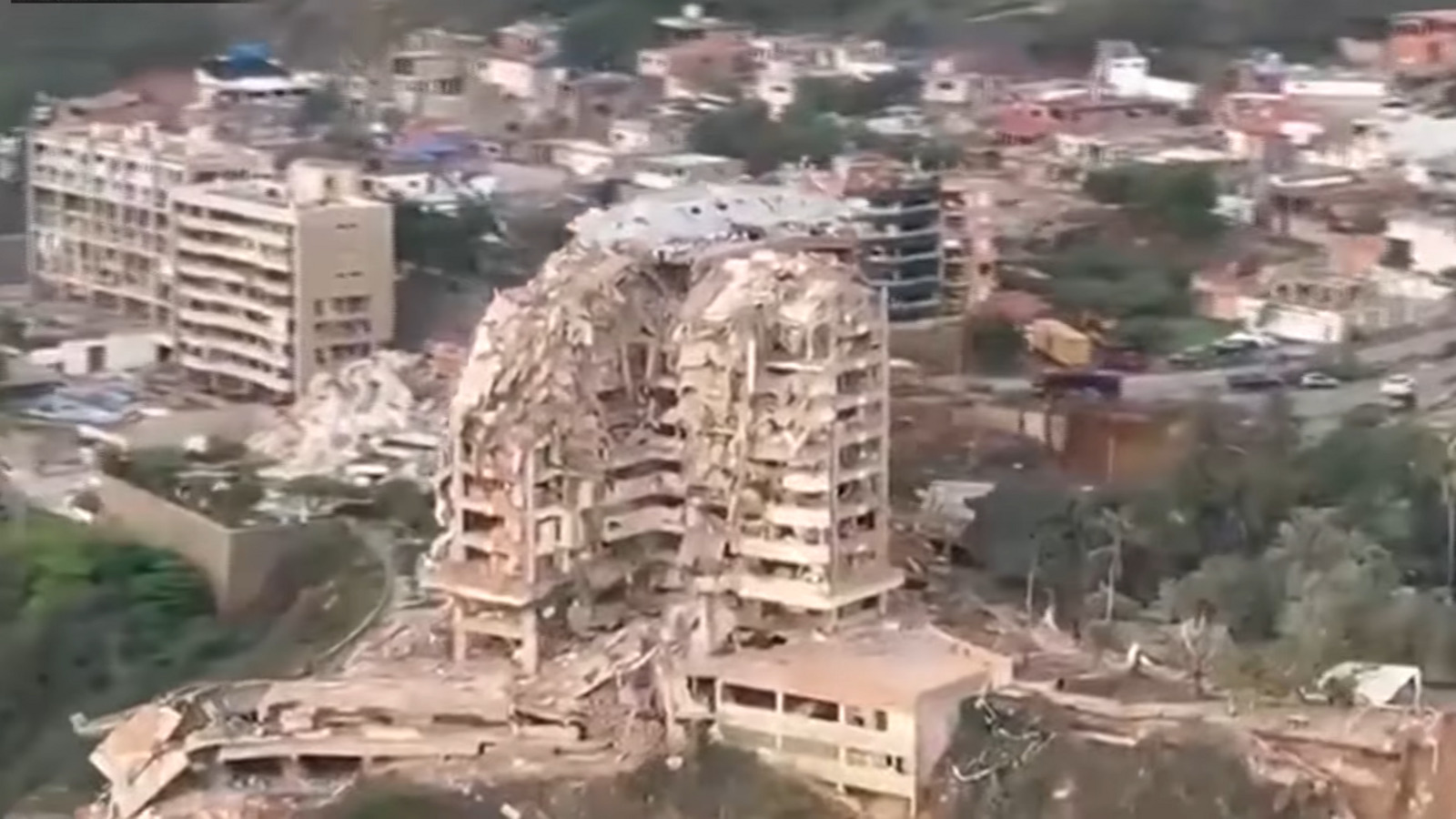

Two tremors of magnitude 7.2 and 7.5 hit areas near Caracas, destroyed buildings in La Guaira, left thousands injured, and mobilized foreign rescuers with drones, dogs, and thermal cameras in the searches
The earthquakes in Venezuela left at least 920 dead and 3,360 injured after two tremors of magnitude 7.2 and 7.5 hit, on June 24, an area about 160 kilometers west of Caracas, causing collapses and an international rush to locate survivors. Data from Reuters.


Hundreds of people are still believed to be trapped or missing, according to government estimates. A website created to gather reports of disappearances had accumulated more than 50,000 registrations by Friday afternoon. The United Nations humanitarian chief presented a similar number.
The United States Geological Survey indicated a high potential for the disaster to exceed 10,000 deaths.
-
Tragedy in Rio: Three-Story House Collapse on Governor’s Island Kills Two Children

-
Mother acts quickly and saves 6 children from fire in studio apartment on the coast of SC before firefighters arrive

-
A 21-year-old woman was carried in the arms to the platform and launched from about 40 meters in a bungee jump in Limeira while a rope appeared coiled on the ground behind the group; witnesses were shouting something that no one around managed to stop in time.

-
Truck breaks down in the middle of the Sahara, leaving Nigerians without water on a remote route and turning the journey back home into a tragedy with nearly 50 dead



If the projection is confirmed, the tremors could rank among the deadliest recorded in Latin America during the last century.
Earthquakes in Venezuela destroy more than 100 buildings in La Guaira
La Guaira, a coastal city on the outskirts of Caracas, appears as the most affected region. At least 100 buildings completely collapsed, including multi-story residential constructions.
Highways were cracked, while dozens of properties were reduced to broken concrete and twisted metal structures.
Names of the buildings were written on some ruins to help teams identify locations during the searches.
Residents began to scour the rubble with their own hands or with improvised tools. The main complaint was the absence of cranes and other heavy equipment capable of removing large slabs.
Jennifer Palacios, 25, stated that residents managed to pull people alive from the rubble of the Hugo Chávez housing complex, consisting of eight towers.
According to her, there were still victims trapped under the structures. Palacios had briefly left her residence to bury her 6-year-old son and five other relatives when the tremors hit the region.

Communities denounce delay in aid and lack of equipment
Volunteers began transporting supplies on motorcycles from Caracas and Valencia. The mobilization occurred while residents denounced the lack of state support, forensic teams, and machinery to advance operations.
In Caraballeda, lawyer Ricardo Trias, 73, was trying to obtain the death certificate of his godson, removed from the rubble on Thursday. The body remained at the site because no forensic authority had appeared.
Trias’s goddaughter, 33, was rescued and taken to a hospital in Caracas. The situation highlights the different challenges faced by communities, from treating the injured to removing and identifying victims.
Interim President Delcy Rodríguez announced that the state of La Guaira would be militarized to facilitate the work.
She also thanked the caravans of volunteers and stated that the government had distributed 2,600 tons of food.
Police patrols and members of the National Guard were observed on the access road to Los Corales, one of the most affected communities. Even so, residents continued to demand greater presence of authorities in the destroyed areas.
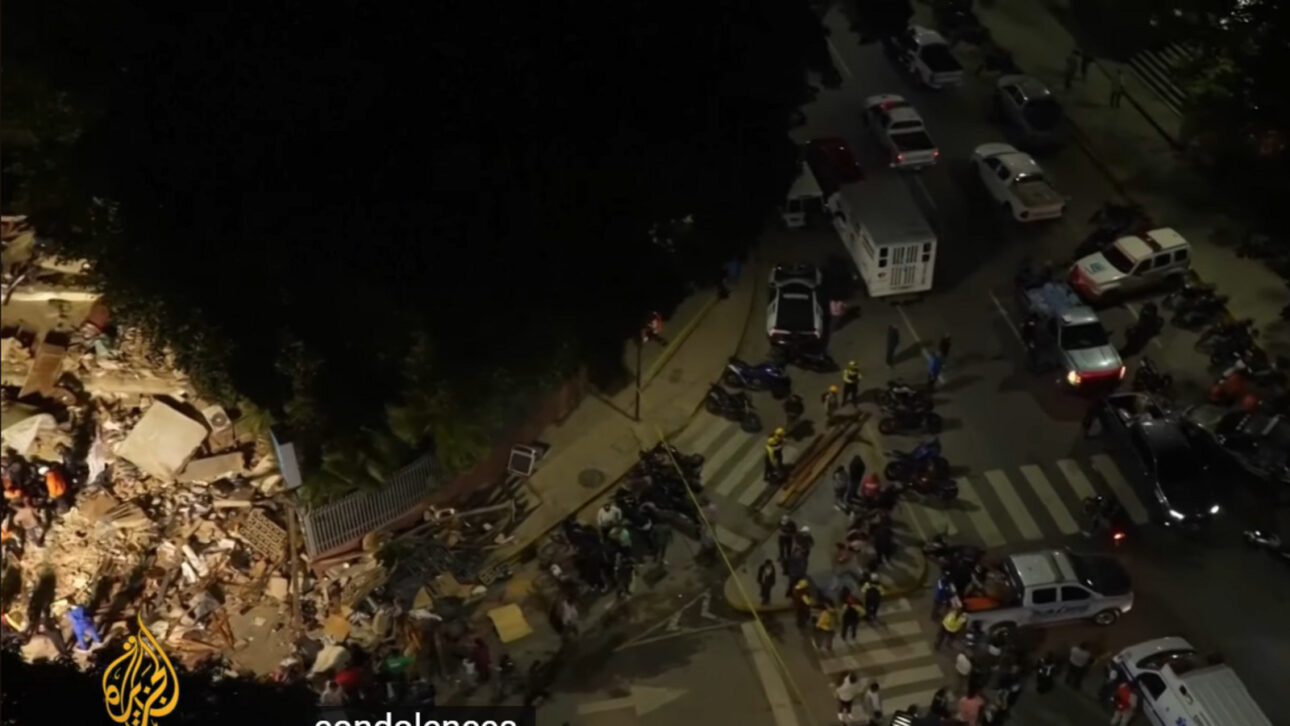
Foreign teams use drones, thermal cameras, and dogs
The first international groups began arriving almost two days after the earthquakes in Venezuela. A small contingent from the Dominican Republic was the first to reach La Guaira, late Thursday.
India and Switzerland sent rescuers and supplies. Mexico mobilized 250 military personnel specialized in rescue, five trained dogs, and equipment to work among collapsed structures.
More than 60 Colombians arrived on Friday. El Salvador initially sent over 180 members of a team expected to gather 300 people, while Spain mobilized nearly 100 rescuers.
The United States announced $150 million in aid and the relaxation of sanctions to facilitate assistance to victims. Two military ships were sent, while helicopters and aircraft would support the searches.
In Los Corales, 50 members of the Salvadoran team assessed the remains of Coral Mar, a complex consisting of three ten-story buildings. Drones, thermal cameras, and dogs were used to search for signs of survivors.
The team leader, Roberto Gavidia, stated that residents reported hearing screams and were able to make phone contact with trapped people.
Until that moment, however, the rescuers had not yet located survivors within the structures.
Almost 7 million people may be affected by earthquakes in Venezuela
The UN migration agency estimated that almost 7 million people could suffer the effects of the disaster. The entity began providing emergency shelters and other relief materials.
The earthquakes hit a country marked by decades of economic and political turmoil, the departure of millions of inhabitants, and the deterioration of infrastructure and basic services.
Foreign energy companies reported that the Venezuelan oil sector did not suffer major disruptions.
The Caracas Stock Exchange remained closed and was transformed into a center for collecting humanitarian aid.
Before the June 2026 disaster, the deadliest earthquake in modern Venezuelan history occurred in 1967, when 240 people died.
This article was prepared based on information from Reuters.