Portuguese
  Spanish



Taesa’s 500 kV Underground Cable Requires Clean Room, Extreme Tests, and $500,000 Splices in a Project that Challenges Electrical Engineering and Could Pave the Way for New Underground Works in Brazil Today
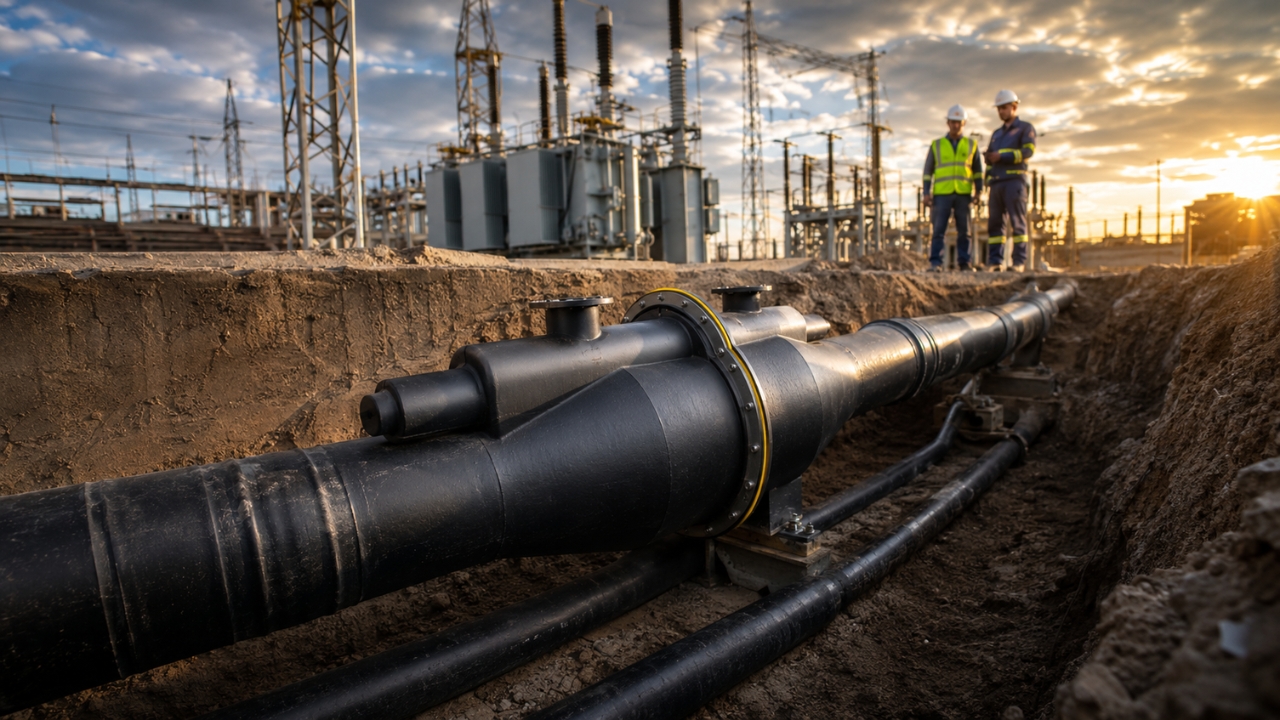
An almost invisible work inside a substation in the interior of São Paulo has presented Brazilian electrical engineering with a rare challenge: installing underground cables capable of operating in one of the highest voltage classes of the national system. The detail that draws the most attention is the cost of a specific piece: a single splice can reach $500,000.
The project involves Taesa, Prysmian, and WEG at the Assis Substation, where an unprecedented underground structure will be implemented to reinforce energy transmission. According to Prysmian, the solution was developed to meet Taesa’s need for high voltage connections within the substation itself.
Behind the million-dollar number, there is an operation that requires extreme precision, a controlled environment, special equipment, and logistics that allow no error. It’s not just about burying cables: it’s about installing a sensitive, expensive, and strategic infrastructure for the National Interconnected System.
-
Private Spacecraft Intercepts Another for First Time in History During U.S. Space Force Mission Completed 11 Hours Early with Rocket Launched in Record 16 Hours

-
Scientists Predict Earth’s Habitable Lifespan: 1.8 Billion Years Before Oceans Evaporate and Sun Forces Planet Out of Life Zone
-
LG Unveils XBOOM Stage 501 Portable Speaker with 25-Hour Battery, AI Karaoke, and Sound by will.i.am in Brazil

-
Scientists Warn San Andreas Fault Holds Highest Seismic Tension in 1,000 Years, Renewing Fears of “The Big One” Megaquake on U.S. West Coast


Why the Solution Needed to Go Underground

The substation already receives several transmission lines, which would make a new aerial connection technically and environmentally difficult. A conventional installation would require more space, could demand new land, and still create obstacles for future expansions.
The underground alternative emerged precisely to circumvent this physical limit. With the cables running underneath, the structure gains flexibility, avoids interference with existing networks, and reduces the need for new interventions in sensitive areas.
Even with about 2 km in length, the project is considered complex. The challenge is not only in the length of the section but in the number of terminals, connections, and procedures required to operate safely in such a high voltage class.
The $500,000 Detail That Reveals the Size of the Challenge
In systems of this magnitude, a splice is not a simple connection point between two cables. It needs to maintain electrical insulation, withstand very high voltage, and ensure there is no internal failure that could compromise the operation.
That’s why the value can be impressive. A cable splice in networks of this category can cost $500,000, according to Daniel Azevedo, Commercial Director of Prysmian. The number shows how each component becomes a critical piece of the work.
This cost also helps explain why Brazil took a long time to advance in this type of solution. The technology requires specialized suppliers, trained labor, and a testing chain capable of proving that everything is ready before energization.

The installation requires a “clean room”
Another point that makes the project unusual is the requirement for a controlled environment during assembly. In critical sections, the installation needs to occur in a kind of “clean room”, with a high level of rigor to avoid contamination.
The concern seems exaggerated, but it is not. In ultra-high voltage cables, dust particles or minimal process failures can affect insulation and increase the risk of future problems.
Therefore, the assembly depends on specialized technicians, expensive accessories, and procedures similar to those of a laboratory. It is a heavy project, but executed with almost surgical precision.
Prysmian brought technology and tests to enable the operation
Prysmian took on a turnkey contract with Taesa, being responsible from the manufacturing of the cables to installation, technical assistance, workforce training, and final infrastructure tests.
Part of the cable is being finalized in China, while professionals involved in the project received additional training in Livorno, Italy. The company also supported Taesa’s engineering in defining the substation layout and sizing the structure.
Another important point was the arrival of equipment for commissioning tests. With two resonant reactors, the manufacturer can conduct tests that can reach 800 kV, an essential step to validate the system’s safety before operation.


The reinforcement also involves giant transformers
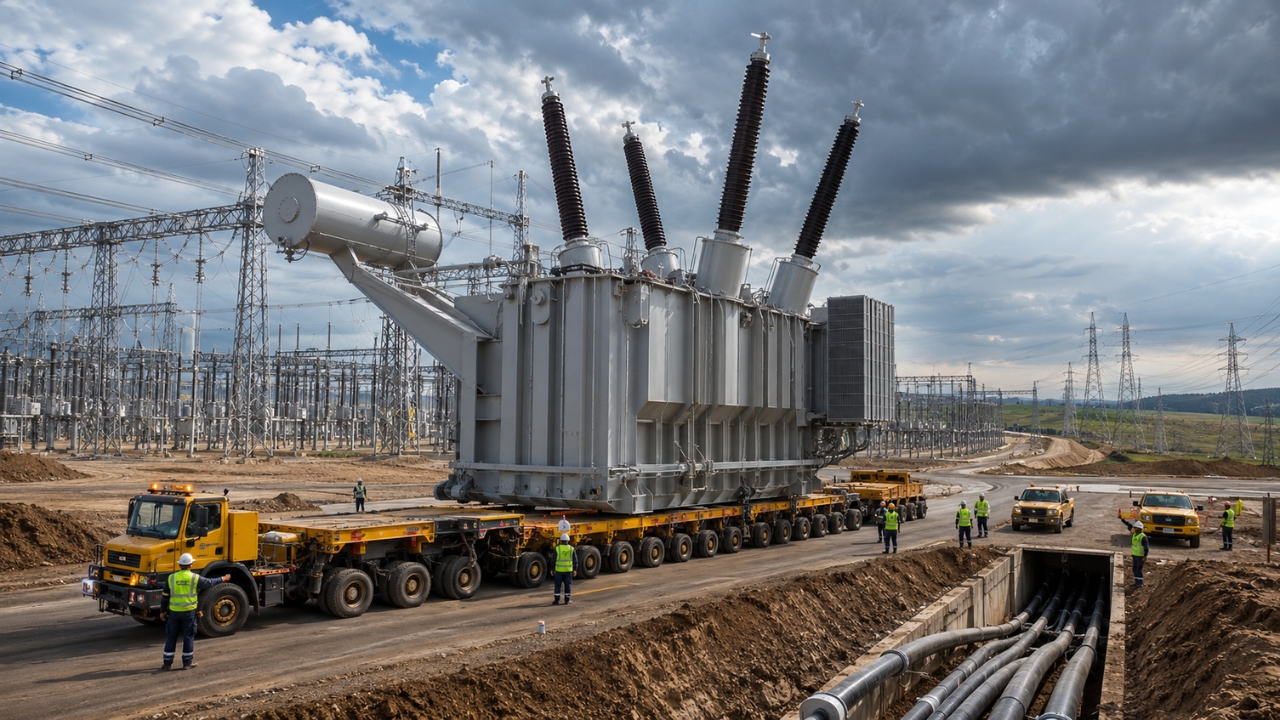
The underground network is connected to the installation of a 500 MVA transformer bank, a crucial piece of equipment to expand the substation’s capacity. WEG will be responsible for supplying the three autotransformers for the project.
Each unit weighs about 300 tons and is being manufactured in Betim, Minas Gerais, approximately 800 km from Assis. Transporting them to the substation will require a specialized logistical operation.
Once ready, the equipment will add 1.5 GVA of transformation capacity to the electrical system. They will also play a role in adapting a transmission line from 440 kV to 525 kV, aligning the structure with the prevailing standard in the country.
A short, expensive, and strategic project
The underground section may seem small compared to the thousands of kilometers of existing transmission lines in Brazil. But its importance lies in the technology applied and the barrier that can be broken.
If the operation is successful, the model could pave the way for other underground solutions in places where overhead lines are unfeasible, such as congested substations, urban areas, or environmentally sensitive regions.
In the end, what makes this project so striking is not just the fact that it is unprecedented. It is the combination of high-voltage underground cables, million-dollar joints, controlled environment, and engineering that needs to work without room for improvisation.