






 Portuguese
  Spanish


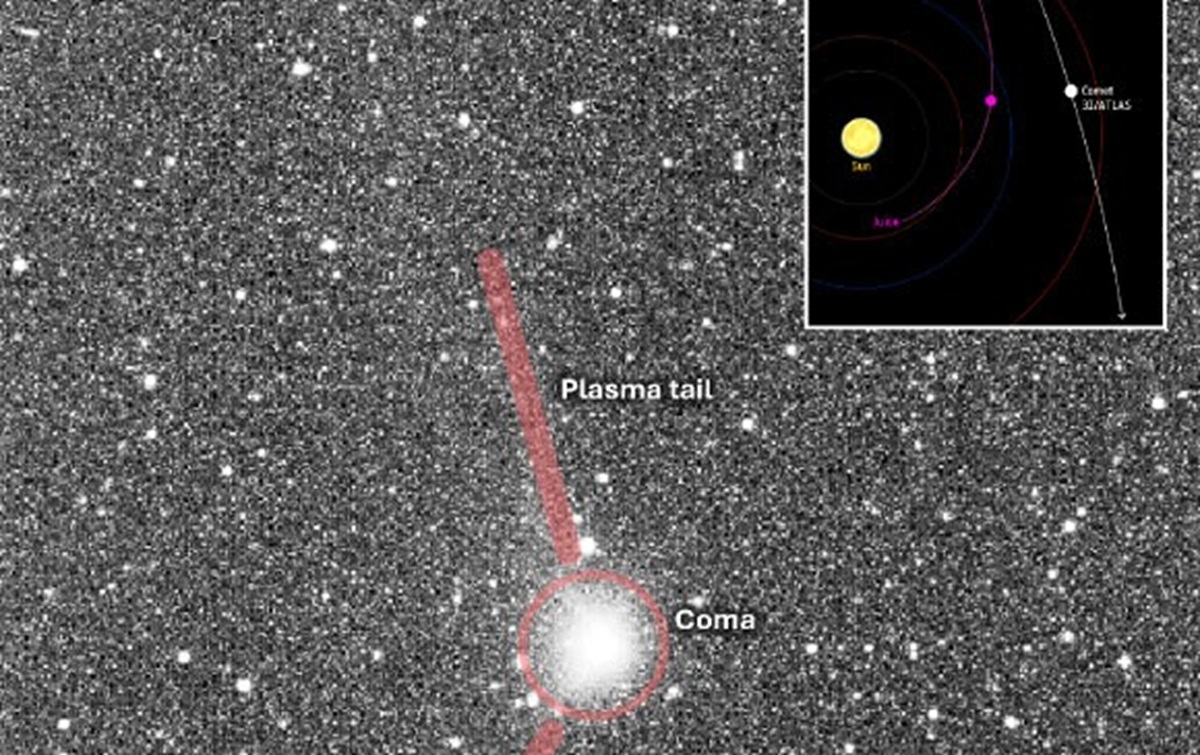


Partial Image Captured by the Juice Probe on November 2 Revealed Bright Halo and Possible Double Tail of Comet 3I/ATLAS, Two Days Before Approach at 66 Million km and Full Data Delivery Expected in February 2026
The Juice probe captured part of an image of comet 3I/ATLAS on November 2, two days before its approach at 66 million km, while the team awaits the complete scientific data scheduled for February 2026.
The Juice team stated that they decided to download only a quarter of the NavCam image because they did not want to wait until February 2026 for the final data. The comet appeared clearly visible and revealed signs of relevant activity.
Researchers reported that the image showed the bright gas halo known as a coma and an indication of two tails. A small digital error occurred during transmission, but it did not affect the identification of the main elements.
-
OnePlus N6 Smartphone to Launch in India with 8,000mAh Battery and 45W SuperVOOC Charging, Lasting Up to Three Days

-
Scientists Plan to Release Air Bubbles Underwater to Protect Antarctica’s “Doomsday Glacier” from Melting

-
Chinese R6000 Drone Combines Airplane and Helicopter Features, Carries Up to 12 People for Multiple Missions
-
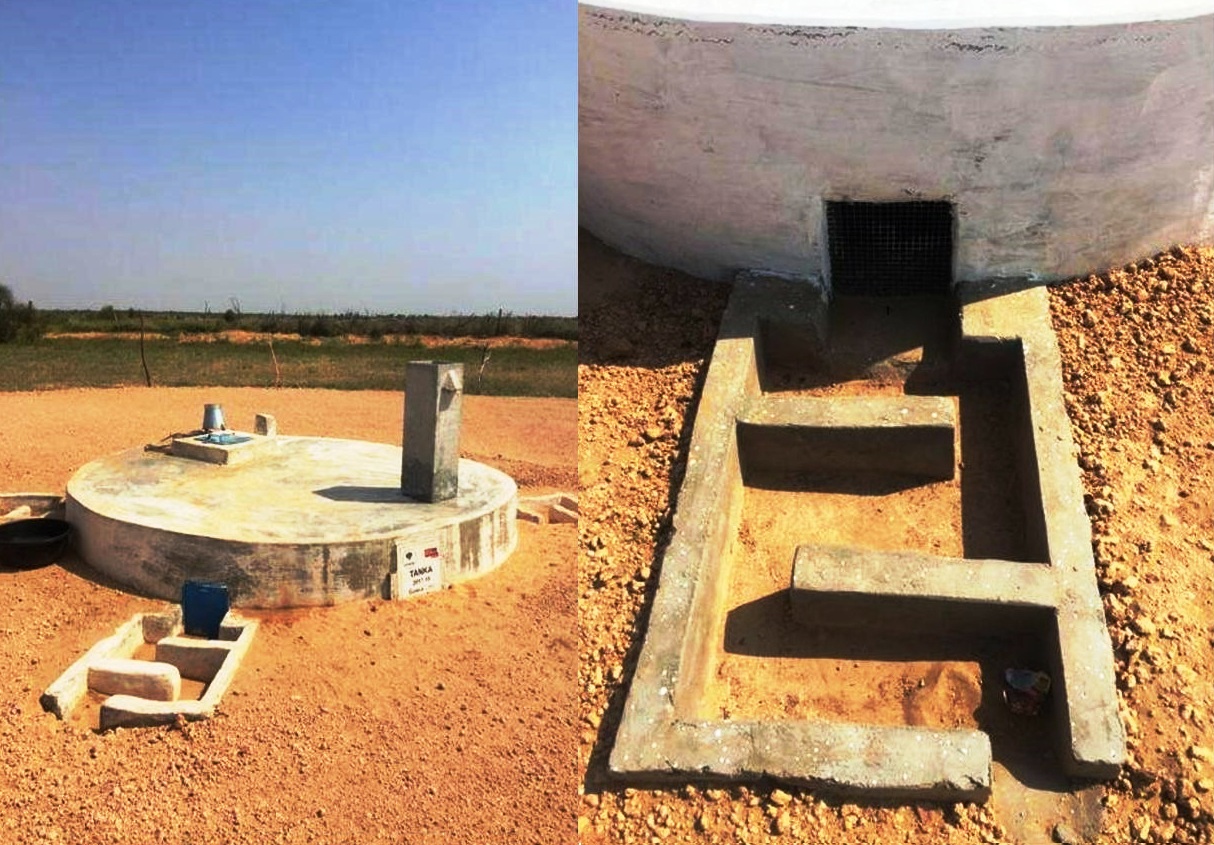
In the World’s Most Densely Populated Desert, Families Dig Funnel-Shaped Underground Cisterns to Capture Rare Rainfall and Store Drinking Water for Up to Eight Months





Plasma Tail and Possible Dust Tail
According to scientists, the plasma tail consisting of electrically charged gas appears extended toward the top of the image. They also stated that the thinner tail may represent the dust tail observed in the lower-left corner.
The image was recorded on November 2 during the first observation period of the mission. Two days later, the closest approach of Juice to 3I/ATLAS occurred, recorded on November 4 at about 66 million km.
Instrument Data Will Arrive Only in February
Researchers reported that they expect to receive the data from the five instruments activated during the observations, identified as JANUS, MAJIS, UVS, SWI, and PEP, between February 18 and 20, 2026.
The delay occurs because the main high-gain antenna is being used as a thermal shield against the Sun, which forces the probe to transmit information through the smaller medium-gain antenna at a much lower rate than usual.
Observation Occurred After Closest Approach to the Sun

Although it was farther from the comet than the orbiting probes from Mars in October, Juice observed 3I/ATLAS shortly after its closest approach to the Sun, a phase in which the object is in a more active state and releasing more material.
Scientists stated that they expect clearer signs of this activity in the data packets, highlighting the complete images from JANUS, which should detail the structure, variations, and intensity of the observed activity.
Expectations for Spectrometry and Particles
The team added that the MAJIS and UVS instruments will provide important spectrometric analyses to identify compositional differences recorded during the scientific flyby conducted in early November.
Researchers are also awaiting records from SWI and the particle data collected by PEP, which are essential to understand the physical behavior of the comet on its current trajectory through the Solar System.
Additional information expected for the first quarter of 2026 will serve as a technical precursor to the complete study, expanding the dataset initiated with the partial image provided by the mission team.








É isso aí está escrito na Bíblia que em Mateus e João que apareceram coisas sinais no sol e nas estrelas e no céu como fala a bíblia sinais da vida do homem para a Terra o que Deus fala na bíblia esses sinais de terremoto cometas aparecendo e muitas coisas desgraças da natureza que o homem não pode respeitar os limites da natureza
Temos ótimos jornalistas no Brasil hahahaha
3I/Atlas, agora é Satélite??
Kkkkkkkkkkkkk. Matou a aula de geografia na escola e agora e jornalista kkkkkkk