Portuguese
  Spanish


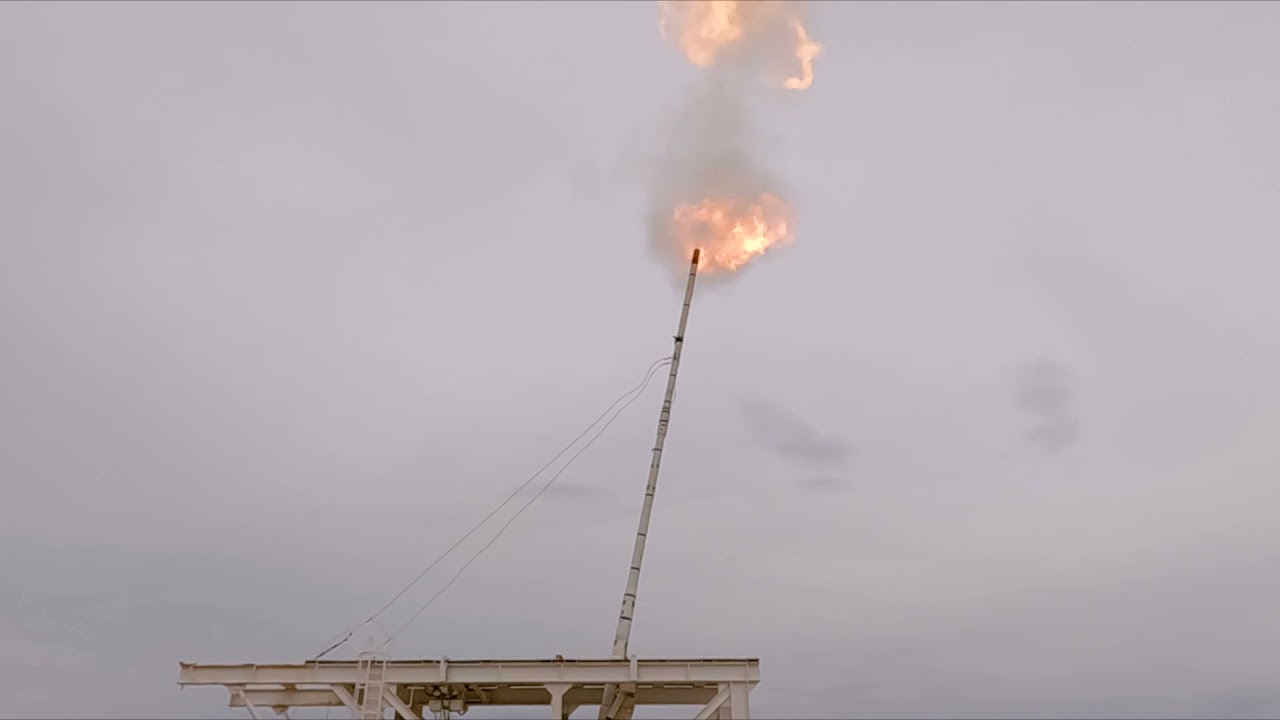


Green Launch tests hydrogen cannon that accelerates loads above Mach 3 and aims to reduce the use of rockets in space launches.
Since the beginning of the space age, practically everything that reached orbit followed the same logic: huge rockets carrying tons of fuel to overcome gravity. But a group of American engineers wants to resurrect an idea that seems straight out of a Jules Verne novel and transform it into real technology to launch satellites using something much closer to a cannon than to a conventional rocket. The American company Green Launch is developing a system based on a gigantic “pressurized hydrogen cannon” capable of accelerating loads to hypersonic speeds while still within a terrestrial tube.
The proposal is to replace part of the work normally done by the first stages of rockets, reducing costs and decreasing the consumption of propellants during access to space.
The project uses a giant hydrogen-filled cannon to propel loads at hypersonic speeds
Green Launch’s technology is based on a concept known as a light-gas gun, or light gas cannon.
-
Five Brazilian Students Invent Drug Test Pen That Detects Date Rape Drugs in Seconds

-
Viedma Glacier Retreat in Patagonia Uncovers 900-Meter-Deep Basin, Making Viedma the Deepest Lake in the Americas
-
Xiaomi Unveils Smart Pressure Cooker That Cooks Meat Up to 40% Faster

-
Antarctic Mystery: Study Uncovers Over 500 Hidden Earthquakes 150 km Deep, Challenging Traditional Theories


Instead of using rocket engines from the ground, the system employs heated and pressurized hydrogen to generate an extremely rapid expansion of gases within a launch tube. This expansion transfers energy to the projectile and accelerates it to speeds much higher than those obtained by conventional compressed air systems.
Here is in slow motion, a 4 megajoule horizontal test shot filmed at 12,500 frames per second:


According to the company, hydrogen was chosen because it has an extremely low molecular mass, a characteristic that allows it to reach much higher speeds than other gases used in similar systems.
First vertical shot launched projectile above Mach 3 using a tube about 16 meters long
Green Launch conducted one of the project’s most well-known tests in December 2021, at the Yuma Proving Ground in Arizona.
According to the company, the shot used a launch tube with 54 feet in length, equivalent to approximately 16.5 meters, accelerating a metal projectile to speeds exceeding Mach 3.

The test marked the first vertical attempt of the system aimed at space applications. The company estimates that the projectile reached approximately 30 kilometers in altitude, although the radars did not track the entire trajectory. The operation was treated as an initial proof of concept for much more powerful future versions.
The ultimate goal is to reach speeds close to Mach 20 and reduce part of the rockets’ workload
The goal of Green Launch is not to place satellites directly into orbit using only the cannon. According to the company, the idea is to accelerate the payload to extremely high speeds still within the atmosphere and then use a small complementary propulsion stage to make the final adjustments necessary for orbital insertion.
The company claims that future versions of the system could reach speeds close to 6 km per second, equivalent to about Mach 17.5, drastically reducing the amount of fuel required after the initial launch.
According to the company, light payloads could reach low orbit within minutes after launch.
The technology was born from military and scientific experiments conducted decades ago
Although it seems futuristic, the technological basis of the project did not emerge recently. The technical director of Green Launch, John Hunter, previously participated in the SHARP (Super High Altitude Research Project) program, conducted at the Lawrence Livermore National Laboratory. This project developed some of the most powerful light gas launchers ever built.

During the SHARP experiments, researchers managed to record speeds close to Mach 9 using hydrogen-based launch systems.
Green Launch claims that its technology represents an evolution of these historical researches applied to the modern space market.
Satellites need to survive brutal accelerations that can exceed tens of thousands of times gravity
One of the biggest challenges of the concept is not just the speed. To withstand a hypersonic shot within a relatively short tube, the equipment needs to endure extreme levels of acceleration. According to Green Launch, future orbital missions could subject loads to approximately 30,000 G during launch.
This value means a force thousands of times greater than Earth’s gravity acting on electronic components in fractions of a second.
Because of this, the technology is considered more suitable for small robust satellites, scientific sensors, atmospheric instruments, and loads specially designed to withstand extreme impacts.
Company claims that water vapor would be the main emission of the system
Another central argument of Green Launch involves the environmental issue. According to the company, the use of hydrogen as a working gas would significantly reduce emissions associated with the first stages of traditional space launches.

The company describes the system as a lower environmental impact alternative because part of the energy of the shot is obtained by the expansion of light gases, mainly generating water vapor during the process.
However, space sector experts note that the economic and operational viability of such systems still needs to be demonstrated on a commercial scale.
Project attempts to join a group of ideas that challenge the hegemony of rockets
Green Launch is part of a family of projects known as non-conventional launch systems.
In recent years, proposals have emerged involving centrifugal catapults, electromagnetic rails, hypersonic cannons, space elevators, and kinetic launchers as alternatives to reduce the cost of access to orbit.
Despite the growing interest, none of these technologies have replaced traditional orbital rockets so far.
The main challenge remains balancing speed, cost, reliability, structural resistance of the payload, and orbital precision in an extremely hostile environment.