






 Portuguese
  Spanish


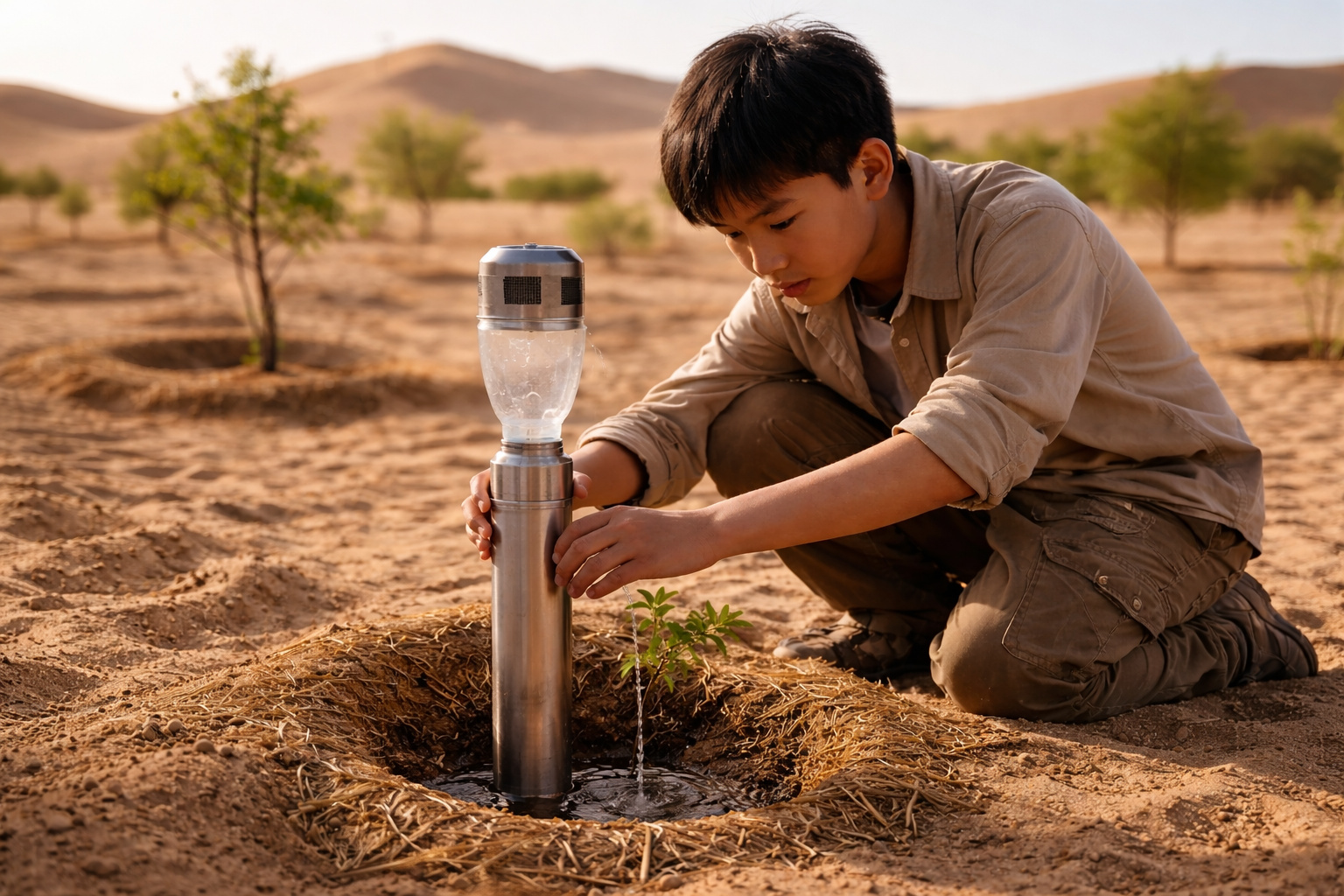


Passive System Developed in 2024 Uses Air Humidity to Irrigate Trees, Reduces Losses in Reforestation, and Attracts Attention from Researchers and Environmental Authorities
A highly impactful environmental solution gained prominence in 2024, in northern China. In Chifeng, an area marked by desertification, the 14-year-old teenager Jia Mingxuan created a passive device that produces water from air humidity. The technology requires no electricity, pumps, or reservoirs, which immediately sparked interest from researchers, environmental authorities, and reforestation managers.
Since then, environmental agencies have begun to evaluate the invention as a strategic complementary solution for the Great Green Wall of Northern China, an initiative started in the 1970s and recognized as the largest reforestation project in the world, according to data from the Chinese government.

Everyday Observation Drives Simple Environmental Solution
First of all, the idea was born outside of laboratories. Jia observed that, on cold days, water droplets formed on the frozen surfaces of the kitchen, a direct result of the condensation of vapor present in the air. From this observation, he wondered if he could apply the same principle in natural environments.
-
Scientists Develop Needle-Free Insulin That Penetrates Skin, Reduces Glucose in Animals Within an Hour, Paving the Way for Diabetes Patches and Creams for Humans

-
After 40 Years of Research, Powdered Coconut Water to Be Produced in Brazilian Biorefinery, Aiming to Revolutionize Health for Children, Elderly, and Hospital Patients
-
Queen Guitarist Brian May Collaborates with ESA Scientists to Study Asteroids Bennu and Ryugu Using 3D Simulations
-
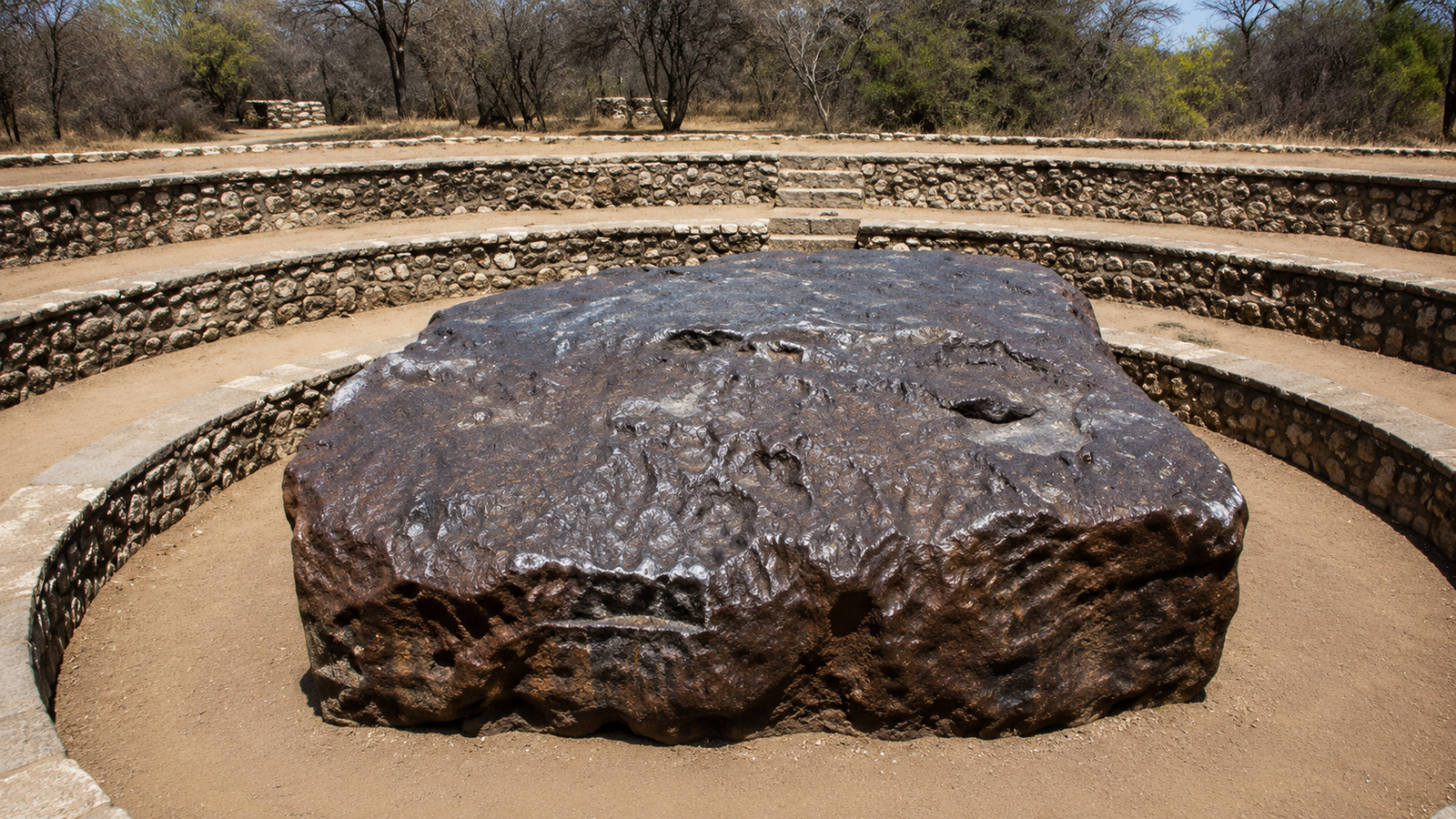
Largest Known Single-Piece Meteorite, Weighing 60 Tons, Puzzles Scientists with Its Intact Fall and Lack of Visible Crater


Thus, the young man directed his tests toward the early months of seedling life, the most critical period for reforestation. At this stage, the lack of adequate irrigation drastically increases the tree mortality rate.
System Operation Exploits Natural Temperature Difference
Technically, the system uses partially buried steel tubes in the ground, while the upper end remains exposed to the wind. This way, the temperature difference between the underground and external air favors the condensation of atmospheric moisture.
Next, the formed water flows through the inside of the tube and directly reaches the roots of the trees, reducing waste. In addition, a top cover ensures continuous air circulation, even in dry environments. To improve the prototype, Jia walked about 30 kilometers repeatedly, adjusting the design and measuring the accumulated humidity.
Historical Desertification Pressures Reforestation
The city of Chifeng is part of one of the most vulnerable areas in northern China. According to environmental records, in the 1960s, the region received about 380 millimeters of rain per year, an insufficient amount to maintain soil balance. As a consequence, mobile dunes and exposed soil areas advanced rapidly.
Currently, after decades of environmental intervention, official data from 2023 indicates that forest cover exceeds 40%. Still, the balance remains sensitive. Even with recent initiatives, such as the combination of reforestation and photovoltaic panels for sand control, thousands of seedlings continue to die due to lack of adequate irrigation.
Increasing Survival Rates Proves More Efficient
In light of this situation, Jia concluded that increasing the survival rate of already planted trees can yield more results than indefinitely expanding planting. The device acts, therefore, as a low-cost solution, ideal for areas without electrical power, sensors, or digital infrastructure.
Additionally, the system helps reduce damage caused by strong winds, which often destabilize young roots and compromise seedling growth.
Recognition, Improvement, and International Reach
As a direct result, the project earned awards and local recognition as early as 2024. Desertification control experts have begun to see the initiative as an example of generational innovation. Currently, Jia collaborates with researchers in Shanghai, where he improves the design, tests alternative materials, such as bioplastics and lightweight alloys, and evaluates large-scale production without increasing environmental impact.

Beyond China, experts linked to international desertification combat programs are evaluating the adaptation of the technology for other semi-arid regions, such as the African Sahel and areas of southern Europe. In these areas, simple and autonomous solutions can define the success of initial reforestation.







The brilliance of ideas with the power to intervene and transform the world for the better is independent of psychopathic ideologies eager for power and planetary domination. Congratulations to the young Chinese scientist, before any label of ideological ownership, simply and solely a brilliant human being concerned with the continuity of life on Earth, which should be the central objective and mission of us all, rather than schizophrenic political ideologies.
A genialidade de ideias com forças de intervir e transformar o mundo para melhor independe de ideologias psicopatas ávidas por poder e dominação planetária. Parabéns ao jovem cientista chinês, antes de qualquer rótulo de propriedade ideológica, simplesmente e apenas um genial ser humano preocupado com a continuidade da vida na Terra, que deve ser o objetivo e missão central de todos nós, do que ideologias políticas esquizofrênicas.
We in Africa can improve reforestation program with this technology. Please how can I get in touch with you. Email address to send me more information is francisosimntiti@gmail.com.