Portuguese
  Spanish




Farmer in the Ceará Hinterland May Have Found Oil While Trying to Solve Water Scarcity
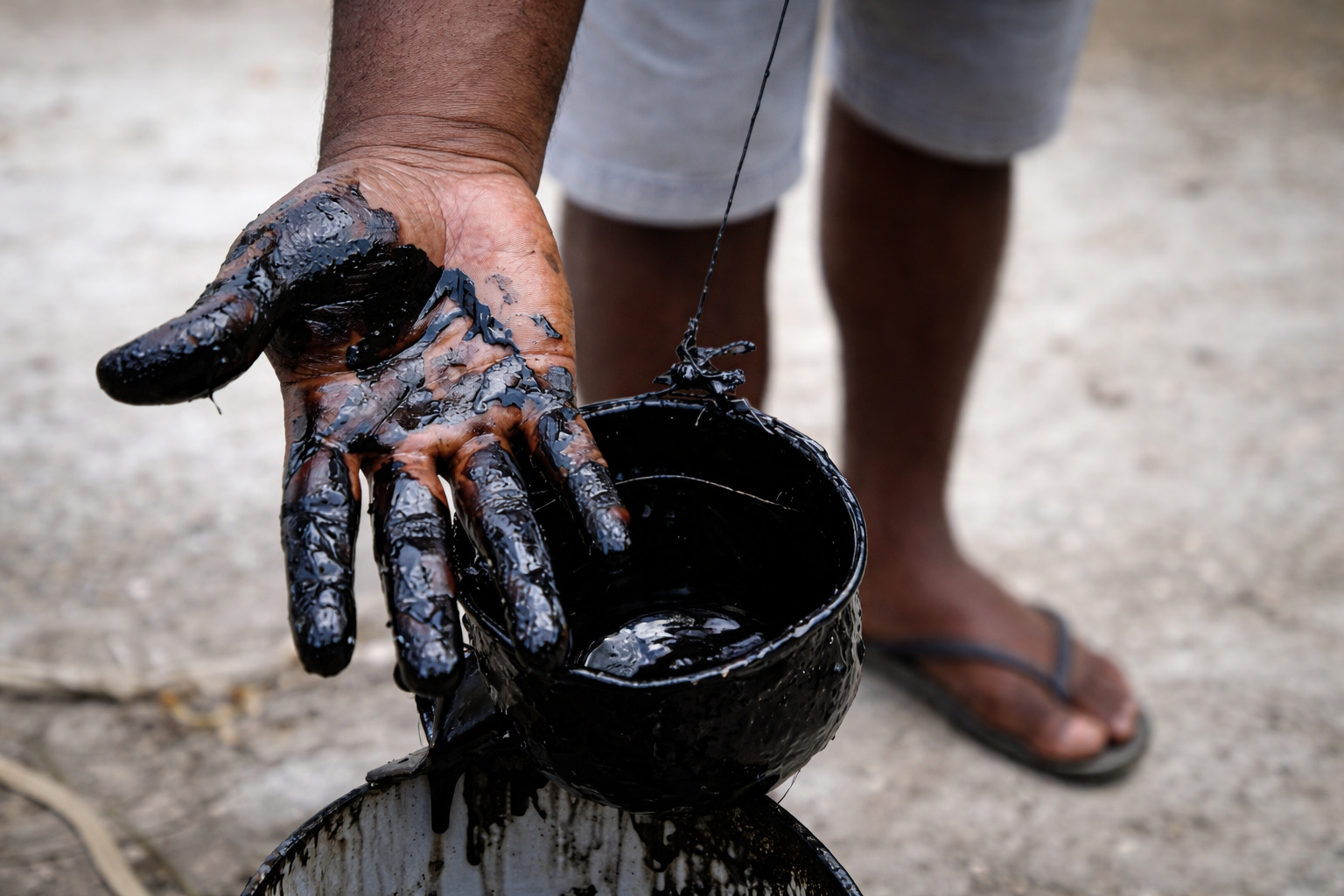
A farmer in the Ceará hinterland may have found signs of oil while drilling an artesian well to face water scarcity on his property. The discovery occurred during an attempt to ensure supply for personal consumption and for the animals on the farm, amid a prolonged drought affecting the region.
The case caught the attention of locals and quickly gained traction on social media. This is because, upon reaching a certain depth, the farmer reported the presence of a dark, oily substance with a strong smell, unlike the expected water.
The situation now raises technical questions and brings up the possibility that the found material may be related to hydrocarbons present underground.
-
US Navy Sinks USS Oriskany with 230 kg of C-4, Creating World’s Largest Artificial Reef in 37 Minutes

-
U.S. Dumped Tanks, Jeeps, and Coca-Cola into the Pacific in 1945 After British and French Lowball Offer, Creating “Million Dollar Point”
-
WHO Warns of Unnecessary Interventions in Natural Births Worldwide, Advocates for More Human-Centered Care, Reigniting Debate on Medicalization

-
World War II American Bombs Discovered in German City Prompt Evacuation of 20,500 Residents




Drilling Started as a Solution for Drought
The farmer in the Ceará hinterland decided to invest in drilling the well after facing difficulties caused by irregular rainfall. In recent months, the volume of water available on the property has fallen drastically.
Initially, he sought traditional alternatives, such as storage in cisterns and buying water from water trucks. However, costs increased and the supply became insufficient to maintain rural production.
In light of this, the producer hired a specialized service to drill an artesian well. The expectation was simple: to find groundwater capable of ensuring a permanent supply.
Dark Substance Surprises During Excavation
During the drilling, workers identified a change in the material removed from the soil. Instead of clean water, a dark and viscous substance emerged.
In addition to its unusual coloring, the material had a characteristic odor and oily texture. The farmer temporarily halted the process to assess the situation.
Residents of the region began to comment on the possibility of oil. Videos and images circulated rapidly, increasing public interest in the case.

Experts Ask for Caution in the Analysis
Despite the buzz, experts warn that the presence of dark material underground does not automatically confirm the existence of commercially viable oil.
Geologists explain that the soil may contain different types of organic sediments, dark clays, or even natural residues that resemble crude oil.
According to technicians consulted by regional media, only detailed laboratory analyses can identify the chemical composition of the found substance.
An engineering geologist consulted by local press emphasized that “it is necessary to collect samples, conduct physicochemical tests, and check for the presence of light and heavy hydrocarbons before any conclusions can be drawn.”
Region Has Relevant Geological History
Ceará has sedimentary basins with energy potential. Although the commercial production of oil in the state is limited, geological studies indicate the presence of formations with organic matter.
The National Agency of Petroleum, Natural Gas and Biofuels (ANP) has already held exploratory auctions involving areas in the Northeast. However, exploration depends on detailed seismic studies and deep technical drilling.
The case of the farmer in the Ceará hinterland occurs in an inland area, away from the main producing regions of the country, such as the Campos Basin and the pre-salt layer.
Therefore, experts emphasize that discoveries of this nature require careful investigation.
Possible Explanations for the Found Material
There are different hypotheses for the emergence of the dark substance during drilling:
- Presence of organic matter accumulated over thousands of years
- Deposits of clay rich in mineral compounds
- Natural contamination from decomposing plant residues
- Small concentrations of hydrocarbons without commercial viability
Additionally, the depth reached by the well directly influences the likelihood of finding oil. In general, commercial deposits require complex geological studies and planned drilling based on technical mapping.
Farmer’s Case in Ceará Hinterland Revives Debate About Energy Potential in the Interior
The episode has reignited discussions about the energy potential of the Brazilian Northeast. Residents are questioning whether the region could hold unexplored reserves.
However, experts point out that identifying oil involves rigorous steps. Companies in the sector conduct seismic surveys, geological modeling, and structural analyses before starting any exploratory drilling.
In the case of the farmer in the Ceará hinterland, the drilling had a purely water-oriented objective, without planning for oil or gas exploration.
If technical analyses confirm the presence of hydrocarbons, the case may gain larger proportions. The discovery could attract the interest of energy companies and regulatory bodies.
However, even if oil is present, economic viability depends on factors such as estimated volume, depth, oil quality, and available infrastructure for transportation.
Experts remind us that many geological signs do not turn into productive fields.
Water Scarcity Remains a Central Challenge
Regardless of the substance found, the main problem remains: water scarcity in the hinterland.
The northeastern semi-arid region faces recurring drought cycles. Farmers constantly invest in alternatives such as artesian wells, underground reservoirs, and efficient irrigation technologies.
The case highlights the reality faced by thousands of rural producers who seek solutions to maintain their activities in light of climate change and irregular rainfall.
Authorities Monitor the Situation of the Farmer in the Ceará Hinterland
After the repercussion, environmental and local technical agencies began to monitor the case. Sample collection should clarify the composition of the material.
Experts reinforce that any indication of mineral resources must follow specific regulation. Brazilian legislation states that underground resources belong to the Union, regardless of land ownership.
Thus, any possible confirmation will require official communication to the competent bodies.
Curiosity, Expectation, and Caution
The episode mixes popular curiosity with economic expectation. However, science must lead the next steps.
While awaiting laboratory results, residents are closely following the unfolding of the case.
The farmer in the Ceará hinterland was only seeking water to combat the drought. Now, the drilling has opened an unexpected possibility that could reveal only natural sediments—or, in a less likely scenario, signs of oil.
The farmer in the Ceará hinterland may have found a substance similar to oil while trying to drill a well to combat water scarcity. The case arouses regional interest and raises hypotheses about the energy potential underground.
However, experts urge caution and await technical analyses to confirm the nature of the material. Until then, the situation remains a curious episode that combines climate challenges, economic expectations, and scientific investigation in the northeastern interior.
If there is official confirmation, the case could gain national dimension. Otherwise, it will remain an example of the harsh reality faced by rural producers who fight daily against drought in the Brazilian hinterland.