






 Portuguese
  Spanish


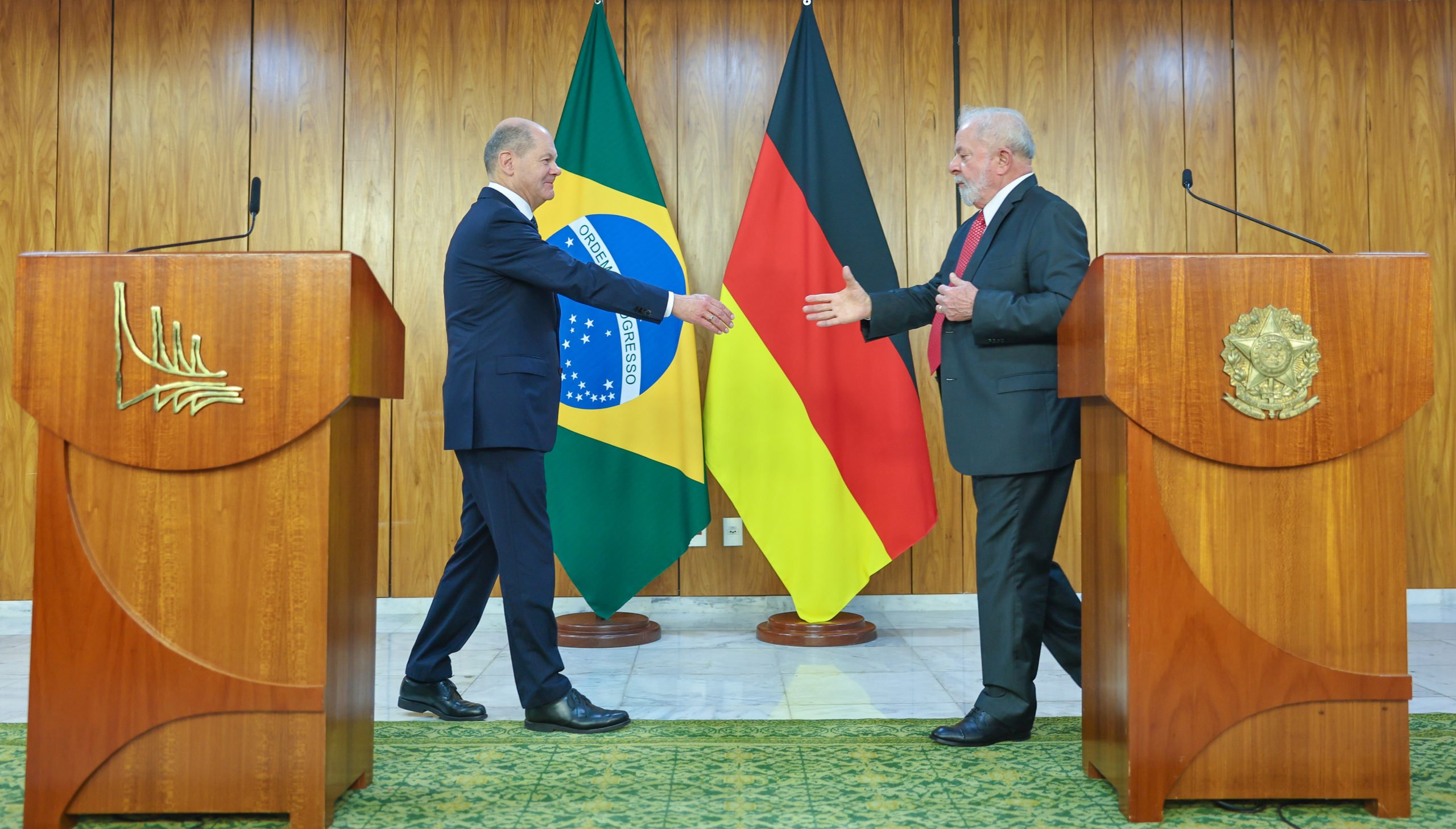

Germany Sees Brazil as an Exponential Exporter of Green Hydrogen, Due to Its Perfect Climatic Conditions for Renewable Energy Generation. The Fuel of the Future Aims to Create Thousands of New Jobs, Income, and Replace Oil.
Brazil, a promising country in the green hydrogen economy, is seen by Germany as a strategic supplier of the fuel of the future, viewed as a major bet to replace oil, gas, and coal and meet climate goals. While Brazil seeks to achieve its environmental prominence, Germany is hurrying to overcome the current energy crisis and fulfill its climate ambitions.
Lula Meets with German Federal Chancellor


President Luiz Inácio Lula da Silva and Olaf Scholz, the German federal chancellor, leaders of the largest economies in the European Union (EU) and Mercosur, met this week to discuss the transformation agenda for their economies focused on protecting the Amazon, clean energy, and the EU-Mercosur trade agreement.
During the meeting, the chancellor emphasized Brazil’s potential for green hydrogen, the fuel of the future produced through clean energies that emerges as the main bet of the economies generated to decarbonize carbon dioxide-intensive sectors such as transportation, agriculture, industries, and energy generation.
-
DoorDash Founder Tony Xu, CEO of an $85 Billion App, Becomes Delivery Driver for an Hour, Completes Four Orders, Makes $19

-
Lufthansa CEO Jens Ritter Takes on Flight Attendant Role, Uncovers Overlooked Issue in Economy Class
-
7-Year-Old Estela Wins Ballet Qualifier; Family Crowdfunds for Argentina Finals in October

-
Before taking over as CEO of Starbucks, Laxman Narasimhan spent about six months training as a barista and committed to working a half shift each month to stay connected to the store floor.


The head of the German government stated that Brazil has extensive experience with renewable energies and significant potential also through the production and export of green hydrogen and its respective products. In light of the restrictions on energy produced by Russia due to the war in Ukraine and criticism of the expansion of coal burning, Germany is about to commence its green hydrogen economy.
The first auction of the H2Global policy is scheduled for February 7, focused on encouraging imports of the fuel of the future, seen as a strategic substitute for oil, gas, and coal for obtaining clean energy. The first bid will be for green ammonia contracts, a product derived from H2V.
Brazil May Become One of the Great Exporters of Green Hydrogen
On the 21st of this month, a new round is expected to be conducted for the contracting of methanol and sustainable aviation fuel, also generated from Green Hydrogen. With this initiative, Germany is acting to regain the forefront of the energy transition process and also to circumvent its dependence on Russian oil and gas.
On the other side is Brazil, which can position itself as one of the major exporters to Europe and recover its prestige as a green power on the international stage.
According to a professor at the Institute of Economics at the Federal University of Rio de Janeiro (UFRJ) and Coordinator of the Electric Sector Studies Group (Gesel), Nivalde de Castro, Germany holds a leadership position because it is exposed to the crucial issue of energy security and has launched the first tender for the purchase of renewable materials from Green Hydrogen in ten-year contracts.
Brazilian Market Could Reach Annual Value of R$ 150 Billion
According to the German strategic consulting firm Roland Berger, Brazil will lead the race for Green Hydrogen, transforming into a major global exporter. The consultancy estimates that the national green hydrogen market will reach a value of R$ 150 billion annually, with R$ 100 billion generated from exports.
The low cost of producing the fuel of the future in Brazil is primarily driven by the abundance of clean energy sources.
As the Northeast is among the regions of the planet with the highest incidence of sun and wind, and is also closer to Europe than the rest of Brazil, several companies have already shown interest in establishing green hydrogen factories at the ports of Suape and Pecém, in the states of Pernambuco and Ceará, respectively.


