






 Portuguese
  Spanish
  3 min of reading
  0 comments


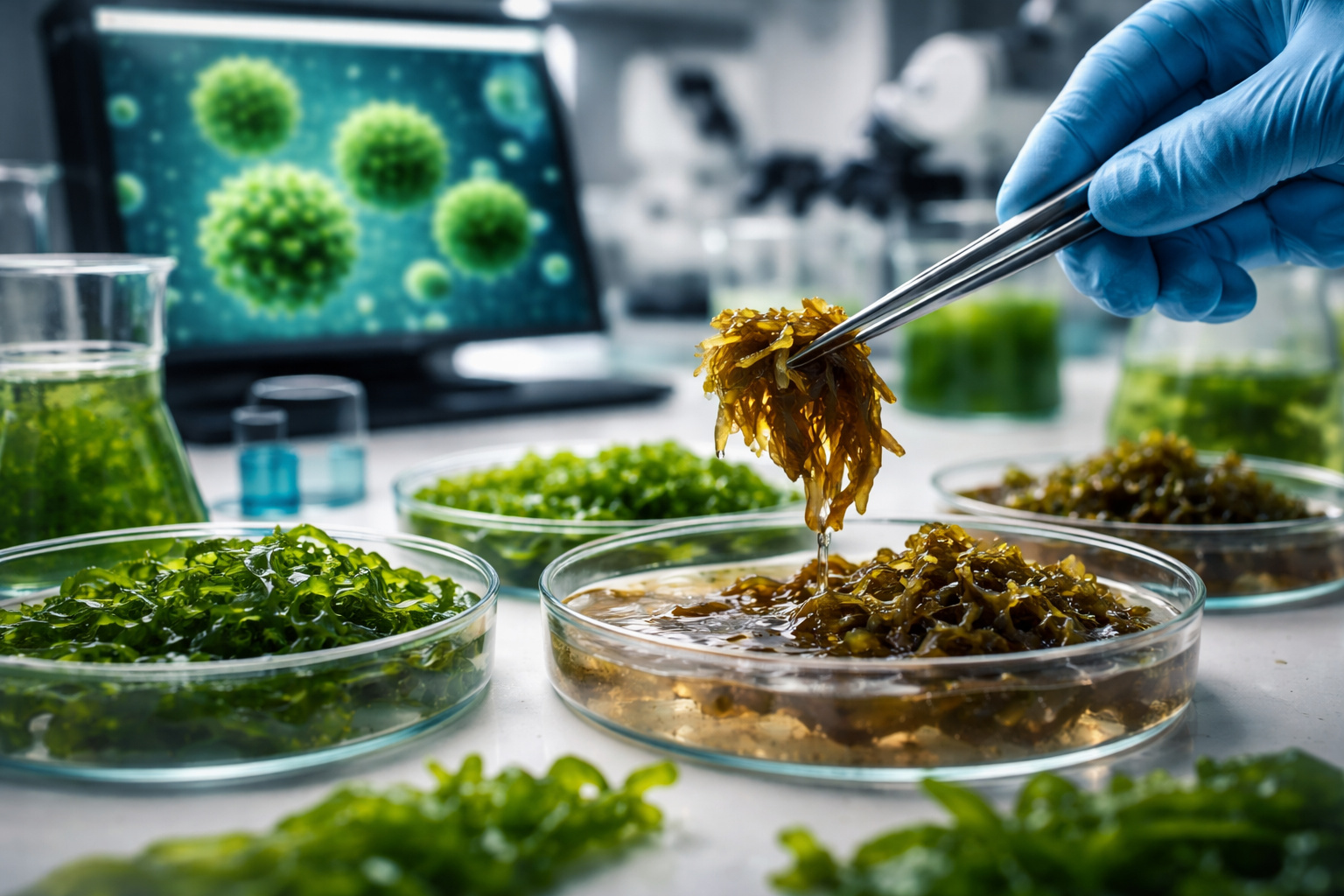
Scientific Discovery Indicates That Natural Compounds Found in Algae May Interfere with the Onset of Infection Caused by Norovirus, Responsible for Hundreds of Millions of Cases of Gastroenteritis Worldwide
A relevant scientific discovery about the prevention of infectious diseases was recently presented by researchers in Australia, attracting the attention of the international scientific community.
The study identified that natural compounds found in seaweeds may interfere with the infection process of norovirus, the main causative agent of acute gastroenteritis worldwide.
The research was conducted by scientists from Griffith University, in partnership with the biotechnology company Marinova, and the results were published in 2026 in the scientific journal Microbiology Spectrum.
-
Public school students in the hinterlands of Maranhão create a bioinsecticide with neem and castor to protect corn crops, transform rural waste into biogas and biofertilizer, and bring sustainable technology to producers at ExpoSertão.

-
Ötzi, the 5,300-year-old mummy found in the Alps, reveals a still active microbiome, and the Iceman’s yeast points to an energy-saving fermentation.

-
More than half of the Earth’s largest lakes are shrinking simultaneously: satellites reveal that 53% of the largest lakes and reservoirs have lost water over three decades, in a collapse equivalent to 17 times the largest reservoir in the United States.

-
Goodbye to the microwave: the appliance present in 96% of Brazilian kitchens is starting to lose space to a single device capable of heating, baking, broiling, and preparing recipes like a microwave, electric oven, and air fryer, occupying practically the same spot on the counter.



Norovirus is known to cause symptoms such as nausea, vomiting, watery diarrhea, fever, and abdominal pain, and is responsible for about 685 million infections per year worldwide.
This scenario reinforces the importance of identifying strategies capable of reducing the global impact of the disease.
Scientific Discovery Analyzes Compounds Found in Algae
The research focused its analysis on bioactive compounds found in green and brown algae, marine species widely studied for their biological properties.
Among the substances investigated by scientists, two specific compounds stood out:
• Fucoidan, extracted from brown algae
• Ulvan, found in green algae
These molecules were analyzed because they could directly interfere in the initial stage of viral infection.
To infect the human body, norovirus must first attach to molecules present in the intestine called histo-blood group antigens (HBGAs).
This binding is considered essential for the virus to initiate the infectious process within the human body.
Laboratory Results Indicate Action of Fucoidan
During the experiments conducted in the laboratory, researchers observed that the compound fucoidan exhibited the most significant effect against the virus.
In this sense, tests conducted by the team at Griffith University demonstrated that the compound was able to block the binding of norovirus to molecules present in the human intestine.
Consequently, when this binding is prevented, the virus faces difficulties in initiating the infectious process.
According to Grant Hansman, a researcher at Griffith University and the principal author of the study, the compound acts as a protective barrier.
According to the scientist, fucoidan occupies the space where the virus normally attaches, preventing the pathogen from connecting to the cellular structures necessary for initiating infection.
Thus, by occupying this binding point, the compound reduces the virus’s initial ability to interact with the cells of the intestine.
Potential for Natural Prevention Strategies
In light of these results, researchers believe that fucoidan may represent a promising pathway for natural prevention strategies against norovirus.
Moreover, the compound currently appears in some dietary supplements, demonstrating good tolerance in studies conducted with humans.
For this reason, this characteristic may facilitate future medical applications related to the prevention of viral infection.
Still, scientists emphasize that further investigations are necessary to expand understanding of this mechanism.
Next Steps in Scientific Research
Now, researchers intend to investigate ways to produce fucoidan on a larger scale.
At the same time, scientists are also looking to enhance the protective effects of the compound, exploring new strategies to reduce outbreaks of gastroenteritis.
Thus, this scientific advancement broadens the understanding of how natural compounds found in seaweeds can contribute to preventive strategies against norovirus.
Therefore, given the high number of infections recorded worldwide each year, new scientific approaches are being considered.
In light of this initial evidence, a relevant question arises.
Could natural compounds extracted from seaweeds, in the future, help reduce the global incidence of gastroenteritis caused by norovirus?








Be the first to react!