Portuguese
  Spanish



Ford Multinational, Which Closed Its Factories in Brazil, Will Import About 30 Thousand Cars Produced in Its Factories Abroad Annually Through the Port of Vitória
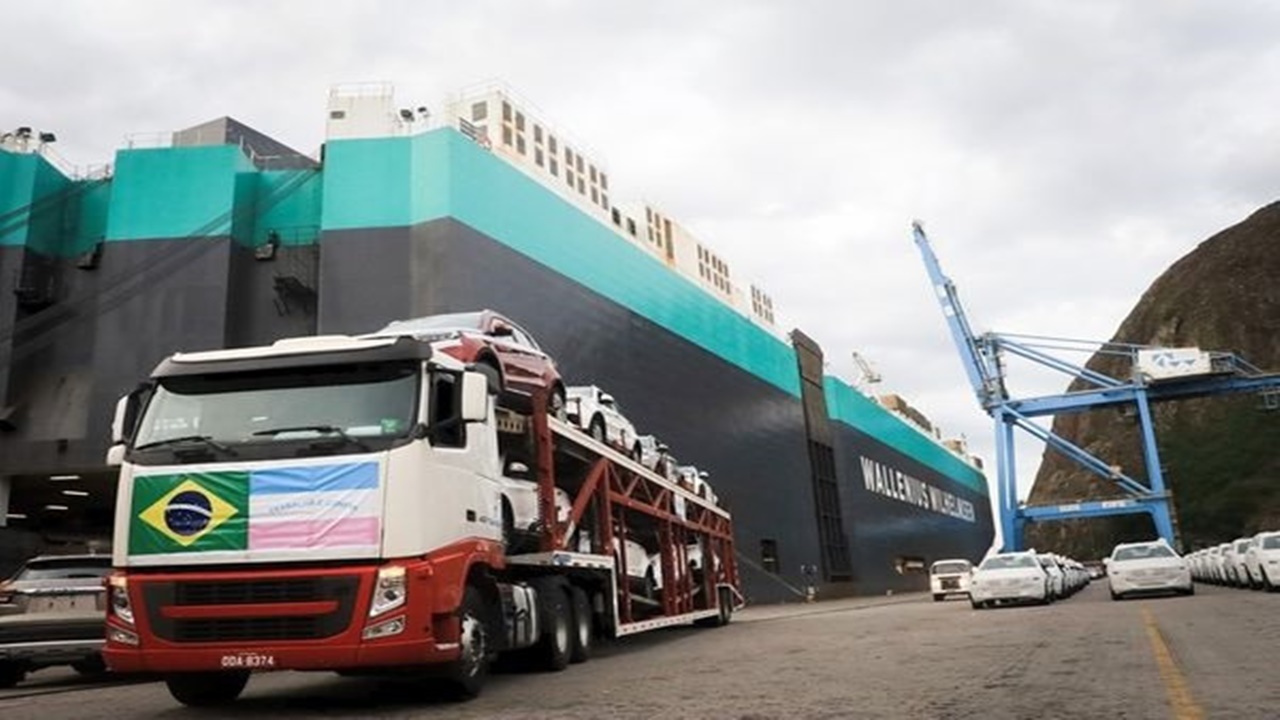
After stopping vehicle production and closing its factories in Brazil, the Ford Motor Company will now import vehicles through the Port of Vitória. Last week, 450 cars were unloaded, which arrived in the state on the ship Torrens. It is estimated that approximately 30 thousand cars will arrive in Brazil, via Espírito Santo, each year.
Read Also
- Ford Motor ‘burned’ 61 billion reais by deciding to close factories, stop vehicle production, and leave Brazil
- Just like the iconic Volkswagen Kombi, new legislation will make the Uno, Doblo, and Grand Siena by Fiat disappear this year
- Head of Honda, one of the most important automobile and motorcycle manufacturers in the world, stops developing and producing gasoline and diesel combustion engines
- Volkswagen calls for inexperienced candidates in all areas for job openings in factories in SP and PR
- After Volkswagen, Ford, Chevrolet, and Fiat, the multinational Yamaha suspends motorcycle production in its factories and puts employees on collective leave
- Audi, a multinational belonging to the Volkswagen group, manufactures a powerful electric car capable of projecting video games through its headlights
- After ending the Up! production, Volkswagen puts more than 2000 employees at its SP factory on collective leave
- Volkswagen ends production of the Up! at its SP factory; Gol, Voyage, and Fox are also on the automaker’s radar
On Tuesday, May 18, the first vehicles from the American automaker arrived at the Port of Vitória. Previously, Ford brought its cars through Baixada Santista and Bahia.
Now, the Port Terminal of Vila Velha (ES) will be Ford’s only entry point in Brazil. According to Log-In Logística, the company responsible for the operation, the complex will receive approximately 28 thousand to 30 thousand cars from the American company annually.
-
Brazil’s Largest Port to Accommodate Bigger Ships by October as Ibama Approves Non-Explosive Removal of Hidden Rocks and Sediments

-
Mexico Develops 3D-Printed Concrete from Corn Waste, Cutting Emissions by 70% and Reducing Construction Waste by 90%
-
Traditional Mortar to Decline by 2026: ACIII-E Solution for Large Porcelain Tiles Offers Better Adhesion and Reduces Risk of Loose Pieces in Floors and Facades

-
The U.S. Navy Conducts Submarine Tests in Idaho Lake to Detect Underwater Noises Hidden by the Ocean


The delivery was accompanied by Governor Renato Casagrande, who also visited the new vehicle storage and handling yard operated by LogIN TVV within the Port of Vitória.
“We came to monitor and celebrate the importance of importing Ford vehicles in Espírito Santo. There will be about 30 thousand vehicles per year, imported here by the state, adding to other brands that are already imported here. This strengthens the economy of Espírito Santo, Vila Velha, and Cariacica. The more capacity to invest, the more capacity to create opportunities for the people of Espírito Santo,” he highlighted.
Ford Chooses the Port of Vitória Complex Due to Better Logistics and Tax Issues
The automaker Ford chose the Port of Vitória complex due to better distribution logistics and tax issues. The state of Espírito Santo is a well-known entry point explored by major automobile manufacturers.
The first batch unloaded at the port comprised 451 units of the Territory. Additionally, the complex is expected to receive more than 20 thousand units of the Ranger, which is imported from Argentina.
Excluded from the projected 30 thousand cars is the Transit van, which will be imported from Uruguay; however, it is expected to enter Brazil via road.
The port will also handle crossover models, which come from China, as well as Mustang models produced in the USA, and the Bronco Sport, which is manufactured in Mexico. This quartet will place Ford in tenth place in the sales ranking of brands in the national market, based on 2020 figures.
Caoa Chery sold just over 20 thousand units last year, and if it does not exceed this volume, it will not be able to displace Ford from the Top 10 brands. Last year alone, the automaker sold 139,255 vehicles.
With imports, Ford will focus on smaller sales, a lean operation, and higher value-added products.
In a Move Contrary to Ford’s, Volkswagen, the World’s Largest Vehicle Manufacturer, Invests in Production and a Factory in SP
In a move contrary to Ford’s, Pablo di Si, CEO of the multinational Volkswagen in Latin America, announced in an interview with Reuters on the 7th, the commitment to launch a new investment cycle in Brazil. According to the executive, details of the investment will be disclosed at the end of the year by the Global CEO of the Group, Herbert Diess.
According to Pablo di Si, “we defined the investment and have already stopped production at our factory in Taubaté to prepare the new platform.” The executive did not provide details of the products, but it is known that one of them is the Polo Track, the brand’s new entry-level model in Brazil.
The Taubaté factory currently produces two compact cars, the Sedan Voyage and the hatchback Gol.
So far this year, Volkswagen has become the best-selling brand in Brazil, replacing General Motors Co (GM.N) after many years, as part of the production of GM in Brazil was more hindered than that of Volkswagen by a global chip shortage.
Just Like the Iconic Volkswagen Kombi, New Legislation Will Make the Uno, Doblo, and Grand Siena by Fiat Disappear This Year
According to journalist Fernando Calmon, who is a columnist for the AutoPapo Portal, the multinational Fiat will have to cease production of the Uno, Doblo, and Grand Siena. This is because starting in January 2022, a new phase of Proconve, L-7, will come into effect, and the three models from the Italian automaker will disappear due to the new environmental emission requirements, just as it happened in 2014 with the iconic Volkswagen Kombi due to the requirement for airbags and ABS brakes.
According to Calmon, Fiat’s factory does not believe it is worthwhile to invest in new tanks and fuel systems in these cars to meet the new evaporation limits from gasoline and ethanol tanks.