






 Portuguese
  Spanish
  5 min of reading
  0 comments


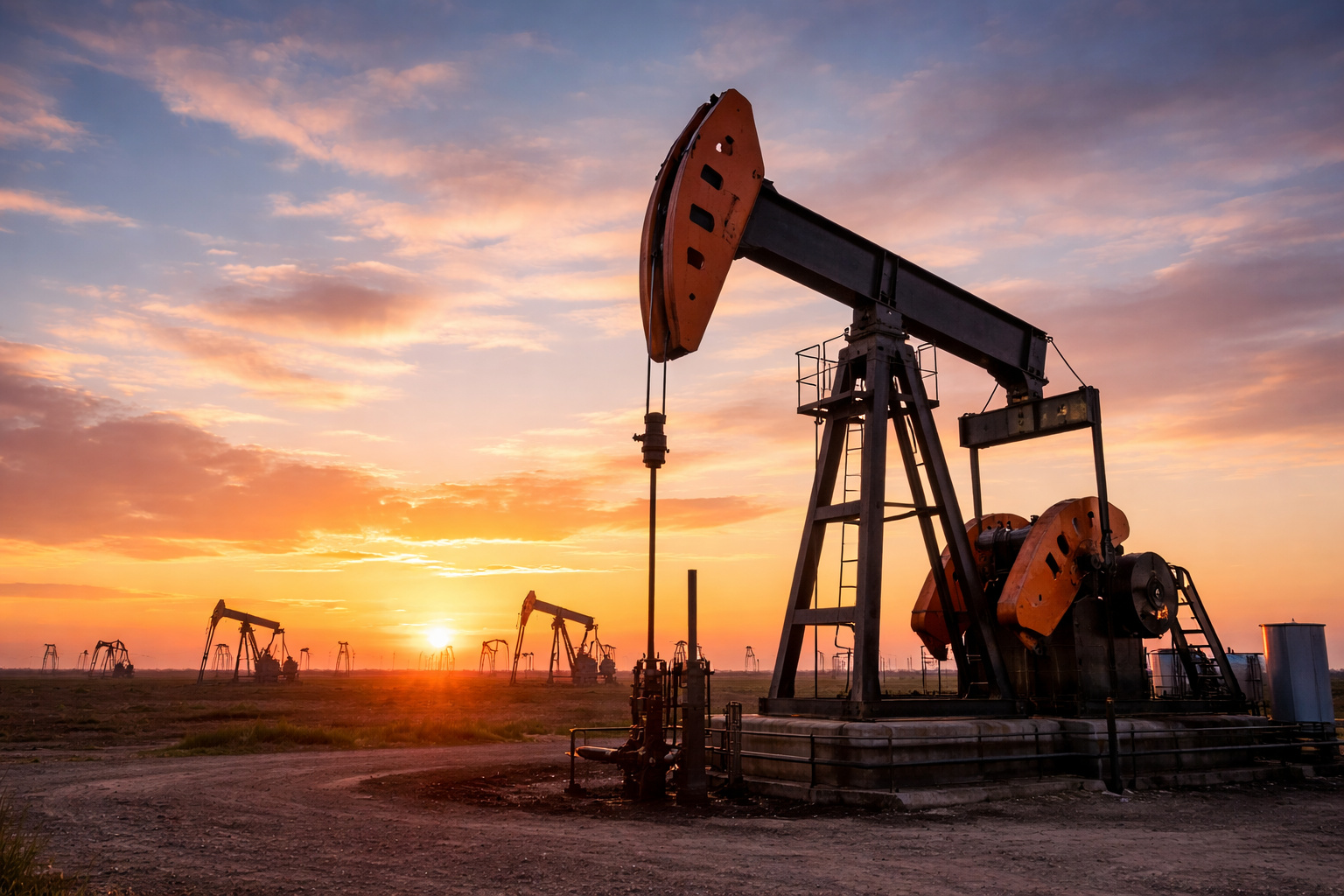
The Asian demand for Brazilian oil grew significantly in early 2026 and, as a result, led the country’s exports to a new record for the period. Between January and March, external sales of crude oil rose by 31%, reaching US$ 12.562 billion — the highest value ever recorded for a first quarter.
This advance occurs, above all, amid tensions in the Middle East, which, in turn, reduced the flow of ships in the Strait of Hormuz and forced Asian countries to seek new suppliers. In this context, with production on the rise and limited internal refining capacity, Brazil began to direct a large part of the surplus to the external market, thus expanding its global presence.
Moreover, in total, Brazilian exports amounted to US$ 82.3 billion in the first quarter, surpassing the US$ 76.9 billion recorded in the same period of 2025 and marking, consequently, the best result in history for the first three months of a year.
-
Oil production grows in Rio, but reserve replacement raises a warning sign

-
Petrobras is expected to complete the drilling of the Morpho well in the Foz do Amazonas in August 2026, the first well in the Equatorial Margin, an oil frontier that the ANP estimates at more than 30 billion barrels and could redraw the map of Brazil.

-
Oil returns to the center of concerns with tension between the US and Iran

-
IEA reduces forecast for global oil demand in 2026 after impacts of the Middle East crisis
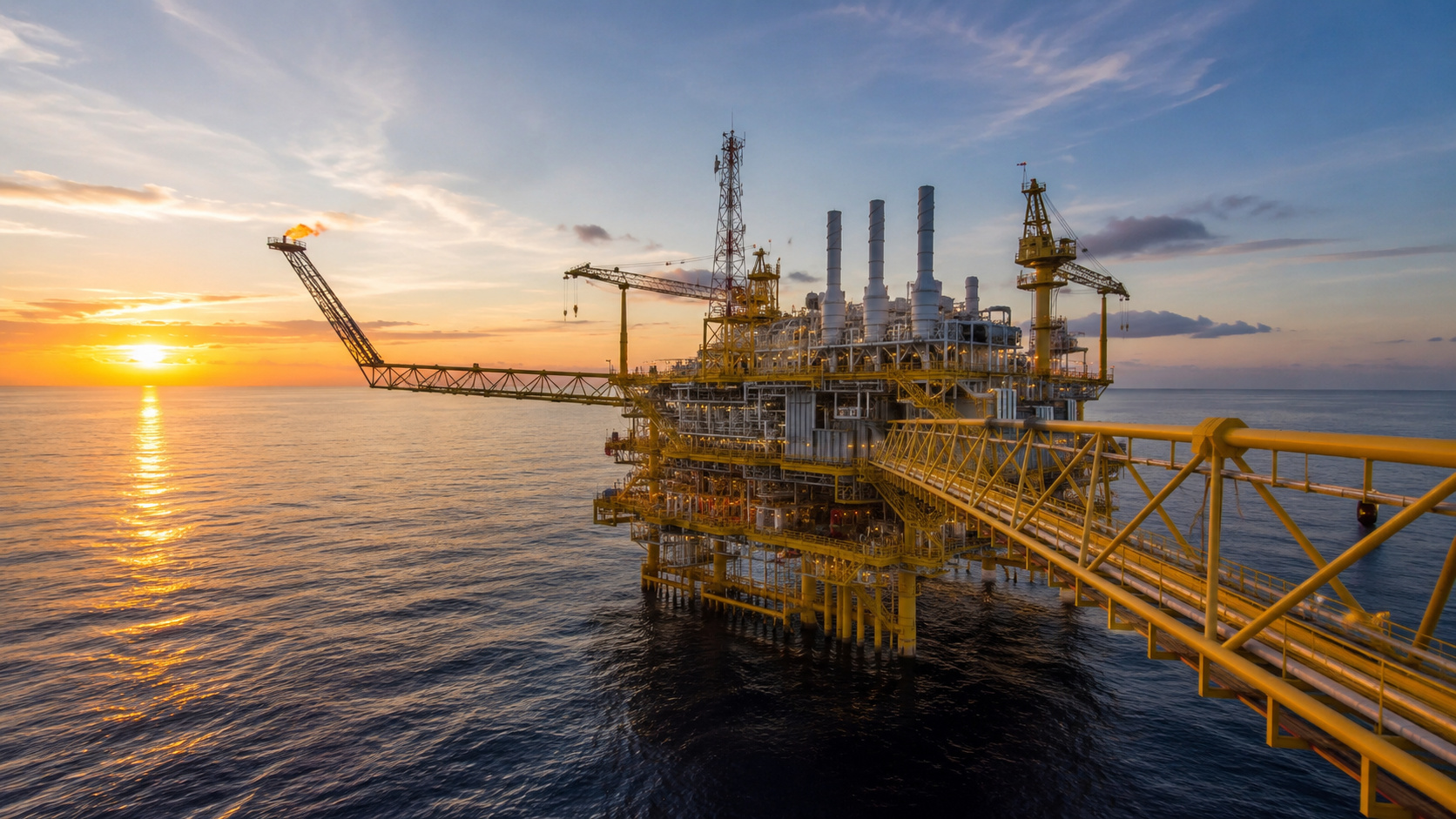


Why Asian Demand is Driving Brazilian Oil
The main driver of this growth lies primarily in the change in behavior of Asian buyers, especially China and India, who have increased their purchases in light of instability in global supply.
This is because the reduction in tanker traffic in the Strait of Hormuz — through which about 20% of the world’s oil production passes — has led countries in the region to diversify suppliers in order to ensure supply.
Thus, this movement directly benefited Brazil, which had already been increasing its production in recent years and, consequently, began to occupy the space left by producers closer to conflict areas.
China and India Lead Increase in Brazilian Oil Purchases
The numbers clearly demonstrate this change in route. For example:
- Exports to China jumped from US$ 3.7 billion to US$ 7.1 billion
- Meanwhile, sales to India grew from US$ 577 million to US$ 1.027 billion
At the same time, the growth in demand in these two markets compensated for declines in other destinations, such as the United States, which, on the other hand, reduced their purchases of Brazilian oil during the same period.
Thus, this shift in the export axis reinforces a trend of greater dependence on Asia as a destination for national oil.

High production helps sustain record exports
However, the increase in exports did not come solely from the external scenario. At the same time, Brazilian oil production also advanced and reached a new recent record.
According to data from the National Agency of Petroleum (ANP):
- 2025: 3.770 million barrels per day
- 2024: 3.358 million barrels per day
As a consequence, this growth increased the volume available for export. However, since the country still has limited refining capacity, a large portion of this oil is not processed internally and ends up being sold abroad.
In practice, therefore, Brazil exports crude oil and, in some cases, imports derivatives, which highlights a structural bottleneck in the sector.
Refining limits turn extra production into exports
In this scenario, the increase in production does not automatically translate into greater internal processing. This happens because the country faces restrictions in refining capacity, causing the surplus to be directed to the international market.
Moreover, this factor helps explain why the growth in exports is more related to volume than to price. In other words, even with the appreciation of oil in the global scenario, the main recent boost came from the quantity shipped, not just from the commodity’s price.
Middle East conflict alters global oil flow
At the same time, instability in the Persian Gulf region has a direct impact on international oil trade.
In this sense, the Strait of Hormuz — a strategic point for transporting the commodity — faced restrictions throughout the conflict, which reduced predictability in global supply.
As a result:
- importing countries began to seek alternatives
- suppliers outside the region gained ground
- international prices rose
In fact, the price of oil exceeded the mark of US$ 110, reflecting the increase in tension and concerns about supply.
Exports to the US fall while Asia gains ground
“`htmlOn the other hand, while Asia has increased its purchases, the United States has followed an opposite path.
In this context, Brazilian oil exports to the American market fell from US$ 1.065 billion (2025) to US$ 632.3 million (2026).
Thus, this decline reinforces the change in the destination of Brazilian oil and indicates, at the same time, a strategic repositioning of the country in international trade.
Global demand slows, but Asia maintains growth
Despite the increase in Brazilian exports, the global scenario, in turn, is not one of uniform growth.
According to the International Energy Agency (IEA), there is a projected decline of about 80,000 barrels per day in global demand in 2026.
Still, Asia continues on a different trajectory. That is:
- there is a forecast of an increase of 141,000 barrels per day in the region
This divergence explains why Brazil was able to expand its sales even in a weaker global environment.
Record exports lead government to revise projections
In light of this performance, the government decided to revise its estimates for foreign trade in 2026.
The projections have been updated to:
- US$ 364.2 billion in total exports
- US$ 72.1 billion trade surplus
If these numbers are confirmed, the country could achieve a new annual record, surpassing the previous year’s result.

Rising oil prices help exports but pressure imports
On the other hand, the current scenario brings both opportunities and risks.
On one side:
- exports are growing
- there is an increase in dollar inflow
- the trade balance is improving
On the other:
- imported products become more expensive
- internal costs may rise
- global inflation impacts the country “`
Therefore, this delicate balance directly depends on the evolution of the conflict in the Middle East and, moreover, on the behavior of international prices.
Commodity dependence exposes Brazil’s vulnerability
In general, the increase in oil exports reinforces a well-known characteristic of the Brazilian economy: strong dependence on commodities.
Although this model brings advantages in times of high prices and demand, it also exposes the country to external factors it does not control, such as wars, geopolitical decisions, and fluctuations in the global market.
Thus, a positive outcome in the short term does not guarantee stability in the long term, as external changes can quickly alter this scenario.
What to expect from oil exports in the coming months
Finally, performance throughout 2026 will depend on several key factors, such as:
- evolution of the conflict in the Middle East
- stability in the Strait of Hormuz
- behavior of Asian demand
- Brazilian production capacity
- variation in oil prices
Thus, although the full impact of these variables is not yet fully defined, the first quarter already shows that Brazil has managed to take advantage of a moment of global tension to expand its presence in the international market.







Be the first to react!