Portuguese
  Spanish


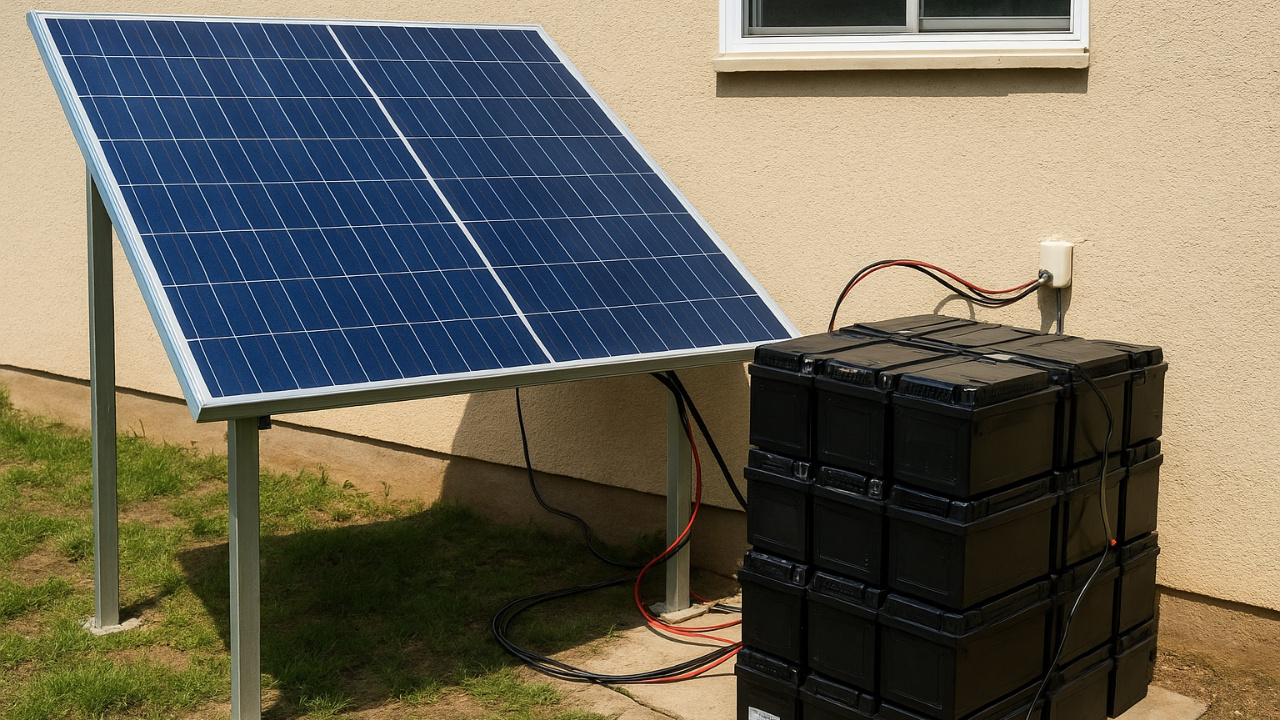

Innovative Project Reuses Laptop Batteries and Creates an Efficient Residential Solar Energy System, Reducing Costs, Electronic Waste and Expanding Energy Autonomy.
Solar energy has stopped being just a clean alternative to become a fertile ground for domestic innovation and technological reuse. A project developed independently demonstrated that discarded equipment can gain new functions and high energetic value.
The initiative, disclosed in specialized forums, draws attention by transforming old laptop batteries into a stable, economical, and durable residential solar system.
This case reveals how creative solutions, when combined with technical knowledge, can expand access to solar energy and reduce environmental impacts. Moreover, it proves that energy autonomy is not exclusive to large industrial investments and can be adapted to the reality of ordinary households.
-
World’s Largest Engie Solar Plant in Brazil Highlights Billion-Dollar Energy Waste Issue: Company Considers Batteries and Bitcoin Mining to Avoid Wasting Production

-
Over 60 Tractors Take to the Streets in Lopera as Solar Parks Compete with Olive Groves, Affecting 13,000 to 100,000 Trees According to Conflicting Reports

-
Brazil’s Vitória Airport to Launch Solar Plant Covering Area of 10 Soccer Fields, Boosting Clean Energy and Cutting Costs
-
Switzerland Converts Train Tracks into Solar Power Plants with Removable Panels to Generate Energy Without Using Additional Land


Off-Grid System Guarantees Autonomy Even Without Electric Grid
Before even understanding how the project was built, what stands out the most are its practical results. The residence equipped with the repurposed solar system remains fully functional even during outages in the public grid. Lighting, electronic equipment, and essential items continue to operate continuously, thanks to efficient energy storage.
With an approximate capacity of 56 kWh, the system is powered by 24 modern solar energy panels, connected to a bank composed of about 1,000 reused batteries. Over eight years of uninterrupted operation, no critical failures were recorded, reinforcing the reliability of the model when well-structured.
Solar Energy as an Economic and Environmental Solution at the Same Time
In addition to stability, the system brought direct savings on the electricity bill. By drastically reducing dependence on the conventional grid, monthly energy costs were virtually eliminated. This factor made the project attractive not only to technology enthusiasts but also to small entrepreneurs and families interested in reducing fixed expenses.
At the same time, the reuse of batteries prevents improper disposal of electronic waste. Materials such as lithium and other heavy metals, common in these devices, gain new useful life. In this way, solar energy fulfills a dual role: generating clean electricity and contributing to the reduction of environmental pollution.
Initiative Began with Testing and Progressive Planning
The project did not come fully formed. Initially, the creator, known in the forums as Glubux, began simple tests with electronic scrap. The goal was to assess if used batteries could still safely store charge. Each cell removed from old laptops was manually tested one by one, ensuring that only units in good condition were reused.
This process required patience and technical rigor. Defective batteries were discarded, while the approved cells were organized into standardized blocks. From the beginning, safety was treated as a priority, especially to avoid risks such as overheating or short-circuiting.
Gradual Expansion Strengthened the Solar Energy System
The initial configuration consisted of approximately 650 batteries and a limited number of solar panels. With the good performance observed in the first months, the expansion occurred in a planned manner. New panels were added, as well as more reused cells, until reaching the current setup.
The batteries were interconnected in 24-volt modules, ensuring efficient recharging even on days with lower solar incidence. This technical detail shows how solar energy, when well-sized, can maintain continuous supply even in unfavorable weather conditions.
Maintenance and Monitoring Ensure Prolonged Lifespan
Contrary to the idea that alternative systems require excessive maintenance, the model implemented proves stable over time. The secret lies in frequent monitoring. The battery blocks are regularly checked to identify possible performance variations.
Continuous screening ensures that only healthy cells remain in operation. Additionally, periodic inspections of the electrical connections prevent risks of excessive heating. The modules are installed in specific areas of the residence, away from the most used spaces, which increases safety and facilitates access for maintenance.
Financial Benefits Broaden Access to Solar Energy
Another decisive factor for the project’s success is the reduced cost. Recycled batteries cost much less than new equipment, making solar energy more accessible. This reduction in initial investment allows more people to consider off-grid solutions, even with a limited budget.
With this, the democratization of clean energy generation gains strength. Similar initiatives are already beginning to emerge in small businesses and households, inspired by the shared experience in online communities focused on technology and sustainability.
Challenges Require Specialized Technical Knowledge
Despite the positive results, working with repurposed batteries is not without risks. Improper handling can lead to serious failures, including fires. Therefore, the project emphasizes the importance of technical knowledge, organization, and strict control of electrical loads.
Correctly equalizing the charge levels of the cells is essential to avoid overloading and premature degradation. Additionally, safety and monitoring systems are indispensable to track performance over time. Thus, solar energy based on reuse proves efficient but not improvised.
Urban Sustainability Gains a New Practical Example
The experience demonstrates that electronic waste can be transformed into a stable source of clean electricity. The reuse of components that would be discarded reduces environmental impact and extends the useful life of valuable materials. At the same time, energy autonomy strengthens the resilience of households against failures in the conventional electrical system.
Renewable energy experts point out that initiatives like this help consolidate solar energy as a central pillar of the energy transition, especially in urban environments. The combination of creativity, technique, and planning appears as a decisive factor for the model’s success.
Repurposed Solar Energy Inspires New Residential Models
Over eight years, the system has proved that durability and sustainability can walk hand in hand. The absence of significant failures and the consistent performance reinforce that alternative solutions, when well executed, have long-term potential. The experience also highlights that investing in battery reuse can be a solid strategy to expand the use of solar energy in cities.
In this way, independent initiatives find space as laboratories of innovation. By sharing results and methods, projects like this help to build new pathways for the production of clean, accessible, and environmentally responsible energy.