






 Portuguese
  Spanish


Created by three high school students in Évian-les-Bains, the NauticLink won the regional stage of the 2026 Engineering Science Olympiad in Grenoble by proposing a geolocated SOS alert capable of reducing delays in rescuing divers in emergency situations.
A beacon created by three high school students promises to send a geolocated SOS in less than a minute to help divers in danger. The NauticLink won the regional stage of the 2026 Engineering Science Olympiad in Grenoble.
Divers can have rescue activated faster
The project was born at Anna de Noailles high school in Évian-les-Bains to address a diving problem: when an accident occurs tens of meters deep, phone and radio usually stay on the boat or the beach. This interval can delay rescue activation by up to forty minutes.
How the NauticLink rises to the surface
The transmitter is placed on the diver’s thigh and is activated by a cord. In an emergency situation, the activation releases a CO₂-powered diving parachute, causing the equipment to rise to the surface on its own.
-
In Somaliland’s Desert, Greenhouse Uses Sun and Seawater to Grow Lettuce, Cucumbers, and Tomatoes Without Rain: 1-Hectare Project Cools Crops, Desalinates Water, and Converts Brine into Commercial Salt

-
Trump Unveils $400 Million Boeing 747 Donated by Qatar as Temporary Air Force One Amid Boeing Delays, Sparking Debate on National Security, Costs, and Foreign Influence
-
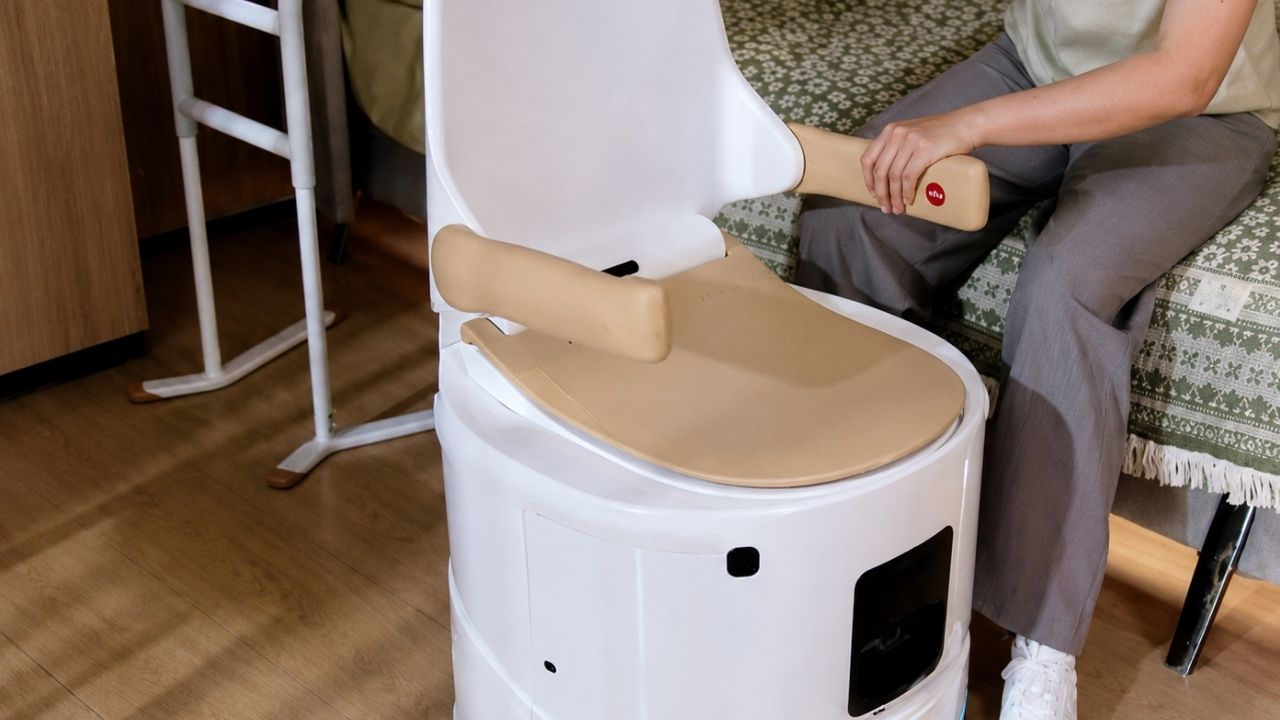
Chinese Company Unveils Robotic Toilet That Comes to You, Featuring Lidar Sensors, Voice Command, Bidet, Hot Air Drying, UV Light, and Self-Cleaning Waste Disposal
-
Rotterdam Develops Floodable Square to Absorb Nearly 2 Million Liters of Rainwater, Doubling as Sports, Theater, and Leisure Space When Dry to Combat Urban Flooding



From 40 meters deep, the ascent takes about twenty seconds. The proposal avoids complex screens and difficult-to-execute commands underwater, using a mechanical solution similar to automatic life jackets.

GPS location and automatic SMS sending
When it reaches the surface, the device activates its electronic components. An ESP32 board activates the GPS module, obtains the diver’s location, and sends the coordinates via SMS through an integrated communication module.
The system has a ten-second safety delay to reduce the risk of accidental triggers. The casing was designed in SolidWorks and 3D printed to withstand pressure at depths of up to 40 meters.

Classroom Idea with Real Use
Even without advancing to the national final due to category issues, NauticLink came in first place regionally. The idea can serve sailing, kitesurfing, windsurfing, and catamarans, enhancing safety in water sports far from the coast.
Why Are Divers in So Much Danger?
In an underwater accident, the diver may be tens of meters deep, while communication means, such as a phone or radio, are usually on the boat or the beach.
The main risk mentioned in the article is the delay in rescue activation. Without an automatic signaler, it can take up to 40 minutes before someone can call for help. In a diving emergency, this lost time greatly reduces the chance of a quick response.
In the case of NauticLink, the idea is precisely to shorten this interval: the device surfaces in about 20 seconds from 40 meters deep and sends an SOS with GPS location via SMS, without the diver needing to do anything other than pull the cord.
In other words, the danger is not just in the accident itself, but in the difficulty of quickly notifying where the diver is.





Be the first to react!