Portuguese
  Spanish


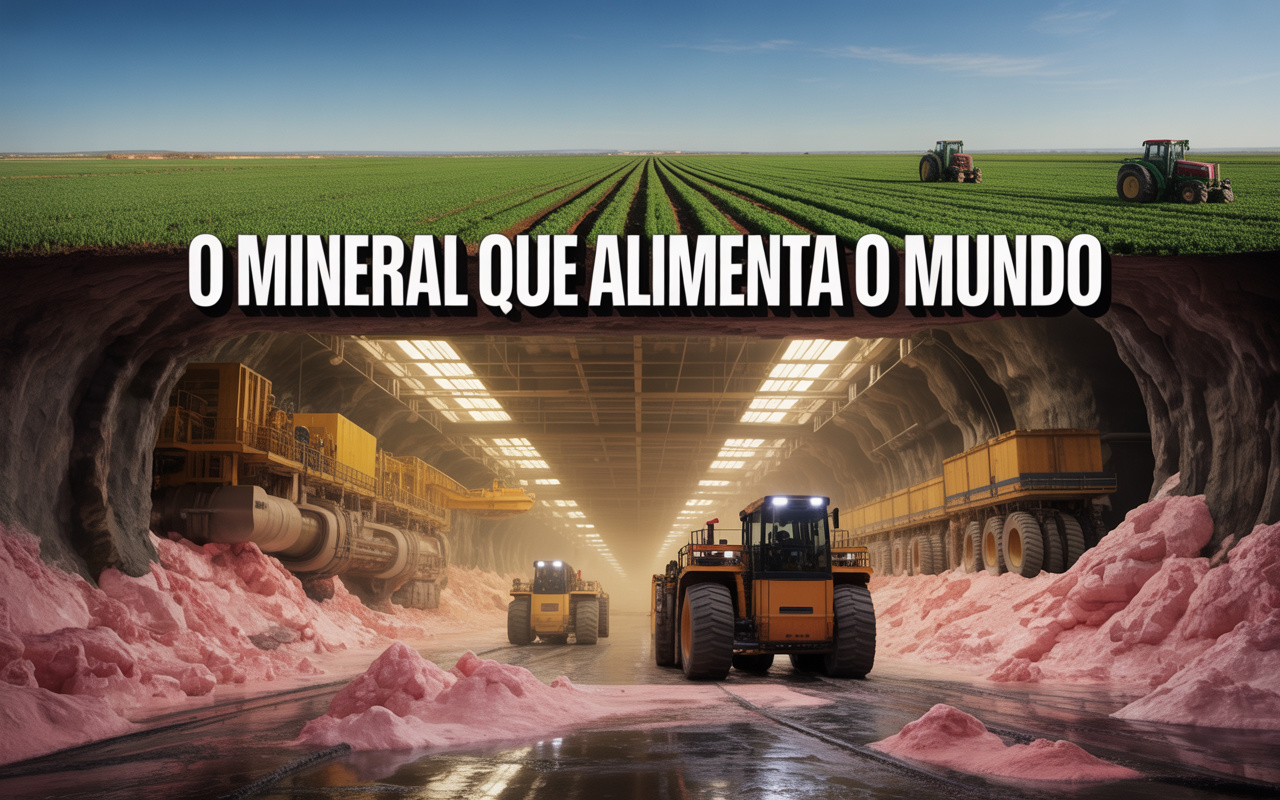


With Exports That Have Already Exceeded 10 Million Tons Per Year, Belaruskali Has Become a Key Player in Global Fertilizer Supply, Sustaining Agricultural Chains Across Various Continents.
Belaruskali, a state-owned company in Belarus founded in 1958, is among the largest producers and exporters of potash fertilizers in the world. Market data widely reported by international agencies indicate that, prior to the sanctions imposed from 2021, the company exported volumes exceeding 10 million tons of potassium chloride per year, accounting for a significant share of the global trade in this strategic input. During certain periods, Belarus represented about 20% of the world’s potassium supply, alongside Canada and Russia.
Potassium is one of the three essential macronutrients for modern agriculture, alongside nitrogen and phosphorus. Its large-scale application is directly associated with increased productivity of crops such as corn, soybeans, wheat, and rice. Belaruskali’s industrial structure, concentrated mainly in the Soligorsk region, supports a significant part of the global fertilizer supply chain.
Evaporitic Geology and the Origin of Potassium Reserves in Belarus
The reserves exploited by Belaruskali are formed by evaporitic deposits originating hundreds of millions of years ago, when ancient seas evaporated, leaving concentrated layers of mineral salts. The main mineral extracted is sylvinite, predominantly composed of potassium chloride (KCl) mixed with halite (sodium chloride).
-
French Brand Transforms 6 Million Brazilian PET Bottles into Sustainable Sneakers for Global Fashion Market

-
Abandoned Factory in Rio’s North Zone Becomes Urban Hazard with Standing Water and Debris

-
The U.S. Navy Conducts Submarine Tests in Idaho Lake to Detect Underwater Noises Hidden by the Ocean
-
British Factory Transitions from Mechanical Parts to Producing 420,000 Electric Power Units Annually, Supplying 70% of Ford’s Electric Cars Sold in Europe



These deposits are located hundreds of meters deep. In Soligorsk, mining shafts can exceed 500 meters below the surface. Underground mining requires complex systems of ventilation, drainage, and geomechanical stability.
The thickness of the mineralized layers allows for continuous large-scale operations. Mining occurs using mechanized methods, employing continuous cutting equipment that fragments the rock and transports the ore via underground belts to the hoisting shafts.
Large-Scale Underground Mining and Heavy Engineering
Belaruskali’s mining operation is structured across multiple interconnected mines linked to processing plants. The extracted ore undergoes crushing, grinding, and separation processes to concentrate potassium chloride.
The underground systems include extensive galleries supported by remaining rock pillars that ensure structural stability. Sensors monitor deformations, gas presence, and ventilation conditions.
Internal logistics involve vertical lifts capable of transporting thousands of tons per day to the surface. The raw ore is then processed in industrial facilities that use physical and chemical methods to separate impurities and meet commercial specifications.
The scale of operation allows for consolidated annual production in the millions of tons. Historical exports exceeding 10 million tons per year reflect the combined capacity of the production units, not that of a single isolated mine.
Industrial Processing and Transformation into Commercial Fertilizer
After extraction, the ore undergoes separation by flotation or crystallization, techniques that utilize differences in density and chemical properties to concentrate potassium. The final product is granulated to facilitate transportation and agricultural application.
The potassium chloride produced is marketed as potash fertilizer, essential for water regulation in plants, disease resistance, and grain formation.
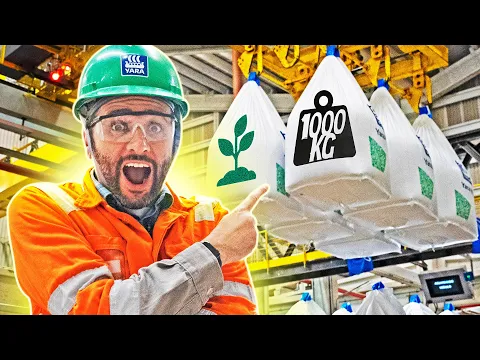
The quality of the product is monitored by industrial laboratories that track potassium content, moisture, and particle size. A significant portion of the production is destined for export via logistical corridors connecting Belarus to ports in neighboring countries.
Geopolitical Impact and Global Dependence on Potash Fertilizers
The relevance of Belaruskali surpasses the industrial aspect. The global potassium market is relatively concentrated, with few large producers dominating the worldwide supply. Canada, Russia, and Belarus are among the main players.
International sanctions imposed on Belarus have affected trade flows, altering export routes and influencing global prices. The dependence on potash fertilizers has become a strategic topic in discussions about food security.
Countries with intensive agriculture, such as Brazil, India, and China, rely on potassium imports to sustain productivity. Fluctuations in supply directly impact agricultural production costs.
Potassium has no direct substitute on a large scale. A reduction in application may compromise productivity and quality of crops. Therefore, global producers remain constantly attentive to supply conditions.
Comparative Production Scale and Position in the International Market
Although Canada leads global potassium production, with volumes exceeding 15 million tons annually in certain years, Belarus has historically maintained production and exports above 10 million tons.
Belaruskali has established itself as one of the largest individual companies in the sector. The installed capacity is distributed among multiple mines and processing plants.
The international potassium market is influenced by long-term contracts, bilateral negotiations, and trade agreements. Belarus’s strategic position has allowed Belaruskali to establish commercial relationships with various emerging agricultural markets.
Technical and Environmental Challenges of Deep Mining
Underground mining in evaporitic deposits presents challenges such as water infiltration control and cave stability. Structural collapses are a constant risk if support pillars are compromised.

Furthermore, processing generates saline waste that needs to be managed appropriately. Tailings piles and storage dams require rigorous environmental monitoring.
The energy consumption of underground operations includes ventilation, transportation, and industrial processing. Energy efficiency is a relevant factor in the competitiveness of the final product.
Food Security and Industrial Interdependence
Potash fertilizer is an essential component in modern agriculture. Agronomic studies demonstrate that balanced application of nitrogen, phosphorus, and potassium significantly increases yield per hectare.
Belaruskali’s production integrates an industrial chain that connects deep mining in Eastern Europe to farms in South America, Asia, and Africa. This interdependence highlights how underground infrastructure in a single country can influence food availability in multiple regions.
The volatility of the fertilizer market, especially during periods of geopolitical crisis, reinforces the strategic importance of these industrial complexes.