Portuguese
  Spanish


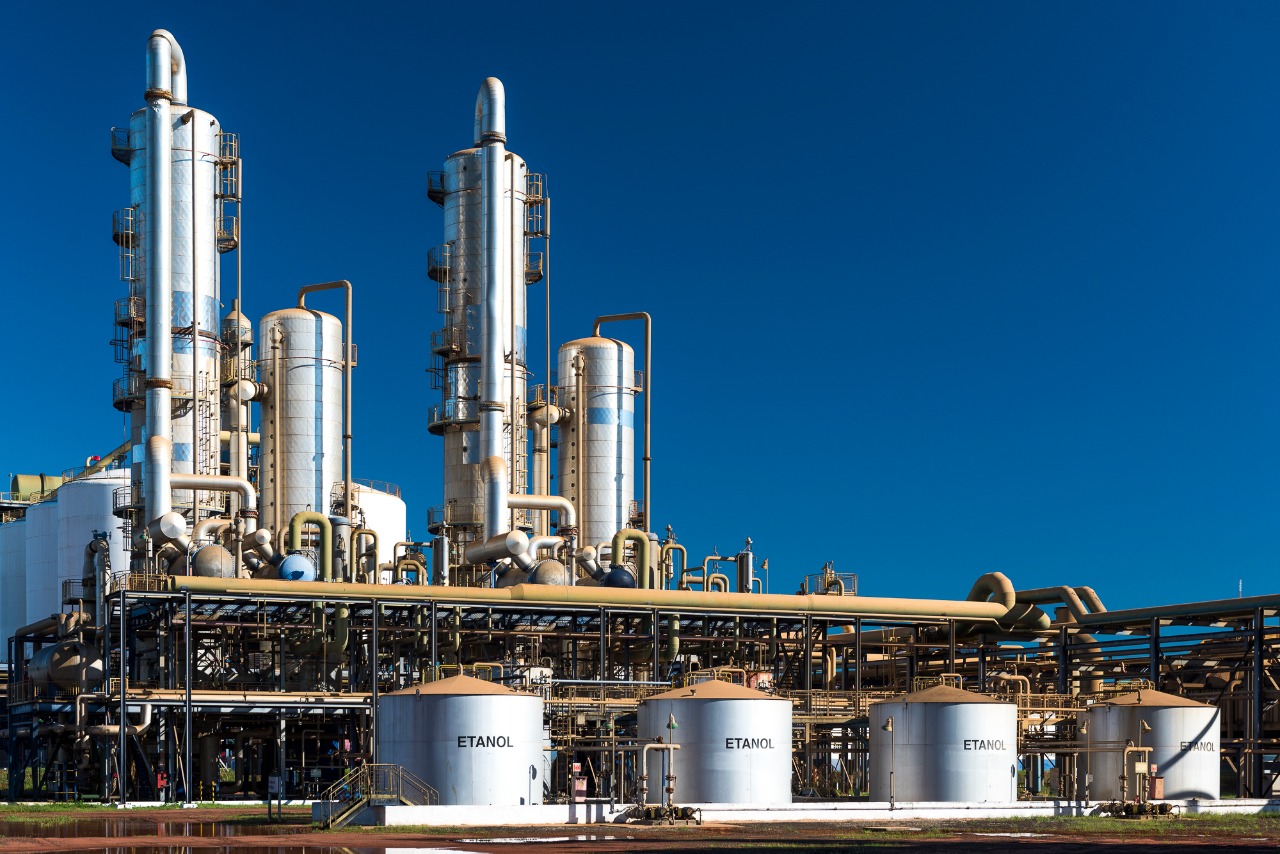


The Plant, Which Covers 192 Thousand Square Meters, Received Investment of R$ 2 Billion and License to Produce 880 Million Liters of Corn Ethanol Per Year
FS announced the official inauguration of its newest unit, located in the city of Sorriso, in the state of Mato Grosso. With an investment of about R$ 2 billion, the Sorriso Unit generated around 4,000 indirect jobs during the construction phases and currently employs 231 people directly. The total production capacity of the corn ethanol plant is 880 million liters of ethanol per year; 212 thousand tons of corn meal; 28 thousand tons of corn oil and 190 thousand MWh per year of energy generation. Also, read this news: R$ 250 million will be invested in a corn ethanol plant in Mato Grosso, becoming the first plant in Brazil to have a negative carbon footprint
- Energy Market Generated from Waste Expects Federal Government to Allocate More Energy in Upcoming Auctions
- Federal Government and Sugarcane Industry Want to Promote Ethanol as an Alternative to Electric Cars
- Stellantis Partners with TIM and Accenture; Jeep Factory in Goiana/PE Will Be Equipped with 5G Technology
- After Ford Announces the End of Troller in Brazil, Americans Discover That the Multinational Vehicle Manufacturer Was Preparing Troller with Ranger Raptor Engine and Mustang Transmission
- Dell and iFood Offer Free Online Courses in Technology with Certificates at the End of the Course
The Construction of the Largest Unit in the State of Mato Grosso
“We are very excited to inaugurate our newest and largest unit, located in a strategic region for FS. We began our operations in June 2017, with the capacity to produce 275 million liters of ethanol per year. Today, with the two largest 100% corn ethanol plants in the country, in Lucas do Rio Verde and Sorriso, in Mato Grosso, we already have over 1.4 billion liters of annual production capacity,” says FS CEO, Rafael Abud. “Our investment plan includes four more industrial plants by 2026, reaching a production capacity of approximately 5 billion liters of ethanol per year,” Abud adds.
The corn ethanol plant project was completed in three phases: the initial phase consisted of building an area with a production capacity of 265 million liters of ethanol per year, with investments of around R$ 700 million. The second phase involved investments of R$ 300 million and doubled the plant’s production capacity. In the final phase, the investment reached R$ 1 million.
-
Flower strips in Brazilian farms become pest control strategy, attracting predator insects and reducing the need for chemical pesticides.

-
Brazilian Startup Turns Coffee Grounds into Plant-Based Leather, Cutting Water Use by Over 50 Times for High-Impact Sustainable Fashion
-
Yara acquires Texas ammonia plant for $1.3 billion, boosting global fertilizer competition with 1.3 million tons annual capacity

-
Eco Invest Auction Aims to Unlock $10 Billion in Investments, Focusing on Green Fertilizers, Critical Minerals, Batteries, and AI for Clean Industry in Brazil


More Details About the New Corn Ethanol Plant in Mato Grosso
The new plant is an efficient unit from a strategic point of view for FS, as it increases proximity to suppliers in the region and broadens business opportunities. In addition to having the capacity to store 600 thousand tons of corn, it processes 2.7 thousand tons of the grain daily. Maintaining this average, it could exceed the mark of 2 million tons processed this harvest year.
From an energy perspective, the efficiency comes from the use of biomass from the new unit, sourced from a 30 thousand hectare eucalyptus forest, which is part of FS’s forest enhancement incentive program. Combining the two operating units (Lucas do Rio Verde and Sorriso, both in Mato Grosso), they will end 2021 with an annual production capacity of 1.4 billion liters of ethanol, 1.2 million tons of DDGs, 40 thousand tons of corn oil, and 415 thousand MW of electricity. The processing capacity increases to 3.2 million tons of corn per year.
Also Check Out: R$ 400 million in investments are expected for a new ethanol and energy plant in Bahia. 8 thousand jobs may be generated at the site
The government of the State of Bahia signed a memorandum of understanding with Usina São Francisco to install the third sugar-alcohol plant in the Agroindustrial and Bioenergy Pole of the Médio São Francisco. The new venture will be dedicated to producing anhydrous and hydrated ethanol, animal feed, and electricity. Initial investments in the new plant may reach R$ 400 million, and it is expected that 8,000 jobs will be generated in the state of Bahia.
João Leão, Vice-Governor of Bahia, stated that the goal is to create 11 plants with production capacity to supply all of Bahia. People who always fuel their cars with automotive alcohol will now fuel them with ethanol produced directly in the state. He also emphasizes that the plan is to stop importing ethanol from other states and become competitive in the market, in addition to developing the region where the municipalities hosting this project are located: Barra, Muquém do São Francisco, and Xique-Xique.
Nelson Leal, head of SDE, says that the state of Bahia has incredible agro-industrial development potential. Leal also states that the memorandum of understanding signed with the plant strengthens the implementation of the Agroindustrial Pole and says that he visited the Bahian municipality of Barra, learning about the construction of the first plant in the Pole – Serpasa – and was impressed with the quality of sugarcane grown in the region for the production of sugar and alcohol. Nelson concludes by saying that they will create jobs, income, and revenue for the municipalities and move forward to overcome the crisis.