Portuguese
  Spanish


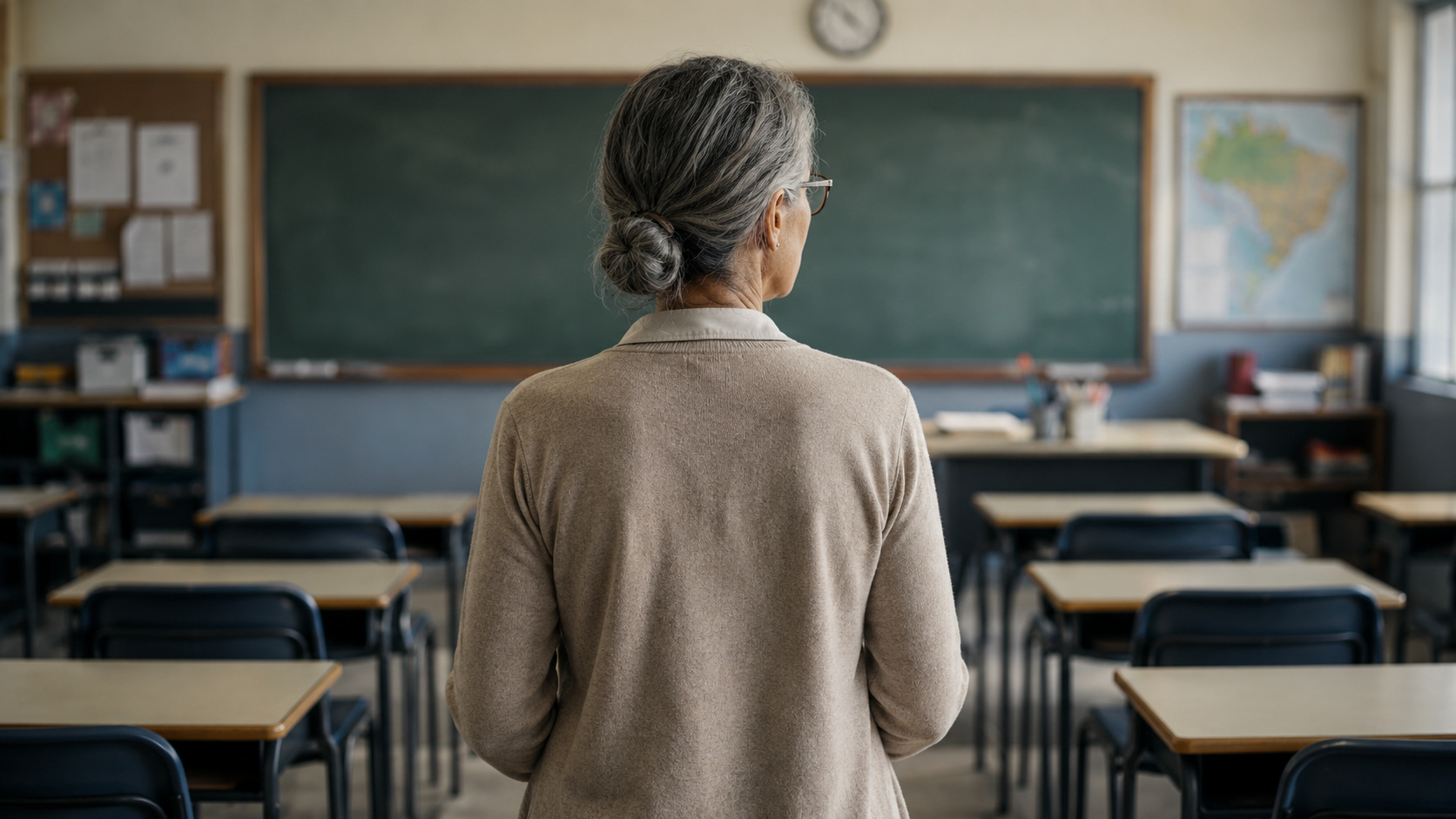

Study indicates that Brazil may face a deficit of 235,000 teachers by 2040, with declining interest in the career and aging of the category.
Brazil may face one of the biggest educational crises in its history in the coming decades. A study by the Instituto Semesp, released and echoed by the Fundação Carlos Chagas (FCC), projects that basic education may register a deficit of up to 235,000 teachers by 2040, if current trends in training and entry into the teaching career are maintained. The warning is not related to a lack of schools or students, but to the growing difficulty of finding people willing to pursue the profession. The problem involves low salaries compared to other higher-level careers, aging of the teaching staff, early abandonment of the profession, and reduced interest of young people in teaching courses.
The projected deficit of 235,000 teachers could affect millions of basic education students
According to the projection by Instituto Semesp, Brazil will need approximately 1.97 million teachers active in 2040 to maintain the current ratio between teachers and students. However, if current trends continue, the country may have only 1.74 million teachers, creating an estimated gap of 235,000 professionals. This scenario represents one of the greatest challenges ever identified for Brazilian basic education.


The projection was developed based on national educational data and considers both the future demand for students and the evolution of the number of active teachers over the coming years.
-
For nearly 35 years, a famous luxury hotel in the United States concealed a secret bunker with a 25-ton door, over a thousand bunks, a dining hall for 400, and space designed to save the entire Congress from nuclear war.

-
China Invested 17 Billion Yuan to Build a Desert City with Museums and Theaters for 1 Million, but Only 28,000 Moved to Kangbashi Initially

-
Mother and Daughter Convert Small Garage into Full Apartment to Save Money and Stay United
-
Woman Leaves Restaurant Job to Become a Builder in Brazil, Launches Her Own Construction Brand “Construcida”




The disinterest of young people in the teaching career appears as one of the main factors of the crisis
One of the most worrying aspects identified by researchers is the difficulty of attracting new professionals to teaching.
The survey shows that young people are showing less and less interest in teaching degree courses. While other areas of higher education have seen strong expansion over the past decade, the training of new teachers has not kept pace.
Fundação Carlos Chagas highlights that factors such as working conditions, social perception of the profession, remuneration, and negative school experiences directly influence students’ decisions not to pursue a teaching career.
Furthermore, many teaching graduates end up migrating to other areas after graduation, further reducing the number of new teachers available for basic education.
The number of young teachers has plummeted while the teaching staff ages rapidly
The data shows an important change in the age structure of the profession. Between 2009 and 2021, the number of teachers up to 24 years old fell by approximately 42.4%, dropping from about 116,000 to 67,000 professionals. At the same time, the participation of teachers close to retirement has increased significantly. This process creates a generational replacement problem.
While thousands of teachers leave the classrooms due to retirement or career change, the number of young people willing to fill these positions is not growing at the same pace.
Experts point out that the result could be increasing pressure on public and private education systems over the coming decades.
Physics, chemistry, mathematics, and biology appear among the historically most vulnerable areas
Although the problem affects virtually all basic education, some subjects are considered especially critical.
Studies by the Ministry of Education have already pointed out historical difficulties in meeting the demand for teachers of Physics, Chemistry, Mathematics, and Biology, areas that require specific training and traditionally have a lower supply of professionals.

In certain regions, schools resort to professionals trained in different areas to temporarily fill the lack of specialists, a situation that can compromise the quality of teaching in these subjects.
The problem becomes even more relevant because these areas are directly linked to the scientific and technological education of students.
Remuneration remains one of the most cited factors to explain the exodus from the profession
Various studies indicate that teacher remuneration remains below that observed in many careers requiring higher education.
Experts from the Faculty of Education at USP highlight that professional devaluation directly contributes to young people’s disinterest in teaching. The perception of lower salaries compared to other professions with equivalent education reduces the attractiveness of the career.
Besides remuneration, teachers frequently cite excessive administrative work, disciplinary challenges, insufficient infrastructure, and emotional exhaustion as factors contributing to leaving the profession.
This set of factors helps explain why the training of new teachers does not keep pace with the future demand of the educational system.
The problem can directly impact Brazil’s economic development
The shortage of teachers does not only affect schools and students. The quality of basic education directly influences workforce qualification, economic productivity, technological innovation, and the country’s competitiveness in the long term.
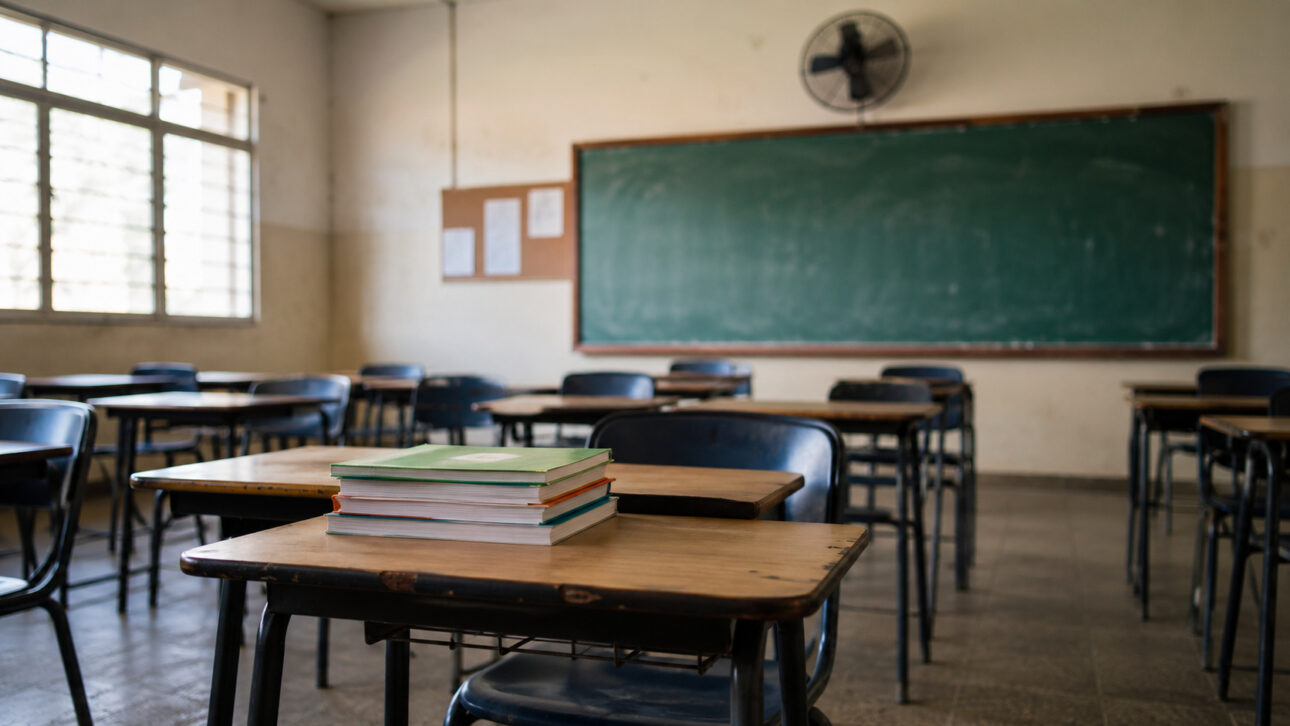
Without enough teachers, it becomes more difficult to improve educational indicators, expand learning in mathematics and sciences, and prepare professionals for strategic sectors of the economy.
Therefore, experts consider the issue a national concern that goes beyond the boundaries of education.
Brazil still has time to avoid a teacher blackout, but the challenge grows each year
The studies do not claim that the deficit of 235,000 teachers is inevitable. It is a projection based on maintaining current trends. Changes in policies for teacher appreciation, improvement of working conditions, incentives for training, and attraction of new professionals can alter this scenario over the coming years.
Even so, the numbers show that the challenge has already begun. The combination of an aging category, low entry of young people, and retention difficulties creates a problem that tends to grow if there are no measures capable of making the career more attractive.
If the projection is confirmed, Brazil may face not only a shortage of teachers but a scarcity of professionals precisely in the subjects responsible for training the next generation of scientists, engineers, doctors, technicians, and researchers in the country.