






 Portuguese
  Spanish


Paula and Marcelo Hofmeister transformed knowledge acquired outside the property into tools for management, sustainability, technology, and planning to strengthen Estância Coronilha
The story of siblings Paula and Marcelo Hofmeister shows how leaving the countryside can represent an important step in rural succession.
As children, the two left the family property in Pedras Altas, Rio Grande do Sul, to continue their studies in Pelotas.
Years later, they began applying professional knowledge in the management of the farm, which includes livestock, soybeans, vineyards, wines, and sparkling wines.
-
Raised in the countryside, she worked as a domestic worker, saved R$ 2,500 from maternity leave, and returned to the family farm in Paraíba; Flávia Santos now leads the production of 300 tons of food per year.

-
Amazon woman turned waste that would go to the landfill into compost, restored a devastated site in Pará, and created an organic production that has already recycled about 2.5 million kg of waste.

-
After 25 years away from the hinterlands of Ceará, a farmer returned to the land he had abandoned, tripled the corn harvest in the semi-arid region, and saw 250 producers knocking on his door to discover the method that revived the crop.

-
In the interior of Tocantins, a former shopkeeper left the counter of the small market, ventured into the Cerrado, and transformed buriti, pequi, and cagaita—fruits that used to rot on the farm floor—into a pulp factory registered with the Ministry of Agriculture, which now supplies school meals and has become a showcase for the FAO/UN.


According to the Confederation of Agriculture and Livestock of Brazil, the siblings’ journey was featured in a report published in October 2024.
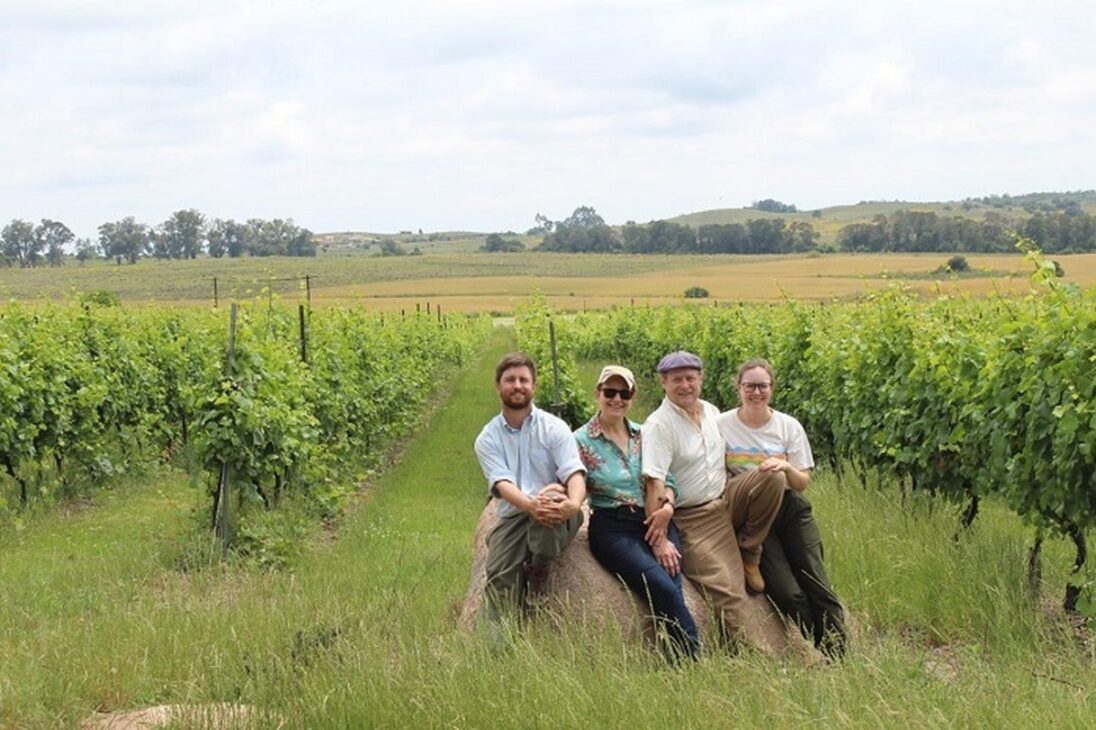
Childhood on the property created a bond with rural work
Paula and Marcelo grew up accompanying their parents and grandparents in the activities of Estância Coronilha.
Marcelo left the countryside at the age of 11. Paula, on the other hand, was 10 years old when the siblings moved to Pelotas.
Even with the move, the connection with the family property was maintained.
Above all, the parents encouraged the children to study, experience other realities, and choose their own professions.
Thus, rural succession was not treated as an obligation.
Experience in the city, therefore, began to serve as preparation for a more technical participation in the family business.
Farm combines livestock, soybeans, and wine production
Estância Coronilha maintains different productive activities.
Currently, the family works with cattle and sheep farming. In addition, they participate in operations related to the production and storage of soybeans.
Part of the property was also allocated to the cultivation of European vines.
The grapes gave rise to Vinhedo Pedras Altas, responsible for the production and commercialization of wines and sparkling wines.
Consequently, the farm reduced its dependence on a single activity.
The diversification, at the same time, created new revenue possibilities and preserved practices developed by previous generations.
Siblings built careers linked to agribusiness
Paula graduated in Environmental Engineering.
Subsequently, she started working as an environmental advisor and coordinator of an environmental committee linked to the Federation of Agriculture of Rio Grande do Sul.
Marcelo, however, graduated in Business Administration.
Additionally, he gained experience in financial management in agribusiness and completed a two-year exchange in New Zealand.
Later, he began working in a consultancy dedicated to the management of agricultural properties and companies.
Thus, although they followed different paths, the two remained connected to the farm’s needs.

Technology allows management even from a distance
Physical distance did not prevent Marcelo from participating in the management of Estância Coronilha.
Remotely, he started to monitor cash flow, balances, investments, and financial decisions.
Paula, on the other hand, remained closer to environmental and productive activities.
Strategic decisions began to be discussed together with the parents.
In this process, digital tools facilitated communication and monitoring of results.
Therefore, technology allowed the siblings to maintain their careers and, simultaneously, collaborate with the property.
Return during the pandemic increased participation on the farm
During the pandemic, Marcelo temporarily returned to Estância Coronilha.
In 2020, he joined the CNA Jovem Program and developed a financial education project for rural families.
The proposal taught producers to separate personal and business expenses.
Additionally, the project addressed the formation of emergency reserves and investment organization.
Subsequently, the initiative was among the ten finalists of the program.
Paula also participated in CNA Jovem.
Her project dealt with the relationship between environment, agribusiness, and renewable energy sources.
In 2019, she was among the three highlights of the edition and participated in a trip to Silicon Valley, in the United States.
Knowledge acquired in the city strengthened rural succession
The academic training and professional experience of the siblings began to directly support the planning of the property.
Financial management, sustainability, innovation, and technology were incorporated into family decisions.
Thus, the story shows that leaving the countryside to study does not mean abandoning one’s roots.
On the contrary, the knowledge obtained outside the farm can help modernize activities, organize finances, and prepare for continuity between generations.
Do you believe that allowing young people to study and build experience outside the countryside can strengthen rural succession and transform family properties into more modern, sustainable, and diversified businesses?


