Portuguese
  Spanish


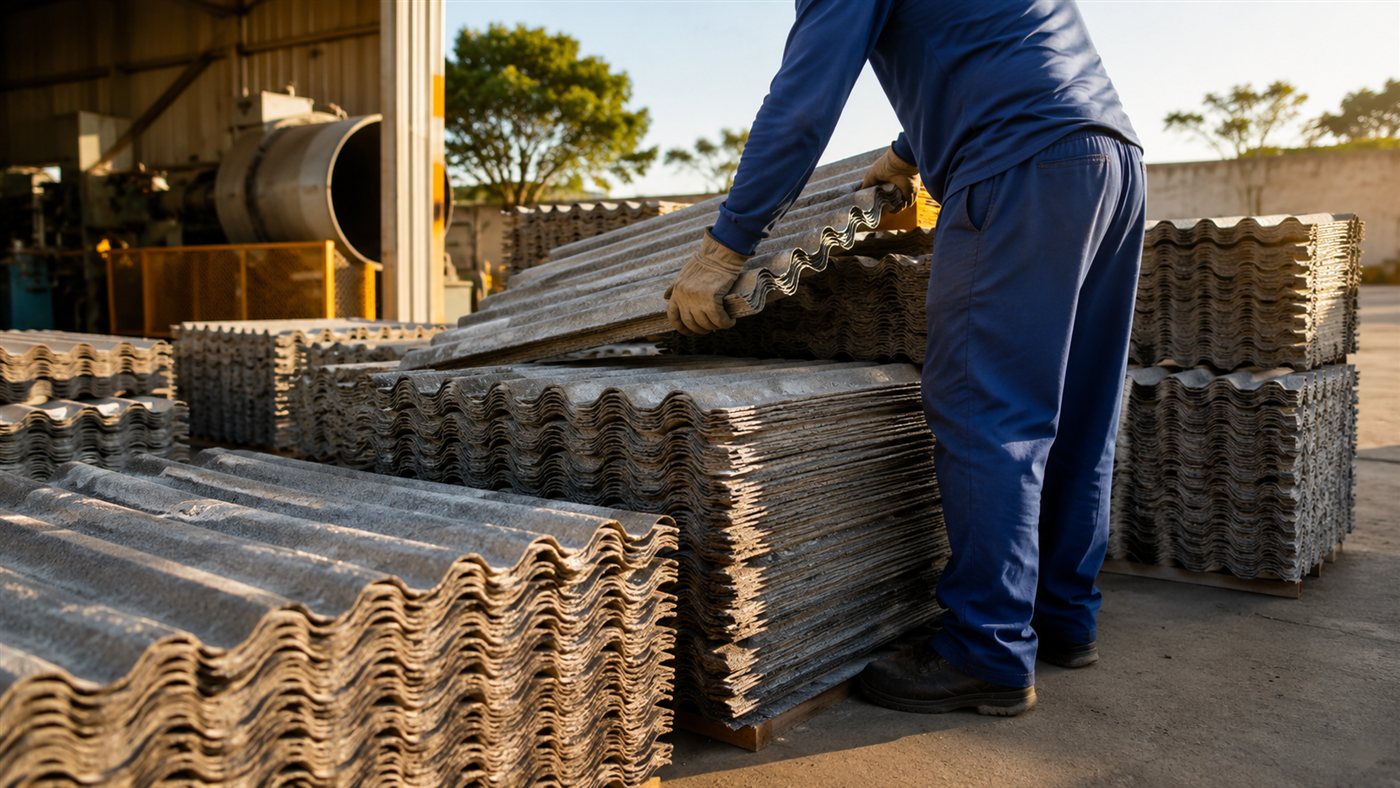

The report from Rádio UPF shows the line that separates paper, aluminum, and plastic from packaging, presses the superheated material, and delivers tiles with a guarantee against cracking and infiltration
A tile that promises to last 100 years without cracking, breaking, or letting water in, made from the waste that everyone throws away after breakfast. According to Rádio UPF, in a report published in August 2016, the technology had just arrived in Passo Fundo, in Rio Grande do Sul, at a factory that transforms carton packages of milk, juice, tomato sauce, and condensed milk into tiles.
The business model starts by paying for the trash. The factory bought the waste at R$ 200 per ton from a São Paulo company that extracts the material from the packaging, as Rádio UPF records in the visit to the production line. At the time of the report, the unit in Rio Grande do Sul had been operating for just over 2 months and was the only one in the state in the segment.
From household waste to raw material: R$ 200 per ton
The tile’s raw material is in any refrigerator. According to Rádio UPF, the pile that looks like shredded paper in the factory is the waste from carton packages that everyone consumes in one way or another, the multilayer package that holds milk, juice, and sauce.
-
Affordable Housing Project in Brazil’s Mato Grosso Aims for 700 Deliveries and $34 Million in 2026, Outpacing Major Developers in High-Demand Areas

-
Brazil’s Largest Port to Accommodate Bigger Ships by October as Ibama Approves Non-Explosive Removal of Hidden Rocks and Sediments
-
Mexico Develops 3D-Printed Concrete from Corn Waste, Cutting Emissions by 70% and Reducing Construction Waste by 90%
-
Traditional Mortar to Decline by 2026: ACIII-E Solution for Large Porcelain Tiles Offers Better Adhesion and Reduces Risk of Loose Pieces in Floors and Facades


What looks like trash is an engineering sandwich. The carton package combines paper, aluminum, and polyethylene in layers, and it is precisely the aluminum and plastic duo from the inner part that gives the tile its properties, as Rádio UPF explains step by step. The paper goes to other recycling destinations, and the milk carton completes the cycle: it starts by protecting food, ends by protecting houses.
How the milk carton becomes a tile: trommel, centrifuge, and press
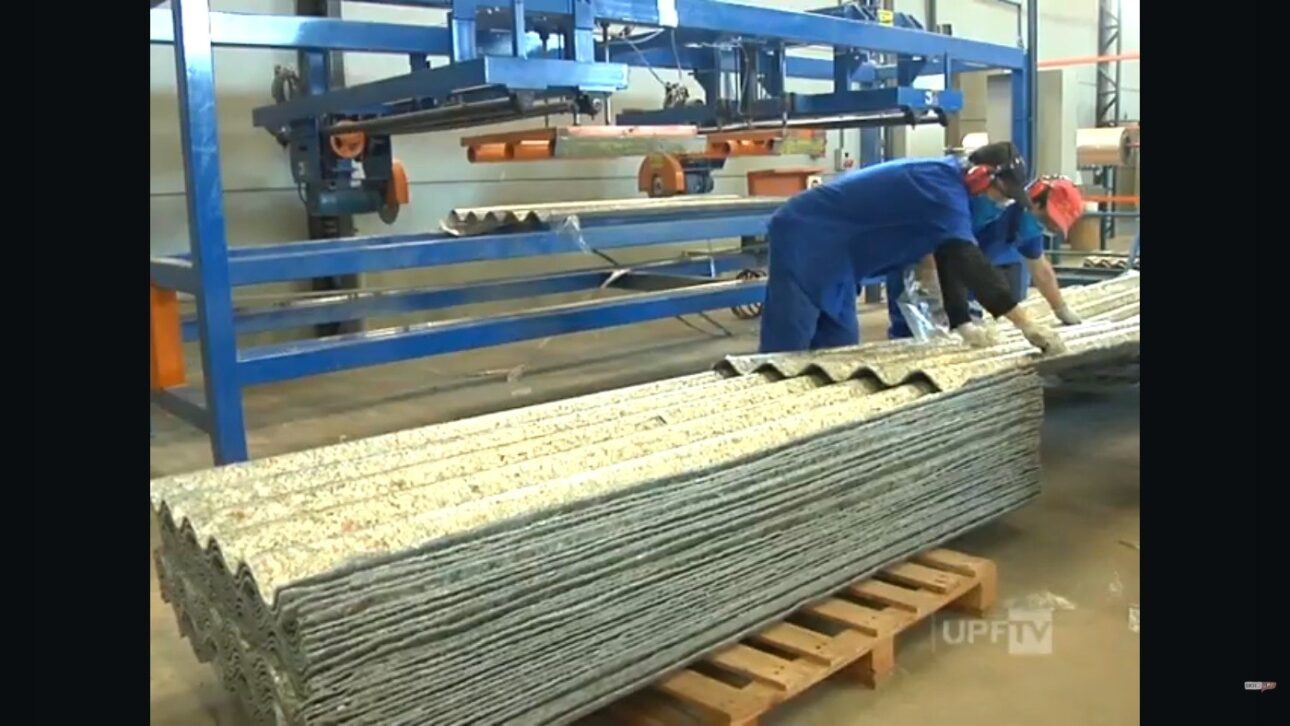
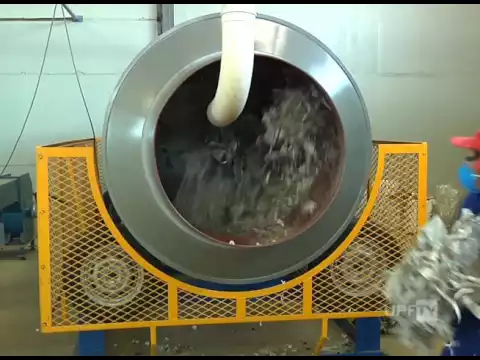
The production line even borrows a mining machine. According to the Rádio UPF channel on YouTube, it all starts with the trommel, the same equipment used in mines for gold separation, which disaggregates and separates the waste from the packaging, and then moves to the centrifuge, where the paper is finally detached from the aluminum and polyethylene.
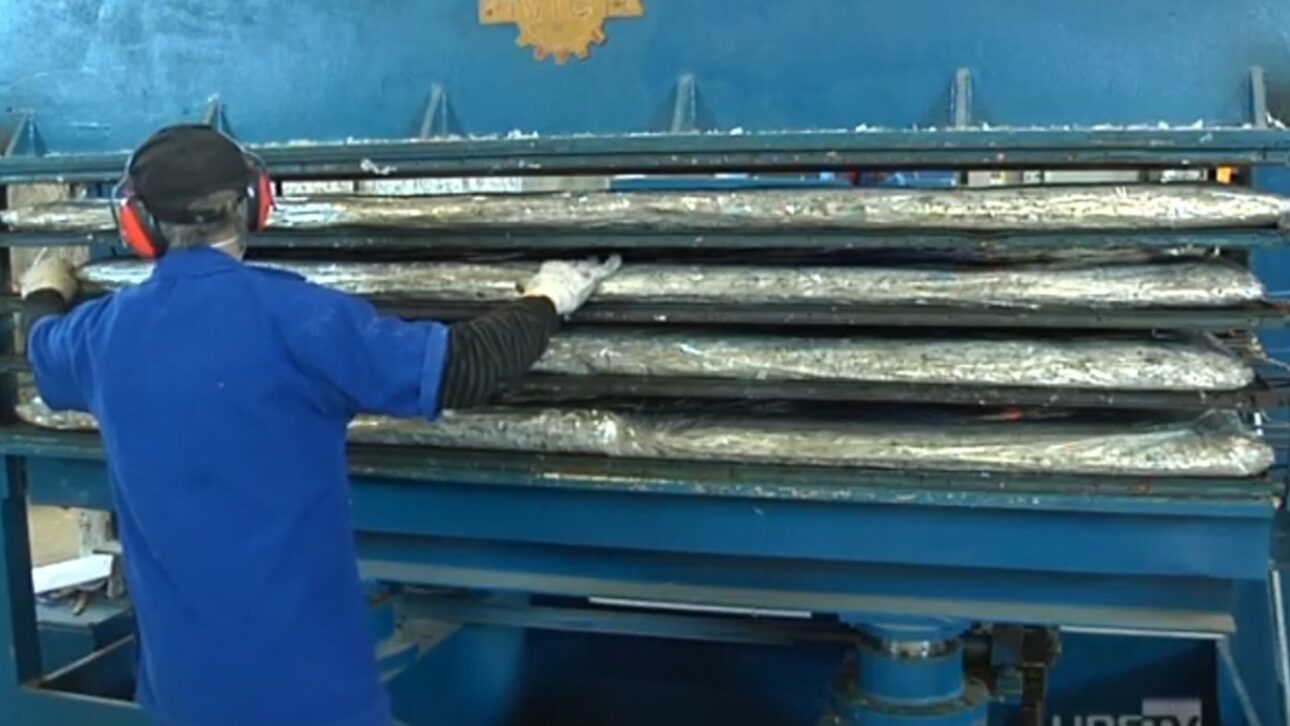
From then on, it’s power and temperature. The material is placed in a mold that marks the correct amount, pressed, superheated, and then cooled for about 40 minutes, in a procedure done by 2 machines that produce 8 tiles at a time, as Rádio UPF details. The tile gains its traditional shape in the press and is only then cut to the right size, ready for the roof.
120 tiles per day, 8 per hour, 6 millimeters
The operation numbers were debut figures, but they already had ambition. According to Rádio UPF, the factory produced 120 tiles per day, with a thickness of 6 millimeters, at a pace of 8 tiles every hour, within the sustainable, environmental, and economic tripod.
The growth goal was outlined. The plan was to reach 3,000 tiles per month by 2017 and, if demand required, double that production, according to Rádio UPF in the partners’ statements. The catalog was also set to grow: besides tiles, fencing, and ridge caps, the material allows for advertising boards, traffic signs, furniture panels, and, depending on the thickness, even truck bodies.
100 years of life proven by IPT
The century promise is not a salesman’s bluff. According to Rádio UPF, the commercial guarantee of the tiles is 5 years, but the durability of 100 years was proven in tests conducted by the Institute for Technological Research, the IPT, and the Center for Characterization and Development of Materials, the CCDM, both in the state of São Paulo.
The performance goes beyond longevity. The tile is resistant to hail, flexible, has good acoustics and thermal condition, and withstands more than 150 kg of force per meter, as Rádio UPF enumerates, with one of the partners classifying the product as the highest quality among tiles, both for its thermoacoustic capacity and durability. For Southern Brazil, a land of storms with hailstones, the hail test is worth gold.
13 kg and R$ 57: the tile benchmark
The product has the weight and price of a big player. According to Rádio UPF, each sheet of tile weighs 13 kg and cost R$ 57 at the time of the report, values that put it in competition with conventional fiber cement and ceramic tiles by the criterion that matters: cost per decade of useful life.
The back-of-the-envelope calculation favors the recycled material. A tile with a century of proven durability dilutes its own price over generations of use, while the competitor that cracks or leaks demands maintenance and replacement, the central economic argument of the product. The buyer pays for the roof once and, if the IPT tests are correct, never again.
It is worth measuring what the 13 kg mean in practical construction. The recycled sheet is heavier than the thin fiber cement tile and much lighter than the equivalent meter of assembled ceramic tile, which requires a common wooden structure, without special reinforcement. The thickness of 6 millimeters, combined with the flexibility of polyethylene, is what allows the piece to absorb the impact of hail by bending instead of shattering, unlike the behavior of traditional rigid tiles.
The idea that was born during a walk in 2013
Every factory has its origin story. According to Rádio UPF, the idea arose about 3 years before the report, when one of the partners was walking with his partner Leonel and discovered that carton packages were simply discarded, and remembered seeing something on TV about reuse.
From the sidewalk to the warehouse was a path of method. The duo sought out the packaging manufacturer, conducted a market and economic feasibility study, added several entities to the project, and after proving on paper that the idea was viable, sought an investor partner, as Rádio UPF reports. It’s the classic script of interior industrial entrepreneurship: a banal observation, a stubborn question, and the patience to validate before investing.
The market: local resistance and factories selling everything
The new product faced the natural skepticism of the consumer. According to Rádio UPF, the demand for tiles in the Passo Fundo region was very high, but the local market still resisted due to not knowing the material, a challenge for any innovation that reaches the counter.
Examples from outside gave confidence to the partners. Factories in the same segment in Paraná and São Paulo sold almost all their production, some with orders queued for 30 to 60 days, as Rádio UPF reports, and there were units also in Taió and São Domingos do Sul. The entrepreneurs’ reading was simple: the product had already proven it sells, it was just a matter of time for the gaucho consumer to know it.
Work that resocializes: inmates on the line

The factory also carried a social project. According to Rádio UPF, the team had 5 employees and was going to double to 10, with 5 inmates from the semi-open regime joining the production team.
The detail changes the size of the story. The same line that diverts packaging from the landfill starts to offer a professional restart to those serving sentences, adding the social dimension to the environmental and economic tripod that the partners mention in the report. Roof that protects the house, waste that becomes income, and work that rebuilds a path, all in the same press.
The report shows the trommel, the centrifuge, the press, and the ready tiles, with the partners’ talks about market and goals.
The milk carton tile from Passo Fundo is proof that serious recycling is not a symbolic gesture: it is an industry, with institute testing, guarantee, and a queue of orders. Tell us in the comments: would you cover your house with recycled packaging tiles?