






 Portuguese
  Spanish




In A Revolutionary Discovery, Scientists Discover Metal Capable Of Self-Healing, Opening Doors To A New Era Of Engineering. American Researchers, While Studying Metallic Resistance, Observed For The First Time A Piece Of Platinum, Only 40 Nanometers Thick, Heal Cracks Autonomously, Without External Intervention. Published In The Prestigious Journal Nature, The Study Surprised Scientists Who Are Still Trying To Understand How This Phenomenon Works.
During The Experiment, The Tiny Piece Of Platinum Was Subjected To Repeated Stresses In A Transmission Electron Microscope, Being Stretched 200 Times Per Second. This Movement Caused Cracks Known As “Fatigue Damage”, A Form Of Wear Caused By Stress And Constant Movement. Under Normal Conditions, These Cracks Progress Until They Cause Failures In Metal Structures Or Components. However, To The Surprise Of The Researchers, After 40 Minutes, The Metal Began To Heal Autonomously, Challenging Established Concepts In Engineering.
New Era Of Engineering With The Discovery Of The Metal That Heals Itself
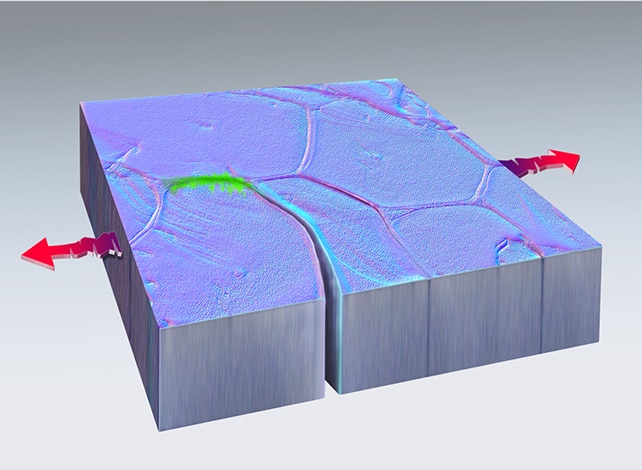
Brad Boyce, A Materials Scientist Leading The Study, Expressed Surprise At Witnessing This Behavior In The Metal. “It Was Absolutely Amazing To Observe This First-Hand,” Reported Boyce. He And His Team Believe That If This “Self-Healing” Can Be Understood And Controlled, The Discovery Could Mark The Beginning Of A New Era Of Engineering, With Applications Ranging From Bridges To Motors And Electronic Devices, Increasing The Durability And Resilience Of Metal Structures.
In The Field Of Metallurgy, The Trend Is To Design Materials That Prevent Or Slow Down Crack Growth, As It Is Assumed That The Formation Of Cracks Is Irreversible. However, This New Observation Opens The Possibility Of A Completely Different Approach. “The Premise That Fatigue Cracks Can Heal Autonomously In Metals Challenges The Most Fundamental Theories About How Engineers Design And Assess Fatigue Life In Structural Materials,” The Authors Of The Study On The Self-Healing Metal Claim.
-
While the World Opens New Airports and High-Speed Trains, Brazil Rushes to Complete Projects Stalled for 40 Years

-
Brazil Invests in Massive Waterway to Transport Soybeans by Barge, Reducing Costly Truck Reliance
-
Bridge Rebuilt in Just One Year Reconnects Two Brazilian States
-
Custom Furniture Costs in Brazil Expected to Range from $350 to Over $1,450 per Square Meter by 2026, with Kitchens, Closets, and Laundries Highlighting the Impact of Premium Features


Especially Promising Discovery
A Possible Explanation For The Phenomenon Is A Process Known As “Cold Welding”, Where Very Close Metal Surfaces Can Join At Room Temperature, Due To The Entanglement Of Atoms. Although This Phenomenon Is More Common Under Specific Conditions, The Fact That It Occurred At Room Temperature During The Experiment On The Metal Makes The Discovery Especially Promising.
Michael Demkowicz, A Member Of The Team And A Scholar In The Field, Had Already Raised This Possibility In 2013 But Only Recently Managed To Observe It. According To Him, This Discovery May Encourage The Scientific Community To Explore The Extent To Which This “Self-Healing” Is Applicable To Conventional Metals Under More Common Conditions, Such As Outdoors.
As New Investigations Are Conducted To Deepen The Understanding Of This Metal, The Discovery Serves As A Milestone In The Science Of Materials. “My Hope Is That This Discovery Inspires Researchers To Consider That, Under The Right Circumstances, Materials Can Do Things We Never Expected,” Concluded Demkowicz.




O alumínio já faz isso há anos por isso são usados nos aviões…
É aquela velha retórica, as leis subatômicas que ainda não dominamos já fazem parte e tudo que existe, e é utilizado na prática muitas vezes, e ninguém se pergunta como funciona, só sabe que funciona, mas aí é preciso entender direito e abrir a mente para estes fenômenos de emaranhamento de partículas, super posição, sem medo de ter que reescrever a ciência. O alto de evolução tecnológica daqui pra frente, com IAs e novas tecnologias vão dar um salto absurdo nos próximos anos.
Descoberto um pedaço de Transformes.
E realmente impressionante,incrível e maravilhoso saber que isto existe, antes pra mim isso era praticamente impossível,”só coisa de filme ” agora ouvindo essa informação, acredito que vai da pra melhorar muitas coisas, será algo que revolucionara muito a infraestrutura metálica !