





 Portuguese
  English
  Spanish
  3 min of reading


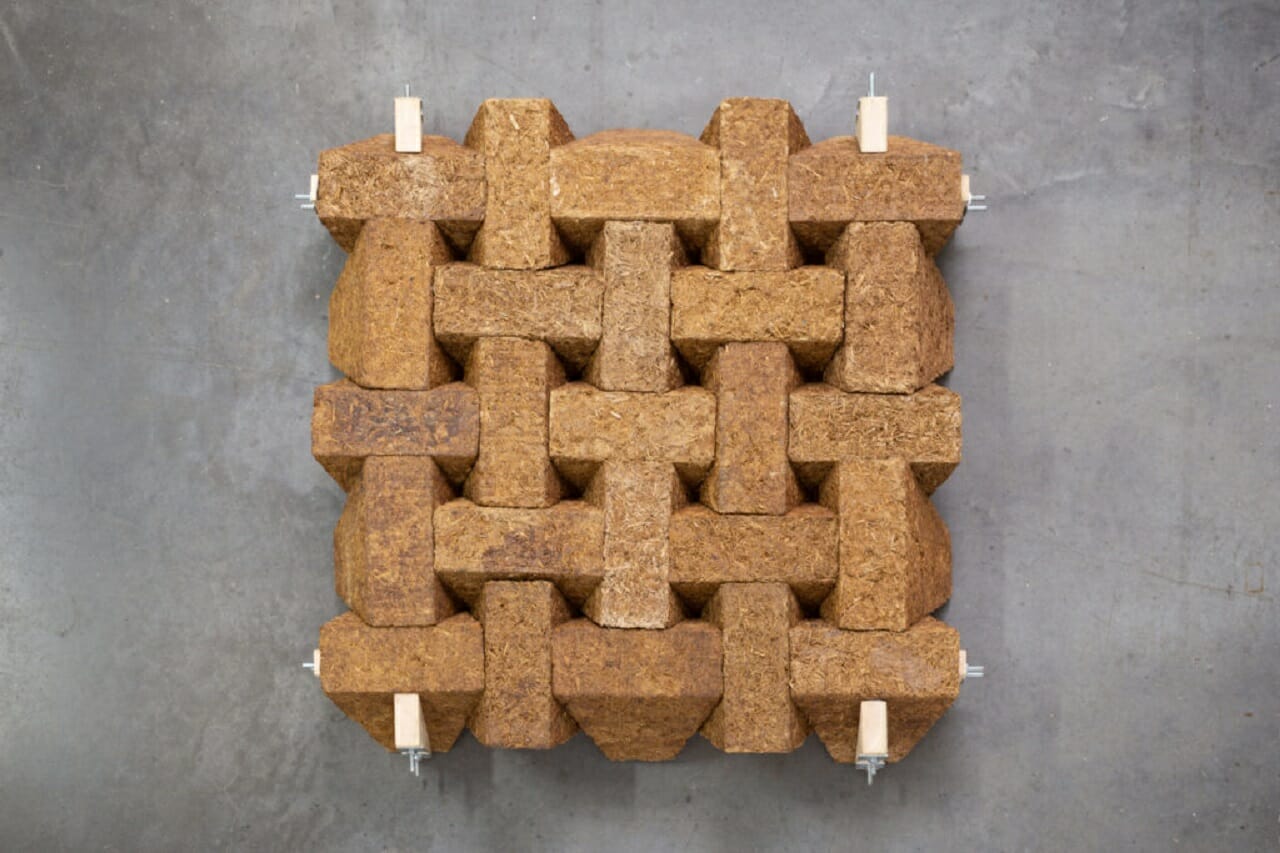
London Researchers Developed New Concrete From Sugarcane Bagasse That Could Change Sustainability In The Global Construction Industry.
Researchers from the University of East London (UEL), alongside architects from Grimshaw and the sugar manufacturer Tate & Lyle Sugar, developed a new sugarcane bagasse concrete for civil construction, called Sugarcrete. The focus of the project is to develop low-carbon solutions aimed at the construction industry, as this sector is responsible for more than 34% of energy use and 37% of carbon dioxide emissions linked to energy and processes in 2021, according to data from UNEP.
Understand How Sugarcane Bagasse Concrete Is Produced
Sugarcane, being the largest crop in the world by production volume, can contribute to the reduction of CO2 emissions in the construction industry. Researchers claim that cultivating sugarcane also provides one of the fastest means of converting CO2 into biomass, up to 50 times more efficient than forestry.
A study conducted by Agroicone, Embrapa Meio Ambiente, and Unicamp confirmed that sugarcane contributed to carbon removal from the atmosphere over the past two decades in the country.
-
A R$ 370 million tender for the construction of 4 prisons in SC is released from blockage after correction of flaws, unlocking works in Chapecó, Lages, and Xanxerê, and reigniting the debate on the urgency of the Santa Catarina penitentiary system.

-
Mother and daughter build a 70 m² house with more than 8,000 discarded glass bottles and impress with their creativity; known as the Casa de Sal, the property is located on Itamaracá Island, in Pernambuco.
-
From 30 cooperators to an agro-industry that brings together 390 families, from the agrarian reform in Paraíba, embarking on a historic leap, the first goat milk powder industry from family farming in the Northeast, a R$ 3.75 million project to tackle the drought in the Semi-Arid region.

-
Construction material store starts selling modular units that resemble small houses, assembled in a few days in the backyard, as the housing crisis pushes families towards unconventional solutions in Australia.





The new sugarcane bagasse concrete was prototyped using advanced digital modeling and robotic production. The innovation exhibits high-quality mechanical, fire, acoustic, and thermal properties, having been tested according to industry standards for fire resistance, thermal conductivity, compressive strength, and durability. The construction product can be used as insulation panels, structural flooring, load-bearing blocks, and roof slabs.
Sugarcane Bagasse Concrete Will Be Tested In NGOs
The benefits of the new material include carbon emissions 20 times lower than conventional concrete, as well as being 5 times lighter and cheaper to produce.
Researchers also emphasize that recycling sugarcane bagasse can contribute to developing locally-made construction solutions for sugar-producing communities.
The project team is already looking for locations in the global south that produce sugar, with the aim of testing Sugarcrete in partnership with local NGOs. Researchers assert that the key to the project is to create a technology and production outcome that utilizes sugarcane biowaste in its local context.
The sugarcane bagasse concrete can bring significant advancements to civil construction regarding sustainability and reductions in CO2 emissions, as well as providing low-carbon solutions for sugar-producing communities. The initiative is proof that it is possible to generate innovative and sustainable solutions from biowaste and local materials.
Construction Industry Becoming More Sustainable
In addition to sugarcane bagasse concrete, the construction industry is increasingly incorporating new technologies every day. Researchers developed a solar concrete that generates energy from solar radiation.
The product was developed in Mexico, resulting from a doctoral research by Euxis Kismet Sierra Marques and Orlando Gutiérrez Obeso. The developers graduated in Advanced Technology at the Azcapotzalco Research and Technological Innovation Center, part of the National Polytechnic Institute (IPN).
To produce solar concrete, the process developed by the scientists uses perovskite, a calcium and titanium oxide mineral and also a more cost-effective alternative to silicon solar cells. Utilizing high-energy milling, the inventors developed a nanoscale cement powder with particles smaller than 100 nanometers.




Be the first to react!