






 Portuguese
  Spanish


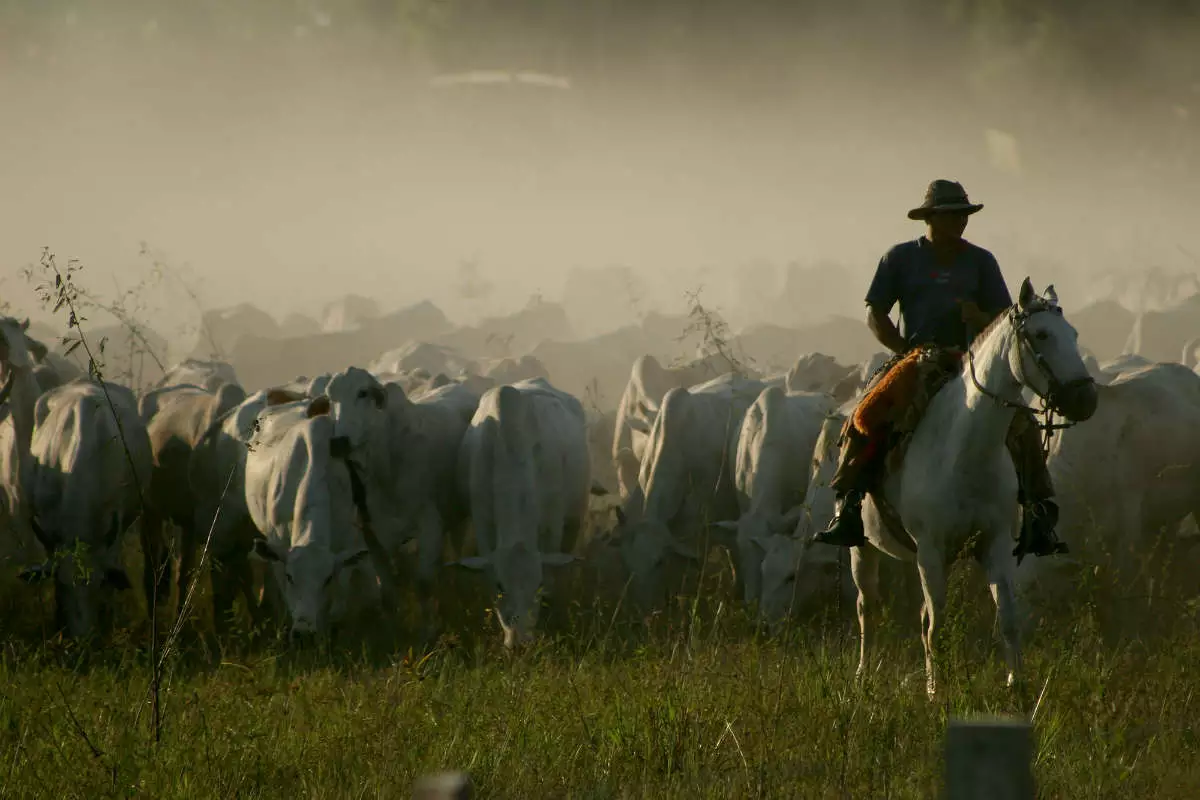

The State of Goiás Stands Out Nationally in Beef Exports to the European Union. At first, the state has 298 properties enabled with over 2.9 million tracked animals, according to Sisbov.
Moreover, the state ranks second in the number of properties eligible for export and third in the number of tracked animals. In 2022, approximately 1.2 million head of cattle were destined for export to the European continent. In terms of tracked animals, the state only falls behind Mato Grosso and Mato Grosso do Sul.
However, there are more than 1,327 properties registered in Sisbov across the country, and only 298 are registered in Goiás. This represents 23% of the total units that can work with exports to Europe.
In this way, according to the Ministry of Agriculture, Livestock and Supply, last year (2022) more than 16 qualification calls for Goiás properties were made to carry out exhibitions for the European Union.
-
Brazil’s Ministry of Justice Investigates CazéTV for Betting Ads During World Cup Broadcasts

-
Brazilian Retail Giant Americanas Faces $10 Billion Asset Freeze Amid Investigation into Hidden Debts

-
Does Your State Rank Highest? Brazil’s IBGE Reveals Salary Rankings and Worker Disparities
-
World’s Largest Women’s Coffee Collective Emerges in Southern Brazil with 2,179 Female Farmers, Generating $21.7 Million in Four Years, Led by a 103-Year-Old Farmer Ambassador


Agrodefense Audits:
Every year, the official veterinary service in the state of Goiás, under the responsibility of the Goiás Agency for Agricultural Defense, conducts several follow-up audits on properties approved in the Sisbov system to enable beef exports to Europe. Thus, the work was done in partnership with auditors from the ministry and also the agency with professionals from agrodefense.
The goal set during 2022 was to inspect 32 properties, which are also referred to as approved rural establishments. The agency’s president, José Essado, stated that: “Agrodefense exceeded this number by conducting audits on 50 units”.
In addition, he also mentioned that this year, 2023, the goal is to inspect 30 ERAs, which will account for around 10% of the total properties, and he also said that the work had already started at the beginning of the month.
The Official Individual Identification System for Cattle and Buffaloes, with the participation of rural producers, is entirely voluntary, but in cases of mandatory requirements, it is not! The action is required by official sanitary programs. For those cattle ranchers interested in identifying an authorized certifier, they should seek the ministry and register, after which the cattle and buffaloes are identified with tags in compliance with the requirements set by both the producer and the certifier.


