Portuguese
  Spanish


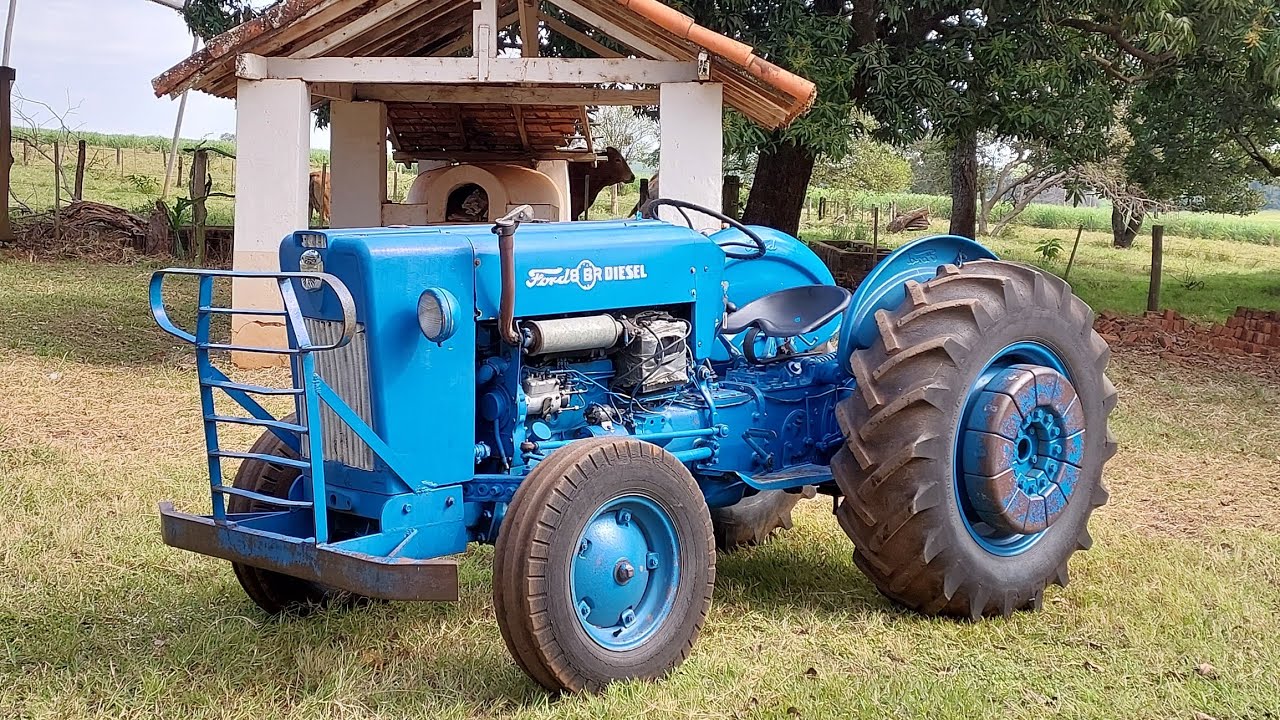


Ford 8-BR Was Not Just a Tractor, It Was a Watershed That Symbolized the Capacity for Innovation and the Potential of National Agribusiness.
The Brazilian agribusiness, a fundamental pillar of our economy, has a rich history of pioneering.
And at the heart of this journey is a machine that revolutionized the field: the Ford 8-BR. This was not just any tractor; it was the first tractor manufactured in Brazil, a milestone that established a legacy of modernization and efficiency for national agriculture, driven by Ford‘s vision.
Get ready to meet the machine that forever changed the way to produce in the Brazilian countryside.
-
China Builds 400-Hectare Irrigation System in Tanzania to Aid 1,000 Families Dependent on Rainfall

-
High School-Educated Farmer in India Converts 40 Hectares of Arid Land into Native Forest with 900 Species and Up to 40,000 Trees

-
After Two Years of Water Scarcity, Brazilian Farmer Finds Well on Her Land, Boosting Mango and Passion Fruit Production in Central Brazil

-
Cashew Becomes Billion-Dollar ‘Superfood’ in Ivory Coast: 1.6 Million Hectares of Monoculture Encroach on Forests as Families Trade Food for Nuts


What Marked the Arrival of the First Tractor Manufactured in Brazil?
Food production on a large scale and the modernization of the Brazilian countryside went through a significant turning point in the mid-20th century.
What was once a predominantly manual activity or dependent on animal traction began to transform with the arrival of agricultural machines. In this context, local manufacturing of equipment became essential.
The Ford 8-BR stands out precisely for that reason. It was the first tractor manufactured in Brazil, a feat that occurred in 1960. This national production marked a moment of technological independence for the country’s agricultural sector.
Before it, Brazil relied exclusively on the import of tractors, which increased costs and limited producers’ access to mechanization. The decision to produce the tractor domestically not only reduced costs but also facilitated maintenance and adaptation to the realities of the Brazilian countryside.
Ford 8-BR: The Legacy of a Pioneering Machine
The Ford 8-BR was not just a name on a production line; it became a symbol of progress and resilience.
Built robustly to withstand the conditions of Brazilian soil and climate, this tractor quickly gained the trust of farmers. Its design focused on durability and the ability to work in various crops, from soil preparation to assisting in harvests.
Ford, one of the largest vehicle manufacturers in the world, played a crucial role in this process.
By investing in local production of the Ford 8-BR, the company not only opened a new market but also contributed directly to the modernization of Brazilian agribusiness. The choice to manufacture a robust and easily maintainable tractor was a key factor in the Ford 8-BR building a lasting legacy, being recognized for its reliability and performance in the fields.
How the First Tractor Manufactured in Brazil Changed the Field
The arrival of the Ford 8-BR triggered a series of transformations in the countryside. Its presence allowed for:
- Increased Productivity: Tasks that previously took days to complete with labor or animals could now be done in hours, freeing up time for other activities and allowing the cultivation of larger areas;
- Long-Term Cost Reduction: Although the initial investment was considerable, the tractor reduced reliance on labor-intensive work and increased efficiency, generating savings;
- Agricultural Modernization: The Ford 8-BR paved the way for the adoption of other technologies and agricultural equipment, boosting the mechanization and technological advancements of rural properties;
- Development of the Domestic Industry: The manufacturing of the tractor generated jobs and stimulated the supply chain and services related to the agricultural machinery industry in Brazil.
The legacy of the Ford 8-BR is visible to this day. It paved the way for Brazil to become one of the largest food producers in the world, with increasingly technological and competitive agriculture.
The first tractor manufactured in Brazil solidified the name Ford in the history of the Brazilian countryside.