






 Portuguese
  Spanish


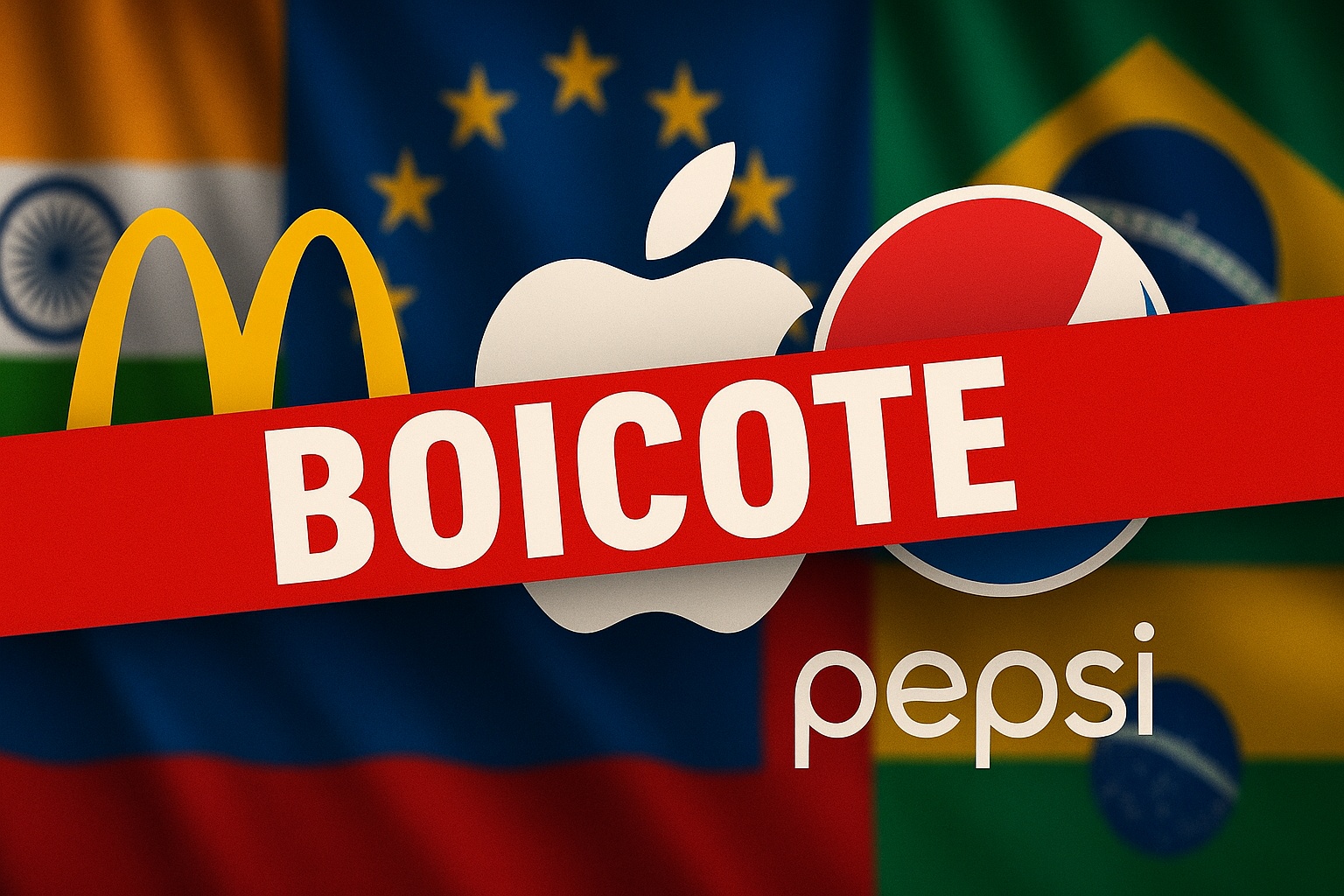
Boycott of American Brands Grows Worldwide: Fast Food, Technology, and US Soft Drinks Face Sales Decline, Political Pressure, and Global Economic Impact.
A movement that began as a reaction to tariffs, trade wars, and diplomatic crises is spreading across the globe: the boycott of American brands. Fast food chains, tech giants, and soft drink manufacturers are experiencing sales declines in strategic markets, pressured by nationalist campaigns encouraging the consumption of local products. From McDonald’s and KFC to Apple, Coca-Cola, and Pepsi, global icons of USA-made consumption are facing growing rejection, creating an unprecedented scenario that is concerning both companies and governments.
Boycott of American Brands Gains Momentum in Global Consumption
What was once seen only as political rhetoric is now reflected on supermarket shelves and in the choices of millions of consumers.
In countries such as India, Europe, and the Middle East, organized campaigns on social media promote hashtags like #BoycottUSA and apps that highlight products of American origin, encouraging substitution with local alternatives.
-
Bolivian Female Construction Workers Form Association to Combat Discrimination and 38% Pay Gap in the Industry

-
Near Amsterdam, residents buy land and discover they must also build streets, manage drainage, handle waste, and grow food on half their plot.
-
Without a mansion, without high investment, and without a traditional classroom, a teacher living in a 22 m² house taught students to build a 9 m² studio apartment with the equivalent of R$10,000.
-
Without her own home and pressured by rent, a 25-year-old bought a small 15-meter boat, gradually renovated the interior by herself, transformed the interior with paint, new flooring, a larger bathroom, and started living on the canals, paying much less per month.


US Fast Food Loses Ground With Global Rejection
Fast food chains are among the primary targets of the boycott. McDonald’s, Burger King, and KFC are facing unit closures, protests, and declining sales in markets where nationalist movements are gaining strength. In some countries, local brands have actually grown on the back of the rejection of American icons.
Giants of US technology, like Apple, Microsoft, and Tesla, are also being impacted. Products once seen as status symbols are now subjects of rejection, and Asian competitors, such as Chinese and Korean brands, are filling the void left by American brands. This shift is already reflected in global sales statistics.
Coca-Cola and Pepsi Soft Drinks Become Symbols of Boycott
The American soft drink sector has become one of the main targets of rejection. Coca-Cola and Pepsi, present in nearly all countries, are now facing campaigns calling for boycotts and substitution with regional brands.
In markets such as Europe and the Middle East, reports indicate a significant decline in sales, around 5% to 15% in recent months.
The financial impact of the sales decline of American brands is starting to worry Wall Street. Analysts warn that if this trend solidifies, companies could lose billions in revenue.
For Apple, which depends on more than 60% of sales from abroad, the contraction could directly affect its market value. The same applies to Coca-Cola and Pepsi, which derive a majority of their revenue from outside the US.
Political Pressure on Local Governments and Diplomatic Dispute
The boycott against American brands is surpassing consumption and entering diplomacy. Local governments, especially in India and Europe, are being pressured to adopt policies to promote domestic consumption.
In the Middle East, campaigns against fast food chains and soft drinks have also taken on a character of political protest against Washington, increasing diplomatic tensions.
More than just a market issue, the boycott of US products reflects a dispute over political and economic values. Consumers associate their choices with national identity and economic autonomy, transforming each purchase into an act of resistance against American influence.







-

1 person reacted to this.