






 Portuguese
  Spanish


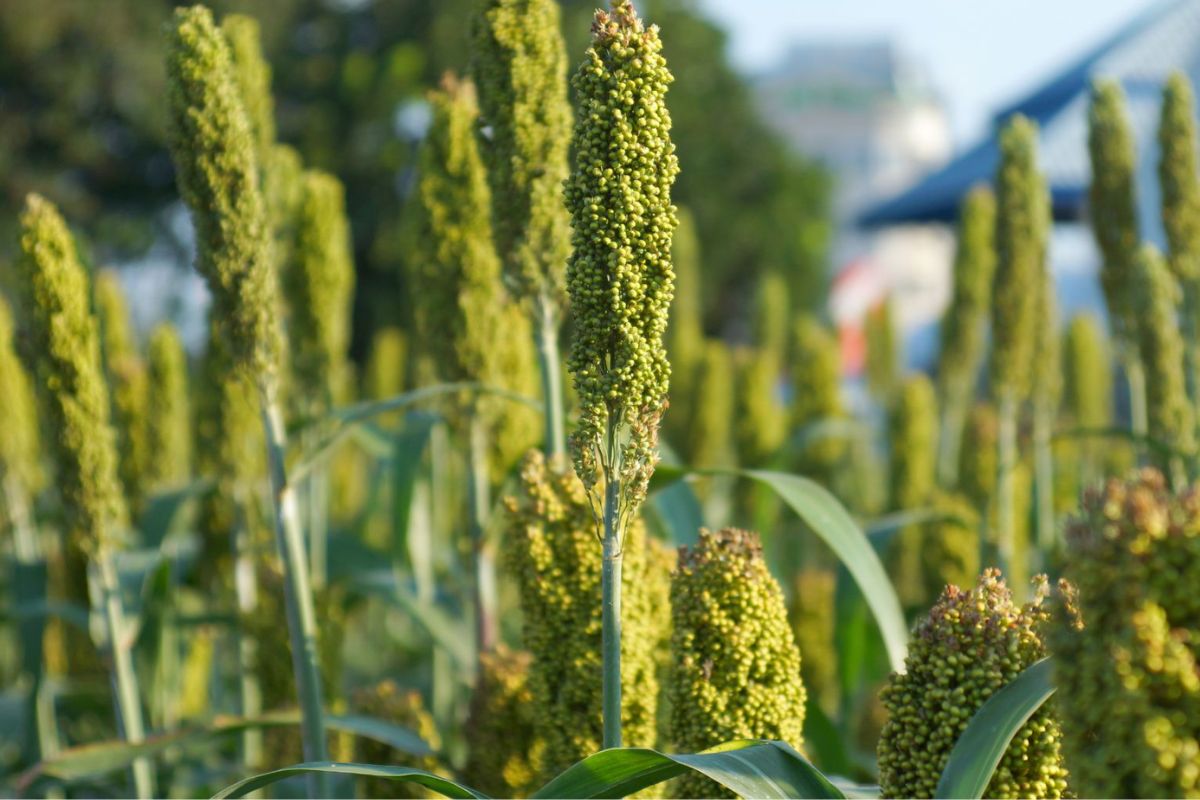
The Santa Catarina Government Strengthens Incentives for Grain Sorghum Cultivation, Promoting Rural Sustainability, Family Income, and Animal Feed Production in the Terra Boa Program 2025/2026
The cultivation of grain sorghum takes center stage in Santa Catarina with the new phase of the Incentive Project for Grain Sorghum Cultivation for Grain Production, integrated into the Terra Boa Program 2025/2026, according to a report published.
The initiative, led by the State Department of Agriculture and Livestock (Sape), aims to increase the supply of grains destined for feed production for pigs, poultry, and dairy.
With this, the State aims to reduce dependence on corn and strengthen the sustainability of productive chains.
-
Low-Demand Brazilian Beef Offal Gains Popularity Abroad: Indonesia Purchases $19.5 Million, Boosting Revenue and Reducing Waste

-
Soy Expansion in Former Brazilian Savanna Sparks Water and Land Conflicts in Major Agricultural Frontier
-
Mexican Pest Threatens U.S. Cattle Herds at Historic Lows, Potentially Boosting Brazilian Beef Exports as Burger Prices Soar

-
Avocado Boom for European and U.S. Markets Fuels Water Crisis in Drought-Stricken Chilean Region




The project was approved by the State Council for Rural Development (Cederural) and offers a strategic alternative for family farmers, strengthening efficient land use and diversifying the agricultural matrix of Santa Catarina.
Secretary Carlos Chiodini highlights that the action also represents a significant step for the autonomy of local agribusiness, with technical support, financial incentives, and partnerships with accredited cooperatives.
Agricultural Diversification and Sustainable Animal Feed Production
The project envisions productive diversification as an essential tool to balance the Santa Catarina agricultural system.
The cultivation of grain sorghum proves to be an efficient alternative to corn, with significant results in productivity and climate resilience.
This cereal can be planted in the off-season, particularly in areas previously designated for tobacco and onion, utilizing idle periods and maintaining soil fertility.
In addition to contributing to sustainable animal feed production, sorghum improves vegetation cover, reduces nutrient losses, and enhances the profitability of rural producers.
The incentive is primarily aimed at small farmers enrolled in the National Program for Strengthening Family Farming (CAF/Pronaf), who can implement up to 10 hectares and receive a subsidy of up to R$ 750.00 per hectare, limited to 5,000 hectares per harvest.
The payment of the incentive occurs after the delivery of the production, based on productivity and the cultivated area, reinforcing the credibility and security of the program.
Technical Support and Family Farming in Santa Catarina
The valuation of family farming in Santa Catarina is one of the pillars of the initiative. To ensure efficiency and quality, the government has established partnerships with cooperatives and agricultural supply stores linked to the Federation of Agricultural Cooperatives of Santa Catarina (Fecoagro).
These institutions are responsible for guiding farmers from planting to harvesting, in addition to purchasing the grains produced according to the adhesion contracts.
This technical support structure ensures that the cultivation of grain sorghum occurs sustainably and with continuous monitoring.
The incentive also contributes to job creation in rural areas, stimulating the local economy and strengthening the regional production base.
Sape emphasizes that the goal is to ensure food security and self-sufficiency in the feed chain, reducing the grain deficit and balancing the internal supply of the State.
Cultivation of Grain Sorghum Strengthens Strategic Partnerships and Sustainable Agricultural Programs
The partnerships established with the cooperative sector reinforce the commitment of the Santa Catarina government to sustainable agricultural programs.
The accredited entities in Fecoagro guarantee the traceability of production, access to quality inputs, and continuous technical assistance.
This collaborative network allows the cultivation of grain sorghum to be an economically viable and environmentally responsible practice.
The Incentive Project for Grain Sorghum Cultivation integrates into the state agricultural sustainability policy, which aims to optimize land use and reduce environmental impacts.
The Terra Boa Program 2025/2026 represents a concrete action to stimulate rural producers, strengthening competitiveness and the balance between productivity and environmental preservation.
The expectation is that sorghum will become an essential complementary crop to meet the growing demand for grains in the State, consolidating Santa Catarina as a reference in agricultural innovation and sustainability.





Be the first to react!