Portuguese
  Spanish


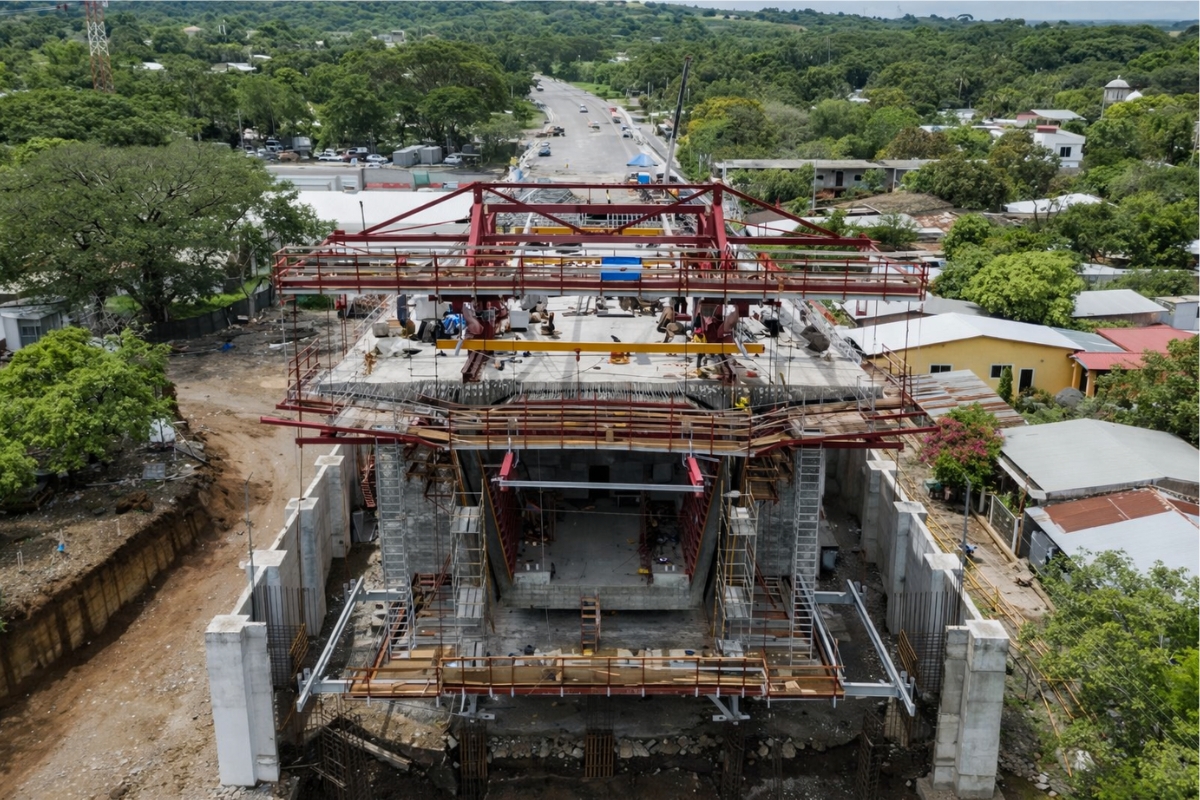


El Salvador And Guatemala Build the Binational Bridge José Manuel Arce Over the Paz River to Reduce Delays, Facilitate Trade, and Integrate the Border.
Borders have ceased to be just lines on a map. In various parts of Latin America, they have come to represent strategic points for development, trade, and integration.
It is in this context that El Salvador and Guatemala are advancing with the construction of the Binational Bridge José Manuel Arce, a project that promises to transform the circulation dynamics between the two countries.
Located over the Paz River, the structure arises in an area where, for years, movement depended on limited crossings, making it difficult for goods to flow and for people to commute daily.
-
Brazilian Fishing Couple Spends 4 Years Building Solar-Powered Floating Home on the Paraguay River, Now a Navy-Approved Vessel with Leisure Area and Tour Demand

-
While the World Opens New Airports and High-Speed Trains, Brazil Rushes to Complete Projects Stalled for 40 Years
-
Brazil Invests in Massive Waterway to Transport Soybeans by Barge, Reducing Costly Truck Reliance
-
Bridge Rebuilt in Just One Year Reconnects Two Brazilian States


Structure of Approximately 350 Meters Changes the Border Dynamics
With approximately 350 meters in length, the new bridge creates a more direct link between the territories. The aim is to reduce crossing time and provide more predictability for transport.
The improvement impacts both trade and the daily routine of those crossing the border for work, business, or personal reasons. Less waiting means greater efficiency and enhanced regional integration.

Four Tracks Expand Circulation Capacity
The project foresees four tracks for traffic in both directions. The configuration is designed to increase circulation capacity and avoid congestion during peak hours.
In addition to the bridge itself, ramps and paved roads connected to the structure are included, ensuring continuity for vehicle flow and greater safety in travel.
Construction Strengthens Trade and Local Economic Activity
The expectation is that the new link will strengthen economic activity in the border region. By facilitating cargo transport, the project is expected to boost competitiveness and increase trade exchanges between the two countries.
According to diariouno.com.ar, an Argentine news and current affairs site, the construction is considered one of the most relevant initiatives to consolidate the connection between El Salvador and Guatemala.
Project Considers Floods of the Paz River and Structural Resistance
The bridge was designed with adequate height and drainage for periods of rain and rising water levels in the Paz River. This measure aims to prevent interruptions during flood seasons.
The structure uses prestressed concrete and deep foundations, ensuring stability and resistance. The choice of materials reinforces the goal of creating a durable and safe crossing.
More than just an infrastructure project, the new bridge represents a concrete step toward consolidating regional integration. It facilitates daily life, brings communities closer together, and creates a more efficient corridor between two neighboring countries.
By transforming how the border operates, the construction strengthens Central American connections and repositions the region on the logistics map of Latin America.