Portuguese
  Spanish


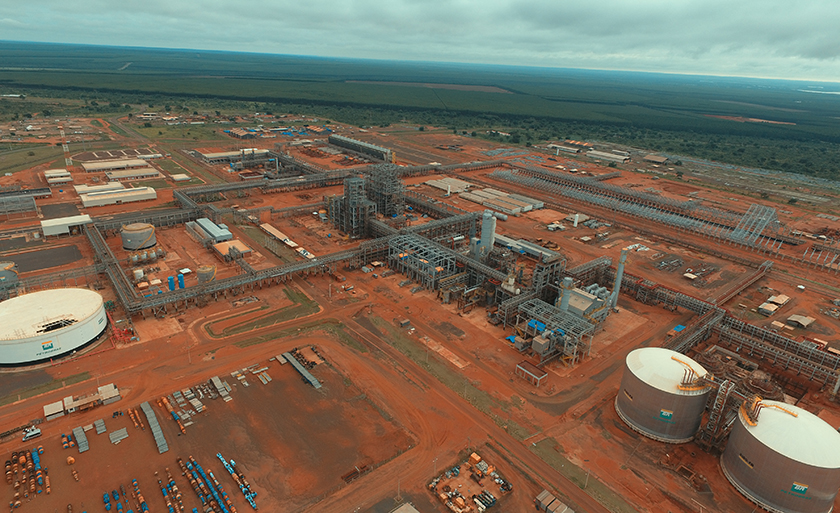

The Finalization of the Purchase Operation of the Nitrogen Fertilizer Unit 3 (UFN3) of Petrobras, Located in the Municipality of Três Lagoas, by the Russian Company Acron Opens New Investment and Economic Diversification Perspectives for Mato Grosso do Sul.
Meetings throughout this Thursday, July 18, in Campo Grande finalized details for the completion of the sale of UFN-3 (Petrobras Nitrogen Fertilizer Unit) to the Russian group Acron. The contract, amounting to R$ 8.2 billion, is expected to be signed in August, with the prospect that the unit will have its construction completed and start operations by 2024.
Representatives from Acron and Petrobras –owner of the factory located in Três Lagoas, 338 kilometers from the Capital– met behind closed doors with state government officials and among themselves to discuss points such as the transfer of tax incentives from the Brazilian state-owned company to the Russian conglomerate, allowing tax exemptions on the sale of the structure and machines.
-
Over 2,000 Tons of Discarded Fishing Nets Since 2020 Repurposed into Durable Caps, Fins, and Parts

-
Seals and Sea Lions Lose Habitat and Food as Climate Change Advances, Impacting Ice, Prey, and Coastal Communities

-
Brazilian Innovator Uses 3D-Printed Device to Cool Two Rooms with One Air Conditioner
-
China Uses 432 Robots to Move a 7,500-Ton Historic Building in Shanghai, Preserving Architecture While Creating Space for Underground Center


“The Russian delegation was meeting with government teams all day to present the schedule of how the negotiation will proceed, the resumption of investments, and the volume of resources to be allocated,” stated, through his advisory, Governor Reinaldo Azambuja (PSDB). “They (Acron) requested the tax incentive which was granted to Petrobras, so we would have to transfer that incentive to the purchasing company,” he continued.
The Secretary of State for the Environment, Economic Development, Production, and Family Agriculture, Jaime Verruck, said that the incentives include ICMS (Tax on Circulation of Goods and Services) exemptions for importing equipment for the factory’s construction, at a rate of 10%, and on the sale of urea produced by the plant to other states, at 75%. “What the government wants is for Petrobras and Acron to close the deal,” he emphasized.
Meanwhile, the Secretary of State for Finance, Felipe Mattos, highlighted that, with the exemptions, a new market will be made viable, diversifying the economic matrix, “with the sale of a new input that currently comes from outside the state or is imported from other countries, for one of the economic activities of Mato Grosso do Sul, which is agribusiness.”
The UFN-3 construction was halted in December 2014, with 83% of the project completed, when Petrobras terminated the contract with the consortium responsible for the work citing breach of clauses. The factory was eventually included in the state-owned company’s restructuring and recapitalization plan, being considered an asset that could be negotiated.
The approval for the sale occurred in June, after the STF (Federal Supreme Court) authorized the negotiation of subsidiaries of public companies or mixed-economy companies without congressional approval or bidding. Negotiations with Acron have been ongoing since last year, awaiting judicial clearance to advance.
The UFN-3 was designed to accommodate the production of 70 thousand tons of ammonia and 1.22 million tons of granulated urea per year. It is estimated that the plant alone will generate a thousand direct jobs and another 10 thousand indirect jobs. Acron plans to invest US$ 1 billion in the purchase of the factory and an additional R$ 5 billion for its completion, with the resumption of construction in the first half of next year and the commencement of operations by 2024 for the production of multi-nutrient and chemical fertilizers.
Last week, the presidents of Bolivia, Evo Morales, and Russia, Vladimir Putin, reached an agreement aimed at supplying 2.2 million cubic meters of natural gas daily –to be transported through Mato Grosso do Sul– for the Acron unit starting in 2023. The fuel will be extracted by YPFB (Yacimientos Petrolíferos Fiscales Bolivianos), the state-owned entity in the neighboring country, which will also hold 12% of the Três Lagoas factory, with a stake that could reach 30%.
Sale of UFN3 from Petrobras to Russian Company Will Generate 10 Thousand Jobs in Mato Grosso do Sul