Portuguese
  Spanish


Offshore Energy Can Boost GDP and Transform Coastal Cities with Sustainable Development, Job Creation, and Industrial Innovation in Brazil.
As Brazil moves towards a cleaner and more diversified energy matrix, the potential of renewable energies is becoming increasingly evident.
Among the sources that stand out, offshore wind energy emerges not only as a sustainable alternative but also as a direct driver of the local economy.
As highlighted by Senai-RN, this technology can boost the GDP of coastal cities, initiating a profound and lasting transformation.
-
Billion-Dollar Winds Propel Wind Energy Growth in Brazil, Boosting Unprecedented Technical Workforce Development

-
Brazil filled the Northeast with wind turbines but now faces the side effect of 705 giant blades reaching the end of their lifespan by 2032 just in Rio Grande do Norte, while the world projects 43 million tons of waste by 2050.
-
Brazil has filled the Northeast with wind turbines, but now it faces the side effect of 705 giant blades reaching the end of their useful life by 2032 just in Rio Grande do Norte, while the world projects 43 million tons of waste by 2050.
-
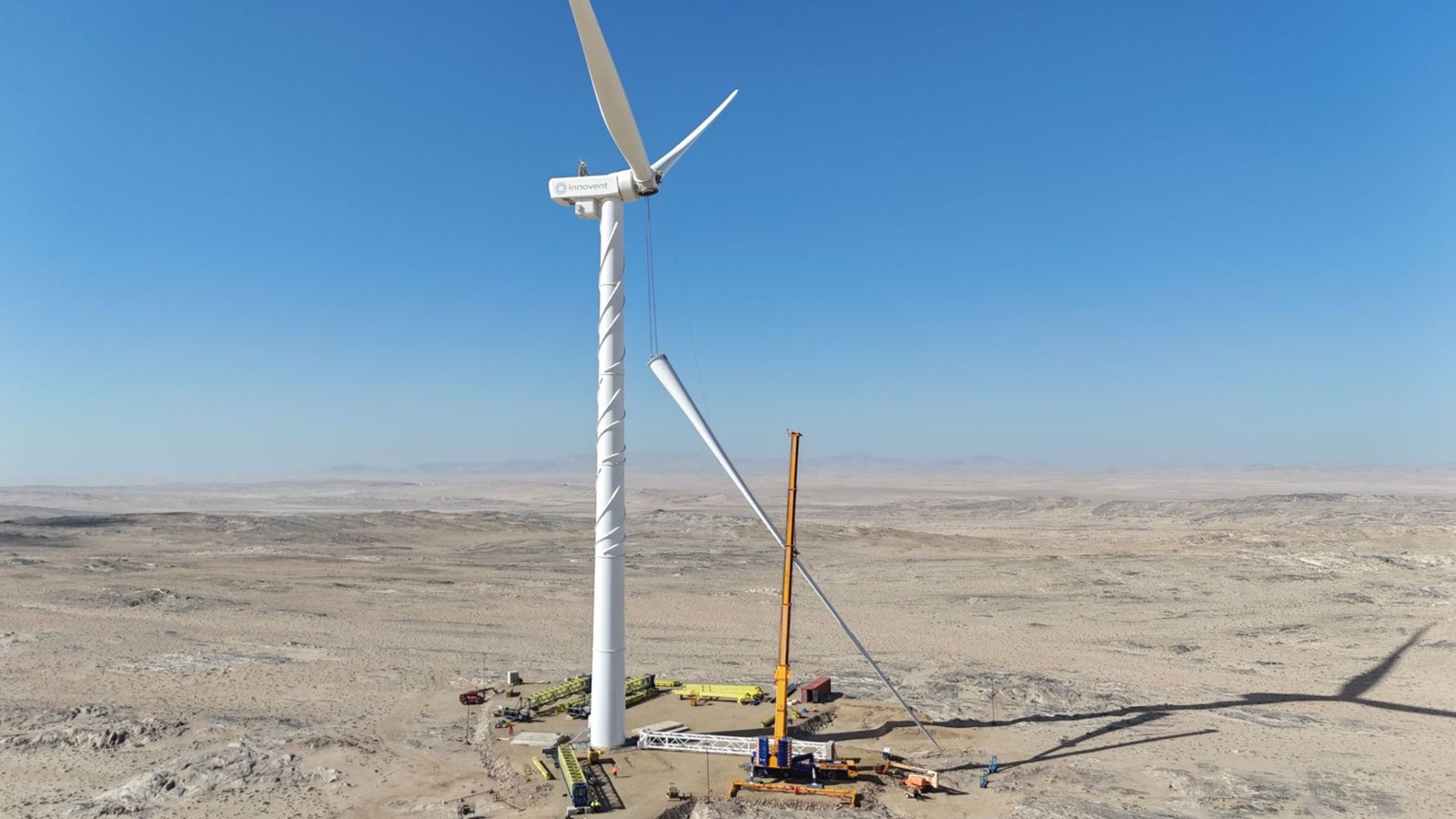
Wind farm in Namibia will have wind turbines assembled without giant cranes and is expected to avoid 200,000 tons of carbon dioxide per year when it becomes operational.


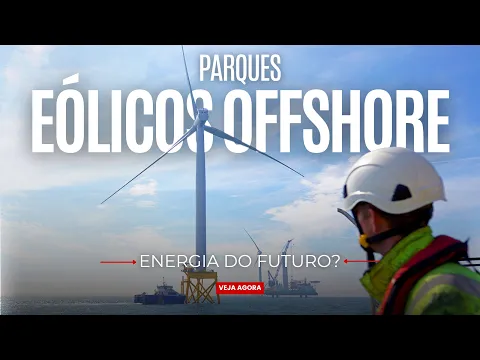
Therefore, the establishment of Brazil’s first offshore wind farm, located about 20 kilometers off the coast of Areia Branca in Rio Grande do Norte, symbolizes an unprecedented milestone.
Since the initiative already has an environmental license approved by Ibama, the next steps focus on executing the project.
Thus, the Senai Institute of Innovation in Renewable Energies leads the process, which promises to surpass the economic impacts of already established land wind farms in the Northeast.
The Force of Wind Energy and Its History in Brazil
Historically, Brazil began more robust investments in onshore wind energy in the early 2000s.
With support from public policies, tax incentives, and innovation programs, states like Rio Grande do Norte, Ceará, and Bahia began attracting significant investments.
Consequently, cities that once faced economic stagnation started to see a significant increase in their revenues, especially through the growth of local Gross Domestic Product (GDP).
According to Senai-RN, municipalities that received land parks saw their GDPs grow by over 40% on average.
These data reinforce the transformative nature of wind energy.
While land projects have generated important advancements, offshore projects tend to produce even greater impacts, both in terms of investment scale and technological complexity.
Offshore wind energy, which utilizes ocean winds to generate electricity, is establishing itself as a key component in the country’s energy planning.
Turbines, installed on fixed or floating platforms, take advantage of more intense and consistent winds.
In this way, they ensure more efficient, safe, and sustainable energy production.
Offshore Energy: Advantages and Strategic Expansion
Moreover, since offshore parks are located far from urban areas, they face fewer limitations related to noise, land use, and visual impact.
This combination favors the adoption of technology, widely used in countries such as Germany, Denmark, the United Kingdom, and China, global leaders in the sector.
In the Brazilian context, offshore energy finds a favorable environment to grow.
Thanks to the extensive coastline, with over 7,000 kilometers, the country has significant natural advantages.
For this reason, Rio Grande do Norte emerges as the ideal pilot state, especially due to its established experience in land wind projects.
As emphasized by Rodrigo Mello, director of the Senai Institute of Innovation in Renewable Energies, the offshore park in Areia Branca initiates a true economic revolution in coastal cities.
The anticipated investments are expected to surpass onshore projects in volume and complexity, and the new production chain has the potential to multiply by seven the financial movement observed so far by land parks.
How Offshore Energy Can Boost Local GDP
Consequently, offshore energy can boost the GDP of coastal municipalities.
The expectation is that the installation and operation of these parks will drive various sectors, such as naval engineering, port infrastructure, precision welding, robotics, drone operation, and logistical services.
This new industry not only diversifies the economy, but also creates skilled jobs and opportunities for local businesses.
Furthermore, international studies show that offshore wind farms have the capacity to generate up to ten times more jobs than land projects.
This fact applies especially to the construction and operation phases, where the demand for highly qualified professionals intensifies.
Thus, Brazil has the opportunity to develop technical and scientific skills.
By investing in training and innovation, the country will not only meet its own demands but also be able to export solutions tailored to the tropical climate and the national regulatory environment.
Training, Innovation, and Energy Sovereignty
With this in mind, Senai-RN is already acting proactively in workforce training.
The School of Renewable Energies and Industrial Technologies (Faeti) will launch Brazil’s first postgraduate course in offshore wind energy.
This way, local professionals will be prepared to fill the positions generated by this emerging industry.
At the same time, the pilot project has been developed with a focus on the Brazilian reality.
Instead of importing ready-made solutions, Brazil seeks to adapt technologies to its natural and socioeconomic environment, promoting independence and strengthening energy sovereignty.
As the demand for components, services, and infrastructure grows, regional industrial hubs are strengthened.
This stimulates the local economy, generates income, and enables Brazilian companies to integrate into a strategic value chain.
Sustainability and Challenges in the Offshore Sector
In this context, the Offshore Wind Turbine Testing Site, with a capacity of up to 24.5 megawatts, represents just the beginning.
All the energy generated will supply the Porto-Ilha, reducing dependence on fossil fuels and promoting energy self-sufficiency.
In addition to electric generation, the project boosts scientific research, stimulates professional training, and enhances the technological capacity of the country.
Although the challenges include high investments and installation complexity, the Brazilian model demonstrates balance between growth and environmental protection.
Ibama has already granted the preliminary license, confirming the environmental viability of the initiative.
As a result, the country strengthens its energy security, expands its capacity for innovation, and positions itself as a leader in the transition to a low-carbon economy.
Therefore, investing in offshore energy is not just sensible — it is essential for the future.
A New Sustainable Industrial Cycle
In summary, offshore energy goes far beyond turbines at sea.
It represents a new industrial cycle, especially for coastal cities historically lacking sustainable economic alternatives.
By boosting GDP, qualifying the workforce, and fostering innovation, this modern industry consolidates as a strategic solution for Brazil.
With the support of institutions like Senai-RN, the country advances with security, intelligence, and environmental responsibility.
Thus, Brazil prepares to claim its prominent place on the global renewable energy map, showing that it is possible to grow with balance, inclusion, and long-term vision.