Portuguese
  Spanish




Brazil And Argentina End Operation Fraterno With 600 Military Personnel, Ships, Submarine And Aircraft, Amid Growing Tension Near Venezuela
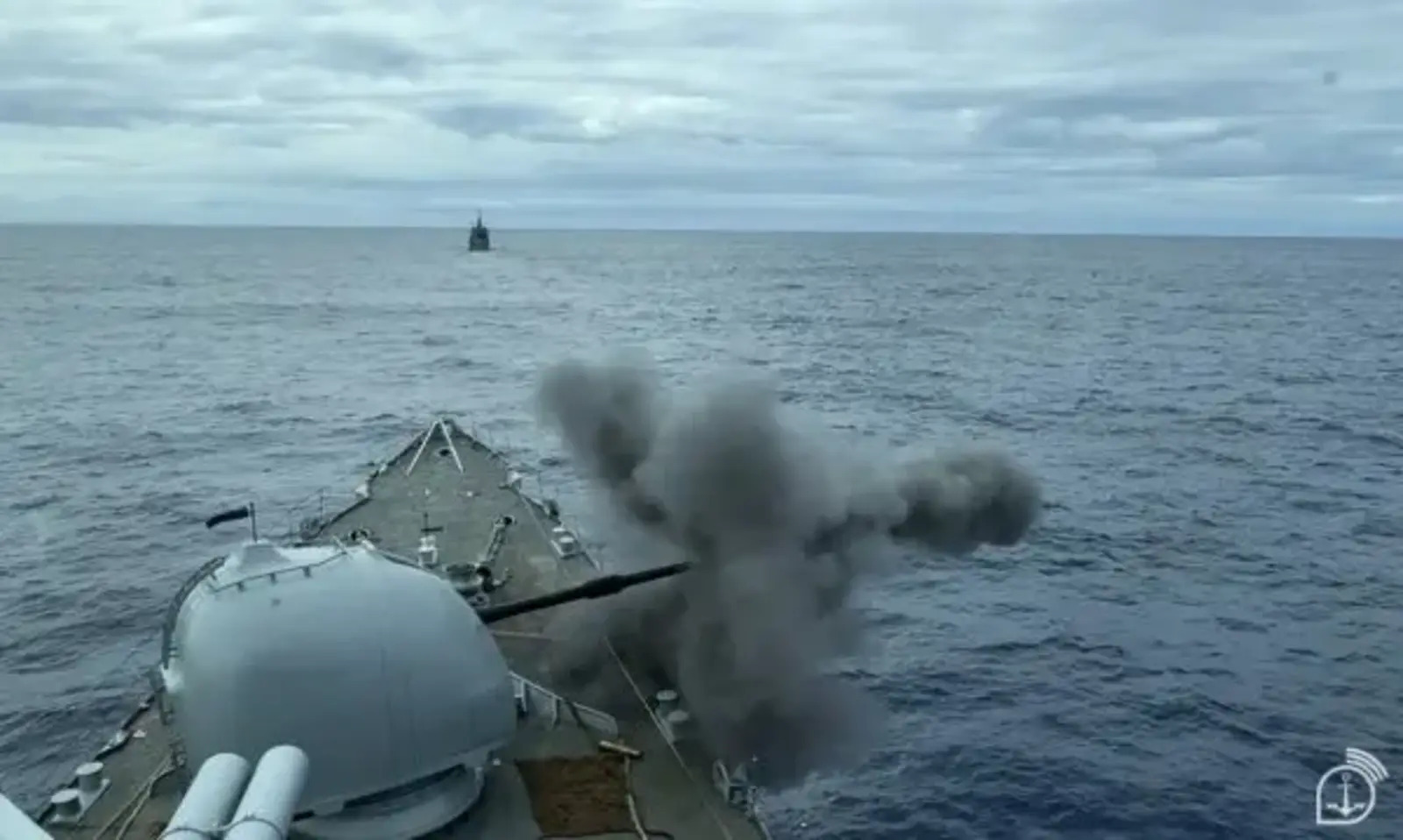
The Brazilian Navy announced on Friday (22) the conclusion of a joint military operation with the Argentine Navy. The movement occurred between the waters of Rio de Janeiro and Salvador and involved more than 600 military personnel, five ships, one submarine, and two warplanes from both nations.
Called “Operation Fraterno”, the initiative began on August 7 and was completed on the 15th. The exercise took place 24 hours prior to the U.S. government order to deploy three destroyers to waters near Venezuela.
Origin And Evolution Of The Operation
Operation Fraterno emerged in the 1970s amid the Brazilian military dictatorship. Since then, it has become an annual exercise that symbolizes cooperation between the two countries. Most importantly, over time, the scale of the maneuvers has increased.
-
China Unveils Laser Weapon Capable of Instantly Neutralizing Military Drones, Marking a Significant Advancement in Air Defense Technology

-
U.S. Navy’s Ticonderoga-class Cruiser Becomes a 9,800-Ton Missile Fortress with Advanced Aegis System Capable of Tracking Hundreds of Targets

-
France’s Charles de Gaulle: The Sole Nuclear-Powered Aircraft Carrier Outside the US, Weighing 42,500 Tons and Equipped with Two Atomic Reactors

-
The military spaceplane that almost took the Cold War into orbit: Boeing X-20 Dyna-Soar was designed to re-enter above Mach 20, fly for up to 40 hours, land like a plane, and transform Titan rockets into a gateway to a new era of orbital warfare.

In past editions, the exercises took place near the border. In 2023, for example, the activities concentrated between Rio Grande, Mar del Plata, and Itajaí. The previous year, they occurred between Rio Grande (RS) and Puerto Belgrano in Argentina.
This year, the change drew attention. The maneuvers moved to the area stretching from Rio de Janeiro to Salvador, closer to the north of South America.
Expansion Of The Forces Deployed
Another notable aspect was the increase in resources mobilized by Brazil. In 2023, the national participation included 300 military personnel, one submarine, one aircraft, and one ship.
Now, the numbers nearly doubled: there were 600 military personnel, four ships, one submarine, and two aircraft.
The list included the Frigate “Independência”, the Submarine “Tikuna”, the Patrol Ships “Macaé” and “Guaratuba”, the Minesweeper “Aratu”, as well as two aircraft, a “Skyhawk” and a “Wild Lynx” helicopter. From Argentina, the Corvette “Espora” was present.
Meetings And Training
Before the activities at sea, the teams participated in training in simulators at the Almirante Marques de Leão Training Center (CAAML).
There were also preparatory meetings, visits to the ships, sports events at the Mocanguê Naval Complex, and the official opening ceremony.
Vice Admiral Antonio Carlos Cambra, Commander of the Brazilian Fleet, received the Commander of the Argentine Task Force, Captain Ramón Gustavo Bravo, as well as Captain Jorge Gabriel Caceres, commander of the Corvette “Espora”.
Actions At Sea
The practical activities reinforced interoperability between the two navies. There were simulations of pursuit against enemy vessels, staged by the patrol ships “Macaé” and “Guaratuba”.
Joint attack exercises against the submarine “Tikuna” also took place, as well as passage through areas threatened by fighter planes, represented by the AF-1 aircraft.
Another highlight was the firing of anti-aircraft guns at illuminated targets launched into the sky and shots from the main guns against a floating target at sea.
Additionally, military personnel trained in approaches to suspicious vessels and navigation in simulated channels with mine risks, conducted by the ship “Aratu”.
The Wild Lynx helicopter also played a central role in the exercises, reinforcing aerial and naval integration.
Official Note From The Navy
In a statement, the Brazilian Navy stated that the operation aimed to “improve the training of the teams from both Navies and foster cooperation, with operational gains resulting from the exchange of experiences.”
According to the note, all activities took place in an environment of professionalism, mutual respect, and camaraderie.
Monitoring Of U.S. Ships
While the operation unfolded, the Brazilian government was monitoring another movement on the continent.
The Armed Forces and the Itamaraty have been tracking the movement of three military ships from the United States near Venezuela.
The decision was made by then-President Donald Trump, who justified the measure as a way to “stem the flow of drugs” coming from the neighboring country.
Days earlier, Washington had doubled the reward for the assassination of President Nicolás Maduro to US$ 50 million.
Venezuela, in response, called upon militias to be on alert.
For now, Brazil should not comment on the issue but remains attentive to the scenario. Therefore, the contrast between the joint training with Argentina and the tension in the Caribbean region reveals the delicate balance involving Brazilian naval operations.
With information from Diário do Centro do Mundo.