Portuguese
  Spanish


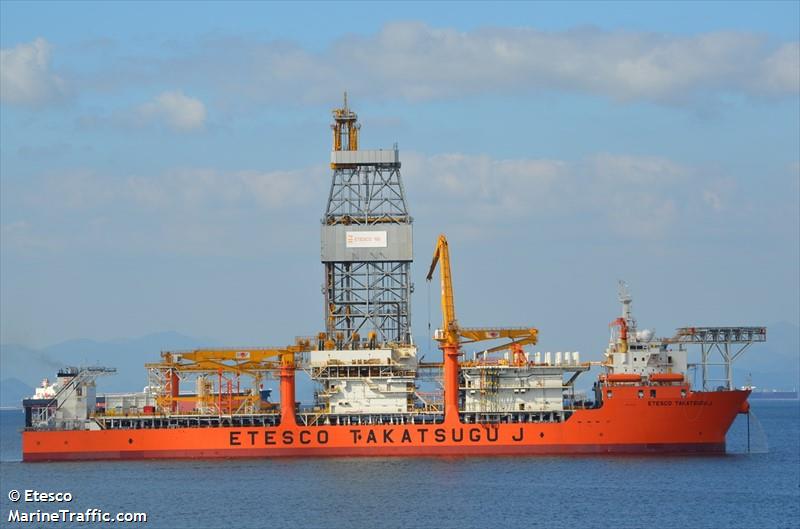


Understand How a Drillship Works, How It Is Possible to Reach Subsea Oil Wells and Overcome the Turbulence Caused by Winds and Tides
This article aims to spread the knowledge of how a drillship operates. Understand how it is possible to reach subsea oil wells while overcoming the major challenge of overcoming the turbulence caused by winds and tides. Follow along! PetroRio buys FPSO OSX-3 from OGX and 80% of the Tubarão Martelo oil field in the Campos Basin
Read Also
- Many URGENT job openings and IMMEDIATE hiring for seafarers
- Job openings for welders and mechanics aimed at projects and works in an engineering company
- Big selection process with many job openings at NG Metalúrgica for Welders and Boiler Makers, resumes at the company’s door
Oil reserves can be found both in shallower and deeper layers of the earth.
-
OPEC+ Boosts Oil Supply by 188,000 Barrels per Day in July 2026, Leading to Price Drop from $112 to $89 per Barrel in Under Two Months

-
TotalEnergies Signs 20-Year Deal to Purchase 2 Million Tons of LNG from Alaska, Boosting Project Viability
-
Turkey Deploys Çağrı Bey Drilling Ship to Explore New Oil Frontier Off Somalia’s Coast
-
Golden Pass LNG Ships First Liquefied Gas Cargo from the U.S., Completing $10 Billion QatarEnergy and ExxonMobil Investment
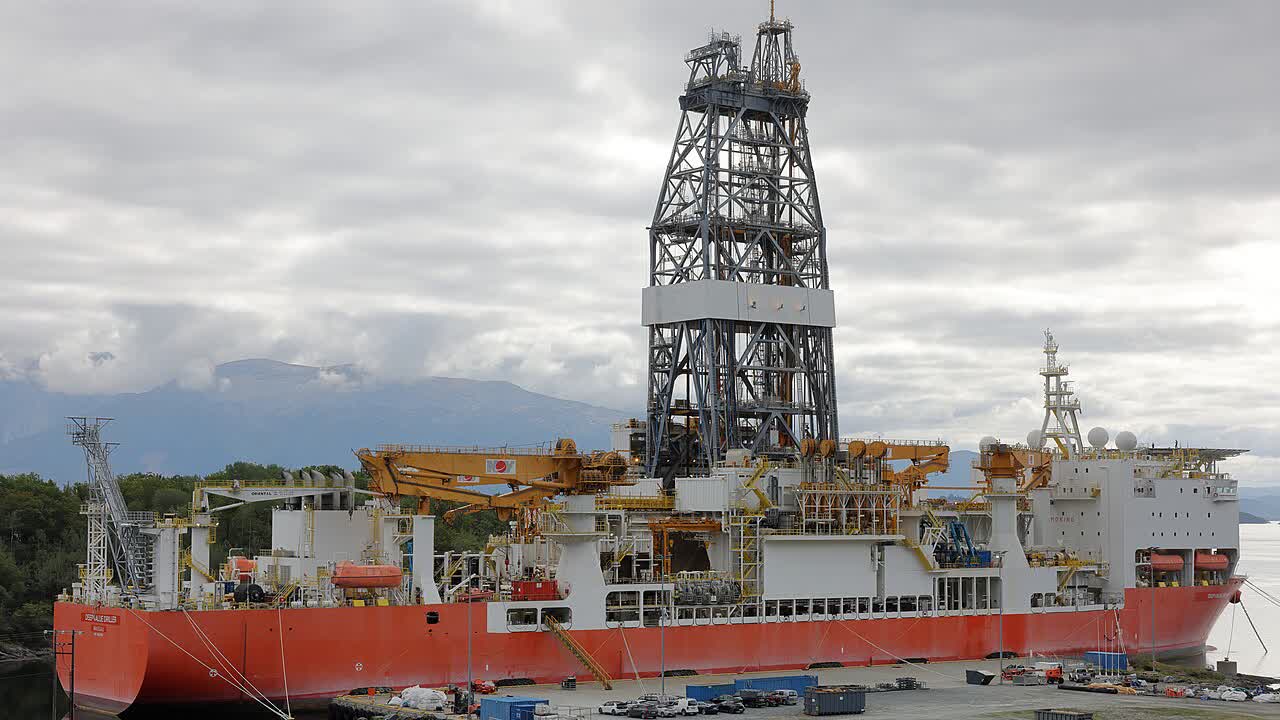

We can also find oil reserves on the ocean floor, but for this, it is necessary to use equipment capable of surpassing the entire layer of water and reaching the ocean bottom for drilling, and for this, a drillship is used.
Drilling Platforms
There are various types of platforms for oil production, but not all of them reach reserves in deeper waters. For this, it is necessary to use a Floating Drilling Unit (FDU).
With the need to drill deep subsea reserves, new offshore techniques and equipment have emerged. Among them are drillship-type platforms.
So, What Is a Drillship?
Maritime drilling is similar to that done on land. The difference is that the rigs we use at sea can adapt to different depths, making it possible to explore much wider areas without many limitations.
Drillship-type platforms are designed to drill subsea wells, surpassing a water column of more than 2,000 m. They can be operated without the support of supply or service boats.
The drilling tower of the drillship is located at its center. There is an opening in the hull that allows the passage of the drill string, where the components used during the operation are assembled.
This way, the water column is transcended, the equipment reaches the seabed and begins its drilling until it reaches the oil reserve. Therefore, this platform offers the possibility of drilling great distances from the shore.
How Is It Possible to Keep the Drillship Stable?
You may be wondering how it is possible to keep the drillship stable despite the turbulence caused by waves, currents, and winds.
The reason lies in the fact that the drillship has a positioning system composed of thrusters, acoustic sensors, and computers. All this modern technology can nullify the effects caused by currents, waves, and wind, keeping the ship stable in its position.
The equipment helps maintain the stability of the vessel automatically, but there is also the possibility of a drillship being anchored to the seabed to perform the drilling.
Drillship-type platforms are the most suitable for oil production, not only because they allow exploration of deeper subsea wells but also due to their large storage capacity, ensuring greater autonomy, as they do not require support boats and can be located at great distances from the shore.
by – Etesco