






 Portuguese
  Spanish
  5 min of reading
  0 comments


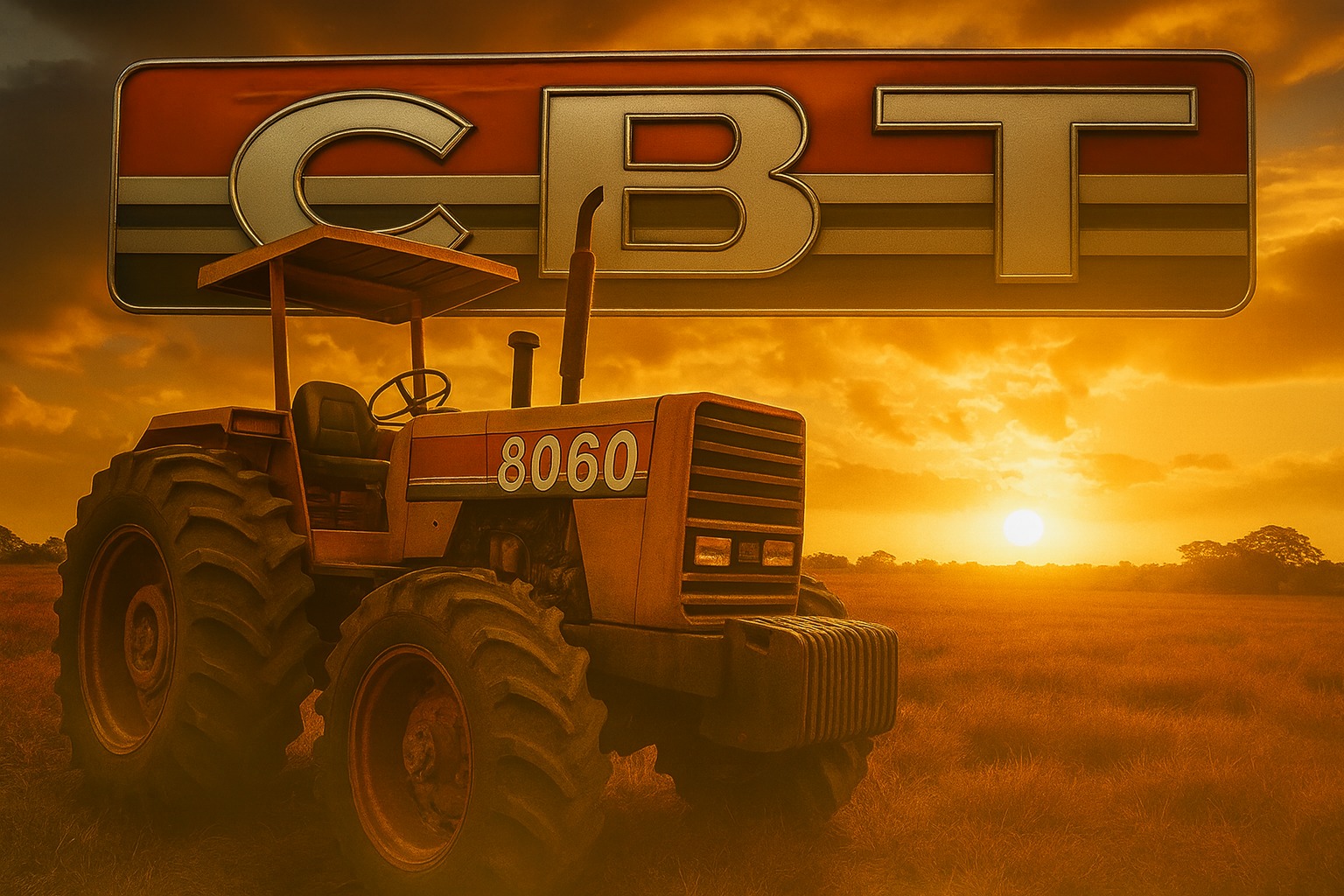
Founded in São Carlos in the 1950s, the Brazilian Tractor Company experienced its peak in the 1970s and 1980s, manufacturing over 100,000 tractors and symbolizing national pride in the field
In the 1970s and 80s, those who lived in the countryside well remember the strong and unmistakable sound of CBT tractors. The yellow machines were a symbol of pride, progress, and technological independence. They represented Brazil’s dream of becoming a powerhouse in agribusiness and industry.
Created as a 100% national company, the Brazilian Tractor Company became synonymous with strength in the field, but also a classic example of how the Brazilian industrial dream was suffocated by crises and foreign competition.
CBT: A Brazilian Dream Born in São Carlos
The Brazilian Tractor Company (CBT) was founded on September 1, 1959, by businessman Mário Pereira Lopes.
-
Bolivian Female Construction Workers Form Association to Combat Discrimination and 38% Pay Gap in the Industry

-
Near Amsterdam, residents buy land and discover they must also build streets, manage drainage, handle waste, and grow food on half their plot.
-
Without a mansion, without high investment, and without a traditional classroom, a teacher living in a 22 m² house taught students to build a 9 m² studio apartment with the equivalent of R$10,000.
-
Without her own home and pressured by rent, a 25-year-old bought a small 15-meter boat, gradually renovated the interior by herself, transformed the interior with paint, new flooring, a larger bathroom, and started living on the canals, paying much less per month.


The beginning was modest, in Ibaté (SP), where the company manufactured engines and parts. Shortly after, it began assembling tractors from the American brand Oliver.
In 1961, the company made an important leap by inaugurating a modern factory in the Água Vermelha district of São Carlos.
From then on, it began to develop its own technology, focusing on national production. The first mounted model was the Oliver 950, still under license.
But it was in 1962 that the historic milestone occurred: the CBT-1020 was born, the first fully national tractor.
This launch showed that Brazil could design and manufacture robust, efficient tractors adapted to the realities of the countryside.
It was a symbolic step for a country that wanted to stop importing agricultural machines and believe in its own engineering.
The Golden Era: Strength, Simplicity, and National Pride
During the 1970s and 1980s, CBT experienced its peak. During this period, it produced around 111,000 tractors, becoming one of the largest manufacturers in Latin America. By 1971 alone, over 14,000 units had already rolled off the assembly line.
The success came from the combination of strength and simplicity. CBT tractors were recognized for withstanding heavy work, with accessible mechanics that were easy to repair.
The level of nationalization reached 80%, a remarkable achievement for the time. Perkins and Mercedes-Benz engines provided the torque and power needed to handle hard soils, open pastures, and plow virgin lands.
Moreover, the company maintained technological independence. While other manufacturers depended on foreign licenses, CBT developed its own projects.
This reinforced the sense of national pride in a Brazil that was growing and modernizing.
The Tractor of the Midwest Opening
In the 1970s and 1980s, the country expanded its agricultural frontiers to the Midwest. And it was with the roar of CBT tractors that many of these lands began to be opened.
In cerrado regions, such as Goiás and Mato Grosso, they became synonymous with progress.
Rural producers trusted the machines for their durability and simple maintenance. Even far from major centers, a few tools and an experienced mechanic were all that was needed to resolve any issue.
For this reason, the CBT became the tractor of the opening — bringing mechanization, productivity, and hope to previously isolated areas.
The sound of the engine echoing in the fields was more than just the noise of a machine in operation. It was the sound of a nation believing in its own future.
Innovation and the Bold Javali Project
In the 1980s, CBT began to seek new paths. The company launched the Javali, a 4×4 utility vehicle produced between 1988 and 1990.
The vehicle utilized a three-cylinder turbo-diesel engine and was designed for both rural and urban use.
With a simple design, the Javali aimed to be a national alternative to foreign off-road vehicles. It was an attempt at renewal in light of market changes and economic difficulties.
Although it failed to reverse the crisis, the model is remembered as one of the last innovations of the brand and a symbol of resilience.
The Downfall: Competition, Costs, and the End of an Era
From the 1990s onward, everything began to collapse. The economic opening promoted by the Collor government brought in imported tractors, which were more modern and cheaper.
CBT, with its heavy structure and high costs, could not compete.
In 1991, production plummeted to 883 units. Three years later, in 1994, only 214 tractors were produced.
Without scale and financial breath, the company plunged into debt. There was a lack of investment in technology and an overflow of foreign competition.
In 1995, production stopped completely. Two years later, in 1997, bankruptcy was officially declared. The old factory in São Carlos was auctioned, ending a cycle of almost four decades.
The site gained new purposes: it now hosts TAM’s Technological Center and the Wings of a Dream Museum, in addition to the São Carlos Airport — built by CBT itself and named after its founder, Mário Pereira Lopes.
A Legacy That Still Echoes
Even decades later, the name CBT remains alive in the memory of producers and mechanics. Many tractors continue to operate, resisting the test of time and obsolescence.
It is common to find an old CBT still working on farms, serving as a silent witness to an era of optimism and national pride.
These machines were not just agricultural equipment. They symbolized the dream of a country that wanted to produce, innovate, and compete on equal terms with the great powers.
The story of CBT is also the story of Brazilian industry: marked by achievements but weakened by unstable policies and lack of long-term investment.
The tractor that opened the cerrado, plowed lands, and gave rise to farms, ultimately became buried by economic decisions and the massive influx of foreign brands.
In the end, no Brazilian automaker survived the advance of multinationals. CBT was just another victim of this process.
However, in the farms where the roar of a yellow tractor can still be heard, there is more than nostalgia. There is resistance, memory, and pride.
The sound of the CBT engine, even old, continues to echo as a reminder of a Brazil that believed in its own power to build the future with its own hands.
With information from Compre Rural.






-

1 person reacted to this.