






 Portuguese
  Spanish


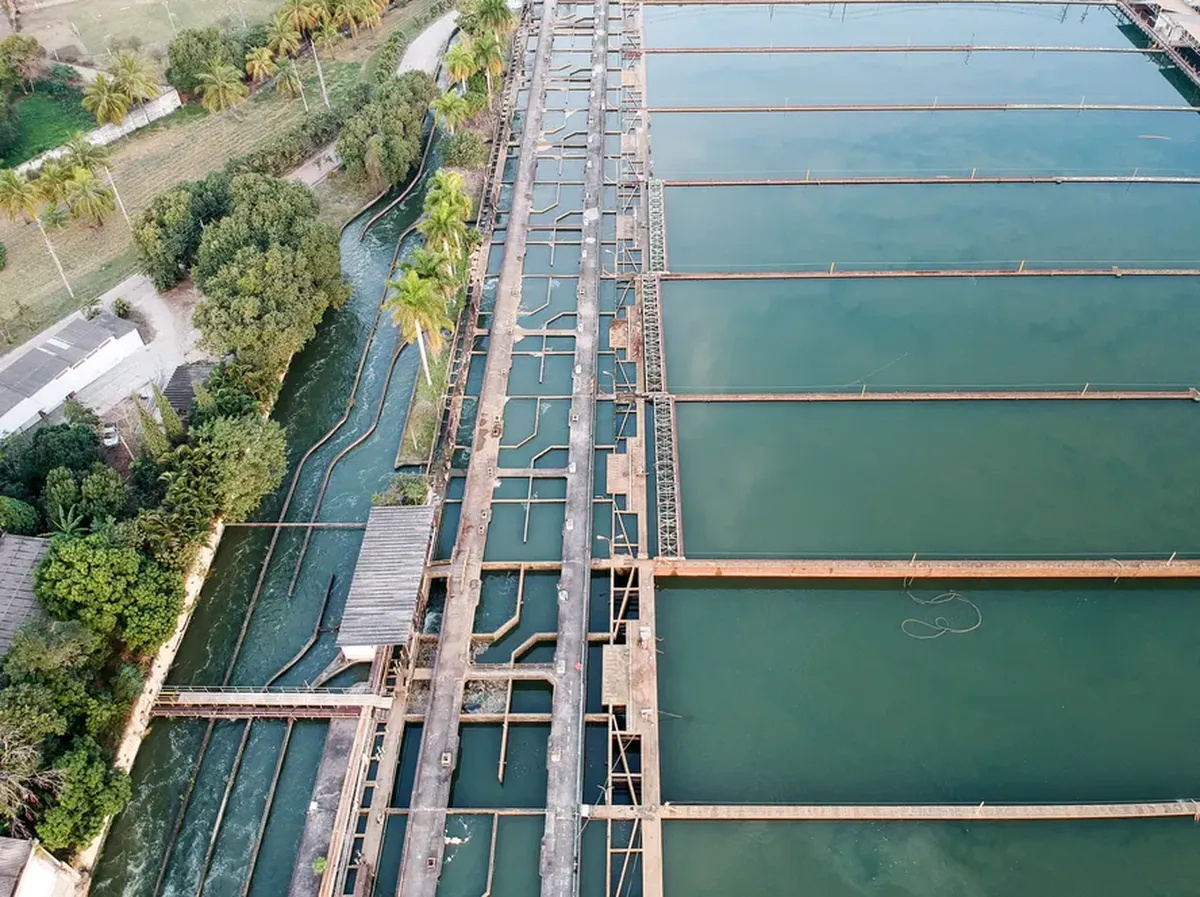

TCE-RJ Suspends Million-Dollar Payment to Águas do Rio and Demands Explanations About Editing Flaws That Could Change the Future of Sanitation in Rio de Janeiro
On October 3, 2025, the Court of Accounts of the State of Rio de Janeiro (TCE-RJ) determined the immediate suspension of the agreement between Cedae and Águas do Rio.
The document provided for a 24.3% discount on the value of water supplied by the state-owned company to the concessionaire, totaling R$ 900 million. The decision by councilor José Gomes Graciosa met the request of deputies Luiz Paulo (PSD) and Jari Oliveira (PSB).
The court wants to clarify errors in the bidding document data, prepared by BNDES, which caused distortions in the sewage coverage calculation.
These errors prompted the request for financial compensation and brought the transparency of the process into question.
The Origin of the Impasse
The problem began in May 2021, during the auction of the four concession blocks of Cedae. Águas do Rio, the winner of two blocks with a grant of R$ 15.4 billion, identified serious discrepancies in the sewage coverage rates reported in the bid document.
After taking over operations, the concessionaire found inconsistencies in 21 of the 27 served cities, which generated immediate controversy.
In Magé, 40% coverage was expected, but technicians found total absence of a collection network. In Belford Roxo, the rate dropped from 39% to 8%, and in Duque de Caxias, from 43% to 10%.
The contract stipulated that, if the difference exceeded 18.5%, the granting authority should compensate the concessionaire. Thus, the issue became the main focus of the legal and political confrontation.
Suspected Data and Shared Responsibility
The BNDES, author of the bid document, stated that it had used information from the National Sanitation Information System (SNIS), provided by Cedae and municipalities.
On September 29, 2025, Cedae emphasized that SNIS has an self-declaratory nature, which often generates errors and gaps. On the other hand, Águas do Rio argued that the technical visits conducted before the auction did not allow for accurate assessment of the underground networks.
According to the company, opening thousands of manholes would be necessary to measure the real situation, something unfeasible during the competition. Furthermore, the contract provided for 24 months for a complete review of water and sewage coverage.
This clause reinforces the concessionaire’s right to question the information and demand contractual rebalancing.
-
Amazonas Updates Flag After Over 40 Years to Represent All 62 Municipalities in Historic Legislative Decision

-
Going to travel and leave your pet alone? Brazilian city creates strict rule, targets temporary abandonment, and can fine dog and cat owners up to R$10,000.
-
Traffic jammed between BH and Nova Lima may get significant relief with the Viaduto Ferradura, a R$ 48 million project that promises to connect MG-30 and MGC-356 without passing through the Belvedere junction.

-
Rio Pinheiros catches the attention of those passing by the bike path with less strong odor, more capybaras and birds on the banks, a reduction of up to 55% in organic matter, and a record removal of trash in São Paulo.


The TCE’s Decision and Next Steps
Counselor Graciosa determined that no discount be applied until the final judgment.
He also set a 15-day deadline for Governor Cláudio Castro, Cedae President Aguinaldo Ballon, Agenersa, and Águas do Rio to provide detailed explanations.
The TCE requested the complete copy of the concession process from BNDES and sent a request to the Public Prosecutor’s Office of the State of Rio (MPRJ) to initiate an investigation into coercion and conflicts of interest.
Part of the team at Águas do Rio includes former executives from Cedae, which raises suspicions of undue interference. Thus, the MPRJ has already opened an inquiry and is monitoring developments.
Reactions and Possible Consequences
The involved municipalities denied responsibility for the data. Belford Roxo stated that the information was provided by previous administrations.
Caxias declared that it does not have direct control over sanitation, attributing the function to Cedae. Nilópolis confirmed the existence of a network, but reported that collection and treatment are not conducted locally. Magé, in turn, did not respond to the case. The state government informed that the agreement is provisional and subject to review.
Agenersa began technical inspections to verify the numbers and validate the methodology used by the concessionaire. The process, however, still has no deadline for completion.
In a statement, Águas do Rio warned that the suspension could lead to a rate increase this year and impact expansion works for sanitation and the decontamination of Guanabara Bay.
Cedae emphasized that only after complete investigation will it be possible to confirm whether there was a failure in the preparation of the bid document.
National Use of Data and Technical Reflections
Ana Tereza Parente, a lawyer specializing in Sanitation Law, explained that SNIS is the main base used in economic-financial modeling in the country.
She highlighted that, although self-declaratory, this data has technical value and guides investment decisions. When there are large variations, however, it is necessary to review contractual balance.
According to the jurist, Cedae and municipalities share the responsibility for inaccurate information.
The impasse of R$ 900 million between Cedae and Águas do Rio reignites the debate on sanitation contract management.
Although there is no immediate impact on consumers, the situation requires transparency, constant oversight, and independent audits.









I loved as much as youll receive carried out right here The sketch is attractive your authored material stylish nonetheless you command get bought an nervousness over that you wish be delivering the following unwell unquestionably come more formerly again as exactly the same nearly a lot often inside case you shield this hike