






 Portuguese
  Spanish


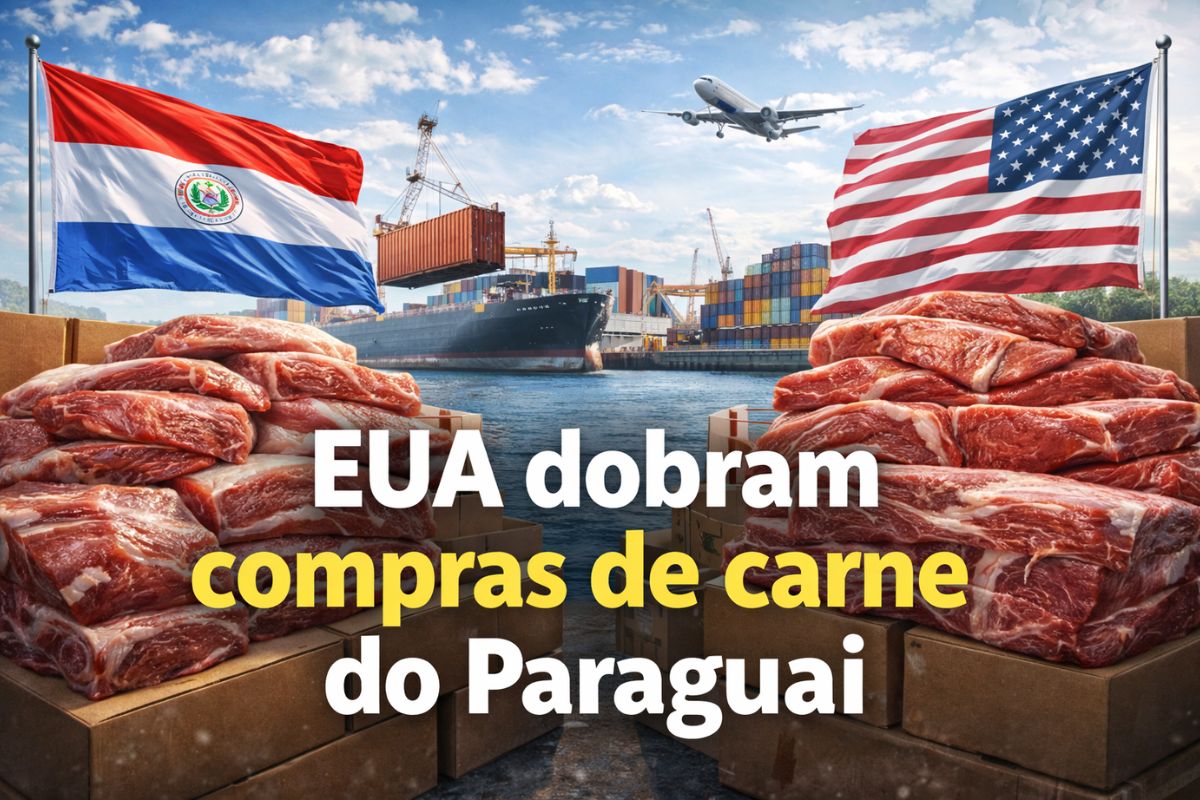


Beef Exports and Paraguay’s Exports Gain New Momentum as Paraguayan Beef Captures the North American Market and the United States Doubles Its Demand in 2025.
In 2025, Paraguayan beef gained a new protagonist on the international stage: the United States. In a year where total export volume grew by only 2.3%, the North American market stood out with an expansion of over 111% in value and 76% in volume, consolidating itself as the second largest destination for Paraguayan beef and the most dynamic partner in the sector. While Chile maintained its leading share, it was American demand that provided the decisive boost for a historic year.
At the same time, total beef exports from Paraguay reached US$ 2.095 billion in 2025, representing a year-on-year growth of 21.9%. This advance did not come from a jump in shipped tons, but from a clear repositioning movement: higher average prices, a focus on premium markets, and a diversification strategy that reduces regional dependency. For producers, processing plants, transporters, and inland cities, this new phase of Paraguayan beef means more dollar revenue, increased predictability, and an economy revitalized by agro-exporters.
USA Doubles Purchases and Takes Central Role in Paraguayan Beef
According to the foreign trade report from the Central Bank of Paraguay, Paraguayan beef exports to the United States jumped from US$ 143.6 million to US$ 304 million in 2025.
-
Brazilian Startup Turns Coffee Grounds into Plant-Based Leather, Cutting Water Use by Over 50 Times for High-Impact Sustainable Fashion

-
Eco Invest Auction Aims to Unlock $10 Billion in Investments, Focusing on Green Fertilizers, Critical Minerals, Batteries, and AI for Clean Industry in Brazil

-
Half of Brazilians Prefer Lower Taxes with Private Health and Education, While 44% Opt for Higher Taxes for State-Provided Services, Datafolha Survey Reveals

-
Brazil’s Most Expensive Toll Rises to R$ 40.60 on Route from São Paulo to the Coast, Nearly Matching Bus Fare to Santos




Practically, this is almost a doubling in a single year, with an increase of over 111% in value and 76% in volume.
This performance places the United States as the second largest destination for Paraguayan beef, accounting for 14.5% of the total export value, surpassing traditional markets such as Russia and Brazil.
Moreover, the North American market is now seen as a structural growth driver and not just as an occasional buyer during price opportunities.
For the sector, this shift means that Paraguayan beef has gained scale and consistency in one of the world’s most demanding markets, which tends to consolidate long-term sanitary, logistical, and contractual standards.
Chile Still Leads, but It’s Paraguayan Beef in the USA That Accelerates the Sector
Chile remains the main destination for Paraguayan beef, accounting for 30.8% of the value exported in 2025. However, Chile’s performance was much more modest, with growth of only 0.8% in dollars and a decline of 3.3% in shipped volume.
Meanwhile, the United States grew by combining greater absorption of tons with competitive prices, helping to provide predictability to the flow of Paraguayan beef shipments.
The result is a map of destinations where growth no longer depends on a single market, but instead relies on buyers capable of paying better, demanding more, and offering more stable contracts.
In 2025, Paraguayan beef reached 54 countries, but the growth was concentrated in markets considered premium, such as Chile, the United States, Taiwan, and Israel.
The message is clear: less focus on raw volume and more on international positioning and added value.
Less Volume, More Value: The New Logic of Paraguayan Beef

Even with a modest increase of only 2.3% in total export volume, Paraguayan beef managed to raise the average price per ton by 19.1% in 2025. This shows that the country started playing a different game: selling better, not just selling more.
In this context, Paraguayan beef is treated as a strategic asset, not just as a volume commodity.
The combination of markets that pay more, more predictable contracts, and a focus on quality strengthens the profitability of producers, the meat processing industry, and the entire logistics chain involved.
Even without paying the highest price per ton, a position occupied by Israel, the United States stands out by balancing scale, consistency, and attractive remuneration, helping to sustain this model shift.
Sanitary Certification, Industry, and Strategy Behind Paraguayan Beef in the USA
The North American advance is not a coincidence. It is a direct result of three pillars:
The expansion of sanitary certification for Paraguayan processing plants, allowing more facilities to ship Paraguayan beef to the United States.
The strong demand for industrial beef for processing, which fits well with part of the Paraguayan production, generating a consistent volume of orders.
A more targeted export policy focusing on reliable markets, prioritizing destinations that offer regulatory stability, long-term contracts, and better remuneration in dollars.
Together, these factors reinforce the perception that Paraguayan beef is undergoing a structural change, shifting from a model centered on gross volume to one based on higher-value markets and lower political and exchange rate risks.
Impact of Paraguayan Beef on the Economy: Dollars, Jobs, and a More Dynamic Interior
The reflection of the good moment for Paraguayan beef is not limited to foreign trade spreadsheets. The impact on the real economy is direct and measurable.
With beef exports reaching US$ 2.095 billion in 2025, the country gains greater foreign currency inflow, strengthening the flow of dollars in the financial system.
There is an increase in tax revenue from agro-export activities, expansion of investments in the livestock sector in genetics, pastures, infrastructure, and technology, and the creation of thousands of direct and indirect jobs in processing plants, transportation, services, commerce, and in the field.
For rural communities, Paraguayan beef consolidates itself as one of the main sources of stable income, irrigating inland cities with salaries, consumption, and new businesses linked to the beef chain.
Less Regional Dependence and New Global Position of Paraguayan Beef
By directing more shipments to destinations such as the United States, Chile, Taiwan, and Israel, Paraguay reduces its dependence on regional neighbors and broadens its insertion outside Mercosur.
This diminishes exposure to economic crisis cycles in nearby countries and to potential political or commercial changes in the region.
More than just setting records in a single year, Paraguayan beef is beginning to build a long-term position as a reliable supplier, with recognized sanitary standards and the capacity to serve both high-value markets and large-scale industrial segments.
In practice, this trajectory points to a Paraguay that moves away from the logic of being a cheap tonnage exporter and walks towards a model based on brand, quality, and strategic relationships with large global buyers.
And Now, What Is the Next Step for Paraguayan Beef?
The strengthening of the United States as a destination for Paraguayan beef is a milestone, but it also raises new questions.
Maintaining sanitary confidence, preserving cost competitiveness, expanding trade agreements, and continuing to diversify markets will be decisive steps so that the leap of 2025 is not an outlier but the beginning of a new level.
If Paraguayan beef continues in this direction, it could redefine the country’s role on the global agro-export map, increasing the weight of livestock in the economy and consolidating a more robust growth base for the coming decades.
And you, what do you think? In your view, is the biggest challenge now maintaining the competitiveness of Paraguayan beef in the United States or diversifying further the destinations to avoid relying too much on a single market?


A carne do Paraguai vai pelo porto de Paranaguá para os estados unidos…😏
Bo
Boa matéria. Faltou informar por onde a exportação é feita.