Portuguese
  Spanish


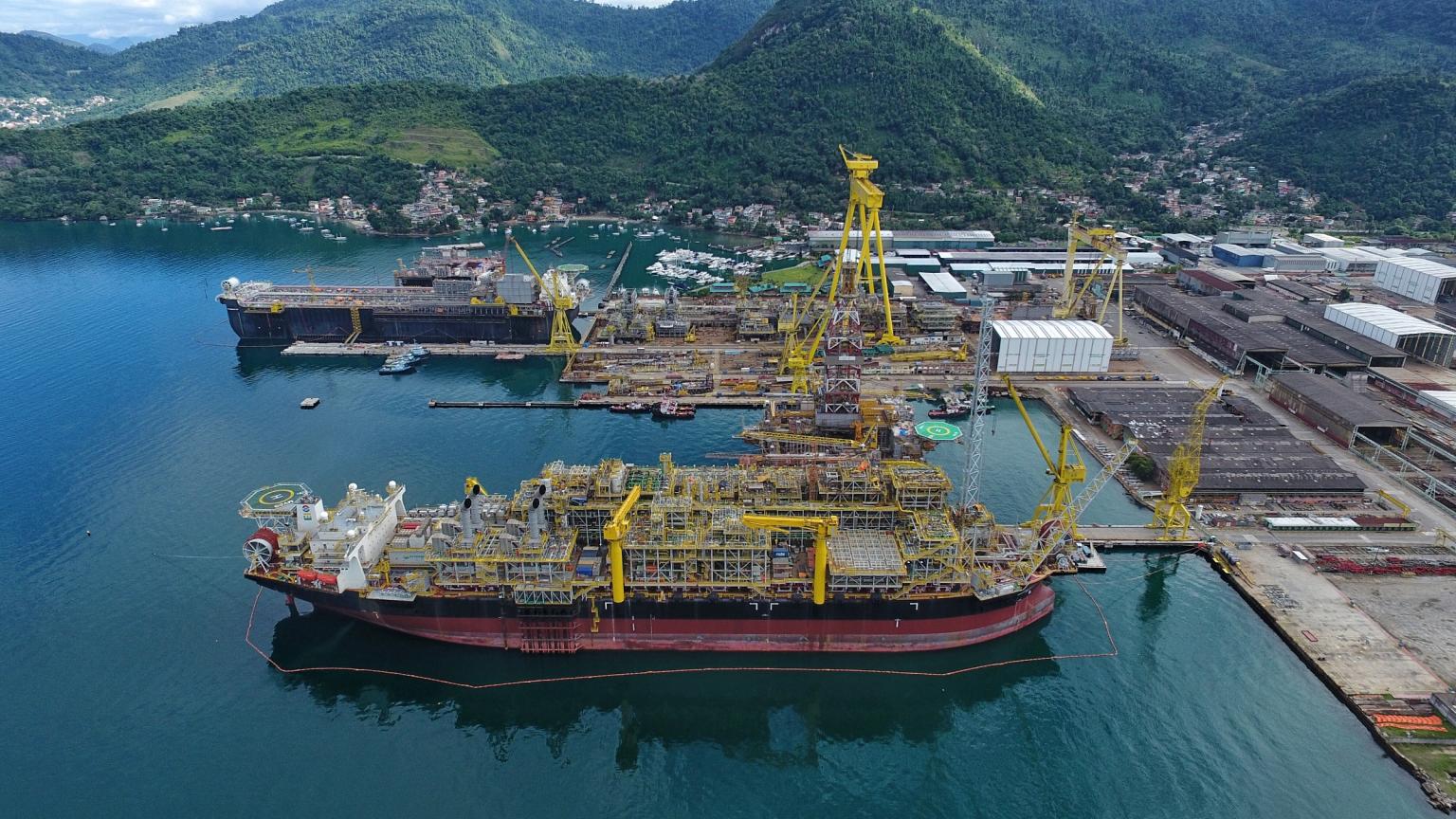

The Vessel Is The Only One With Two Flare Towers And Can Process 150 Thousand Barrels Of Oil Per Day
The FPSO Cidade de Campos dos Goytacazes MV29 is under construction at the Keppel BrasFELS yard in Brazil. The FPSO is unique for having 2 flare towers. The unit is designated for operations in the Tartaruga Verde and Tartaruga Mestiça fields in the Campos Basin, off the coast of Brazil.
Check Out Other News:
- Job Openings For Engineers, Production Operators, Safety Technicians And More On This Day 22
- Renewable Energy Sources Had A Significant Increase In The Energy Matrix In 2019
- In A Webinar By FGV, Experts Say That Port Privatization Is An Example To Be Followed For A Successful Market
Anchored approximately 125 km from Macaé, State of Rio de Janeiro, on the southeast coast of Brazil, in a water depth of 765 m, the FPSO is capable of processing 150,000 barrels of oil per day, 176 million standard cubic feet of gas per day, and has a storage capacity of 1,600,000 barrels of crude oil.
This is the 12th vessel (FPSO/FSO) that MODEC has delivered to the Brazilian oil and gas sector, as well as the 10th vessel for Petrobras.
-
Abandoned Factory in Rio’s North Zone Becomes Urban Hazard with Standing Water and Debris

-
The U.S. Navy Conducts Submarine Tests in Idaho Lake to Detect Underwater Noises Hidden by the Ocean

-
British Factory Transitions from Mechanical Parts to Producing 420,000 Electric Power Units Annually, Supplying 70% of Ford’s Electric Cars Sold in Europe
-
France Launches Network to Recycle 20 Million Cookware Pieces by 2027, Accepting All Brands for Aluminum and Coating Separation


MODEC, Inc. owns the FPSO and provides operation and maintenance services for the FPSO under a 20-year charter contract.
Renewable Energy Sources Had A Significant Increase In The Energy Matrix In 2019
Reports from MME show data on the increase in the participation of renewable energy sources in the matrix from the previous year.
Renewable energies, including hydroelectric, wind, solar, and biomass, represented 46.1% of the energy matrix in 2019, an increase of 0.6% compared to the 2018 indicator. This value represents three times the global average. This information comes from the Ministry of Mines and Energy, which published the Brazilian Energy Review of 2019.