





 Portuguese
  English
  Spanish
  4 min of reading
  0 comments


Study released by the Technical University of Denmark indicates that the accelerated detachment of glaciers increases the transport of rocks and sediments, transforms deep ecosystems, and increases risks for navigation in the North Atlantic
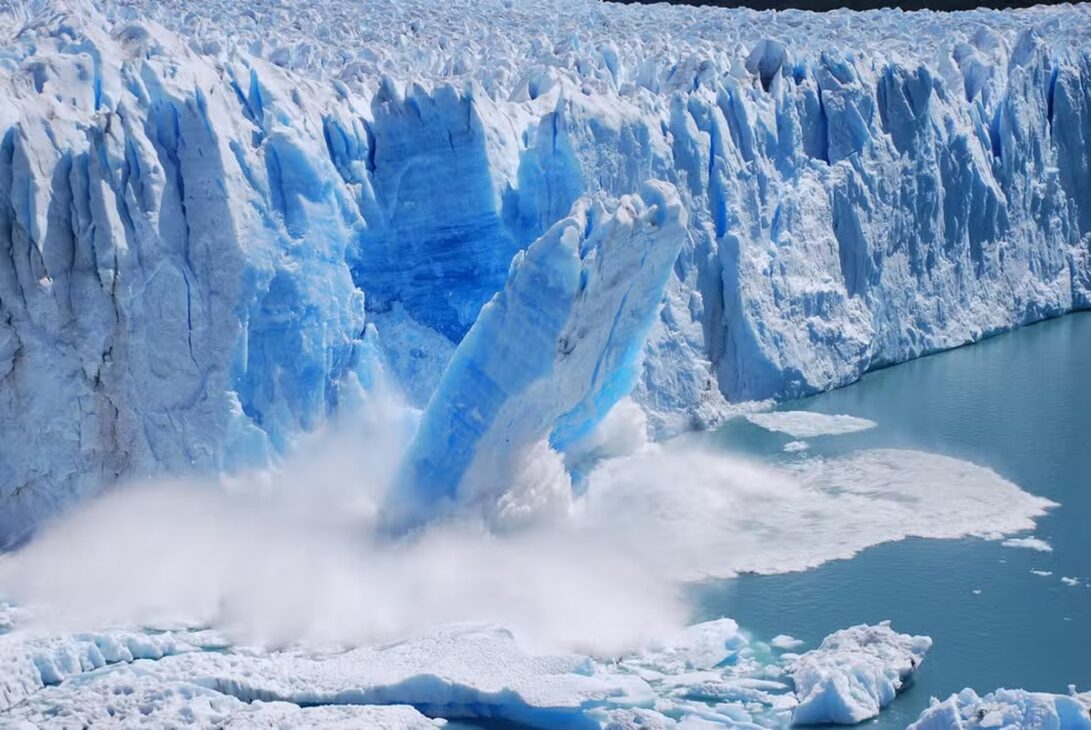
Greenland’s glaciers have started releasing four times more icebergs than 25 years ago, in a process linked to climate change and monitored by scientists from the Technical University of Denmark, DTU.
The study, released this Thursday (11) and published in the scientific journal Nature, shows that the increase in the detachment of ice blocks not only affects the Arctic landscape. On the contrary, the phenomenon also interferes with navigation, sediment transport, and the formation of habitats on the ocean floor.
According to the researchers, the icebergs carry large amounts of rocks and sediments hundreds of kilometers into the sea. Later, when they sink or break apart, these materials reach the seabed and alter local conditions for marine life.
-
Amid toxic foam, satellites, and smart buoys, São Paulo presents a R$ 23.5 billion plan that could change the way Tietê and Pinheiros are monitored until 2029.

-
Owner of Siena 2007 shows how to clean yellowed and cracked headlights
-
Giant advertisements that would end up in the trash are now turned into bags, eco-bags, and accessories, while each 100 m² of reused canvas prevents about 50 kg of waste in landfills.
-
Instead of leaving waste pickers working without structure, a project in Montenegro was approved under the Recycling Incentive Law to support 28 families, expand selective collection, and transform waste into income in Rio Grande do Sul.



Moreover, the reduction of sea ice opens new navigation routes. As a result, the risk of vessels encountering icebergs more frequently during crossings in the North Atlantic increases.
Greenland’s icebergs advance and change deep ocean areas
According to the study published in Nature, there is a direct relationship between changes in the glacier surface, the increase in iceberg displacement, and the greater presence of hard substrates in deep waters.
These substrates are primarily formed by rocks and sediments transported by the ice blocks. Thus, areas far from the glaciers start receiving materials that were previously trapped in the glacial environment.
In practice, this movement transforms parts of the ocean floor. Therefore, the impact of melting and detachment of icebergs is not limited to Greenland’s coastal regions.
The process also reaches more distant areas of the North Atlantic and interferes with ecosystems that depend on stable conditions in the ocean depths.
Fram Strait sees significant increase since 2000
The advance of icebergs is particularly noticeable in the Fram Strait, an area located between northeastern Greenland and the Norwegian archipelago of Svalbard.
According to the Technical University of Denmark, the presence of icebergs in this region has quadrupled since the year 2000. This data highlights the speed of transformation observed in recent decades.
In addition, researchers identified growth in iceberg groups. These clusters, formed by more than five individual blocks, originate from Greenland and also the Russian Arctic.
Since the beginning of the century, the proportion of these groups has increased by 4.5% per decade. Thus, the phenomenon involves both isolated blocks and large concentrations of moving ice.

Climate change appears linked to glacier instability
Researcher Shfaqat Abbas Khan, one of the report’s authors, stated that satellite measurements and observations show a loss of stability in the large glaciers of northeast Greenland.
According to him, the results indicate a climate-induced link between changes in glaciers and the increased movement of icebergs.
This advance, therefore, does not just represent a visual consequence of Arctic warming. It also alters the physical dynamics of the ocean and amplifies effects on deep environments.
Furthermore, accelerated calving reinforces concerns about rising sea levels, although the study highlights impacts that go beyond this point.
New Arctic routes increase concern for navigation
With the reduction of sea ice, new areas of the Arctic become more accessible for vessels. However, this opening also increases contact between ships and icebergs.
Therefore, the increase in ice blocks in the North Atlantic raises an alert for maritime traffic. After all, routes previously less used may begin to register a greater presence of icebergs.
This scenario requires attention because the blocks can travel long distances before sinking or fragmenting. Thus, the risk is not limited to the vicinity of glaciers.
Impact of icebergs goes beyond rising sea levels
The consequences of accelerated glacier calving are not limited to the rise in sea levels. According to Shfaqat Abbas Khan, the effects directly impact deep-water ecosystems.
These changes occur even in areas far from the glaciers. Therefore, the study reinforces that Greenland influences broad regions of the North Atlantic.
By transporting sediments, rocks, and other materials, icebergs alter habitats and create new conditions on the ocean floor. Meanwhile, navigation needs to deal with a rapidly changing environment.
In this way, the increase in the number of icebergs from Greenland reveals a climate change with connected effects: ice, ocean, maritime routes, and marine life all respond to the same process.




Be the first to react!