Portuguese
  Spanish


Xiaomi’s robotic arm works with smart parking, the car parks itself, the robot detects the position and starts charging, disconnecting when the limit is reached. The company says the demonstration is real and ready for production, but sales only start at the end of 2026.
The Chinese technology giant Xiaomi has unveiled a home robotic arm capable of automatically connecting the electric car to the charger, without any driver action, and promises to put the novelty on sale in the fourth quarter of 2026. According to carnewschina, the system was designed for home charging of electric vehicles, eliminating the need to handle the cable. Xiaomi itself says the technology is close to reaching the market.
The charging arm works together with smart parking functions. In practice, the car parks itself and charging begins autonomously, in what Xiaomi describes as a single solution that combines automation and artificial intelligence. The company also claims that the demonstration video was recorded in a real environment, not in a controlled simulation.
What Xiaomi revealed and when it should arrive
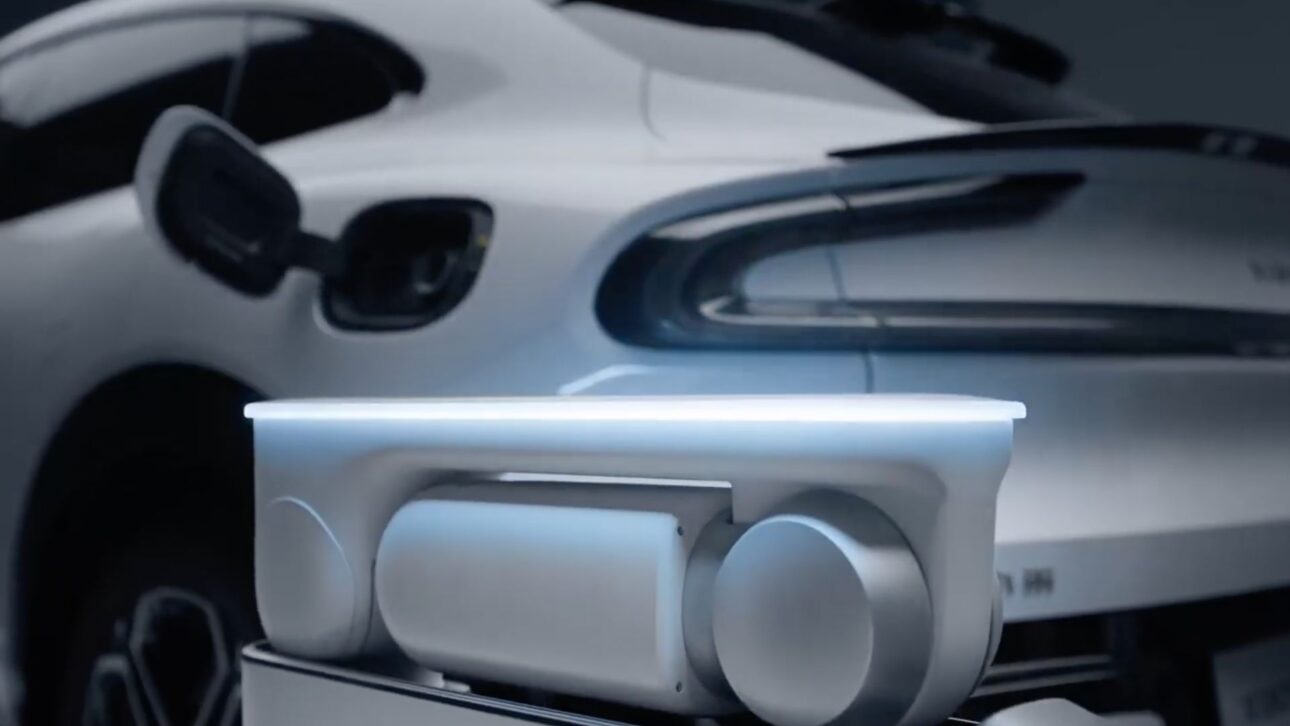
Xiaomi wants to end the routine of manually plugging in the car. According to the material released by the portal interestingengineering on June 13, the Chinese giant presented a robotic arm that connects the electric vehicle to the charger fully automatically, without driver intervention, and states that the commercial launch is scheduled for the fourth quarter of 2026. The proposal is to make home charging practically hands-free.
-
DNA Analysis Reveals How Five Cattle Survived Over 130 Years on a Deserted Brazilian Island

-
Private Spacecraft Intercepts Another for First Time in History During U.S. Space Force Mission Completed 11 Hours Early with Rocket Launched in Record 16 Hours

-
Scientists Predict Earth’s Habitable Lifespan: 1.8 Billion Years Before Oceans Evaporate and Sun Forces Planet Out of Life Zone
-
LG Unveils XBOOM Stage 501 Portable Speaker with 25-Hour Battery, AI Karaoke, and Sound by will.i.am in Brazil


The differentiator is the integration with smart parking. According to the report, the car parks itself and the recharge begins autonomously, in what Xiaomi defines as a unique solution that combines automation and artificial intelligence. The company emphasizes that the demonstration video was recorded in a real environment and that the functions are ready for production, which, according to the material, suggests that the technology is close to being commercialized.
How hands-free charging works
The heart of the system is what Xiaomi calls automatic charging. According to CarNewsChina, after the car is parked, the robotic arm detects the vehicle’s position, connects the cable, and starts charging without the driver needing to do anything. Just get out of the car and let the robot take care of the rest.
The end of charging is also automatic. According to the report, as soon as the battery reaches maximum charge or a user-defined limit, the robotic arm disconnects the connector by itself. Additionally, Xiaomi claims that you can start a charging session remotely, via a mobile app, as long as the car is parked within the arm’s reach, without anyone needing to return to the vehicle or touch the cable.
The Chinese race for autonomous charging
Xiaomi is not alone in this race. According to the material, the competition for autonomous charging of electric vehicles is intensifying, with Chinese automakers and tech companies trying to redefine the experience of refueling the car at home. Several large companies are investing in similar robotic solutions.
Two names help measure the size of the race. According to the report, Li Auto is developing its own automated charging system, and at the launch of the Li Auto i8 electric SUV in 2025, CEO Li Xiang revealed that the company was testing a charging robot, betting that future ecosystems will combine smart parking, autonomous driving, and fully automatic charging.
In August 2025, the Harmony Intelligent Mobility Alliance showcased a robotic system in the Aito M8, where the car maneuvers itself into the spot and an app commands the arm to open the lid and plug in the cable, in just a few minutes, the time for a coffee.
Real convenience or still a promise for 2026
The appeal of Xiaomi’s idea is immediate. According to the material, the proposal for the car to park and connect itself promises to eliminate a daily inconvenience for electric vehicle owners, and the company insists that the demonstration is real and ready for production.
Even so, for now, it is an announcement, with sales expected only by the end of 2026 amid a race where Li Auto and Harmony Intelligent Mobility Alliance are pursuing the same goal.
In practice, there are questions that the announcement does not fully answer. According to the report, the convenience depends on the car being within arm’s reach and the smart parking working well, and it is still unclear about the price, compatibility with different cars and chargers, or the reliability in everyday use. Whether the robotic arm will arrive in garages with the same fluidity as the video, only the 2026 launch and real use will show.
With its home charging robotic arm, Xiaomi shows a future where the electric car parks, connects, and recharges itself, from automatic plug-in to disconnection at the end of the charge, all without the driver touching the cable.
It is a demonstration that the company guarantees to be real and ready for production, with a launch scheduled for the end of 2026, but which still shares space with rivals like Li Auto and Harmony Intelligent Mobility Alliance in the race for autonomous charging. How well this convenience will work in real life is what the coming months should reveal.
And you, would you let a robotic arm plug in and recharge your electric car at home by itself, or do you prefer to continue handling it with your own hands? Share your opinion and exchange ideas with other readers, respecting different views on the future of electric cars.