






 Portuguese
  Spanish


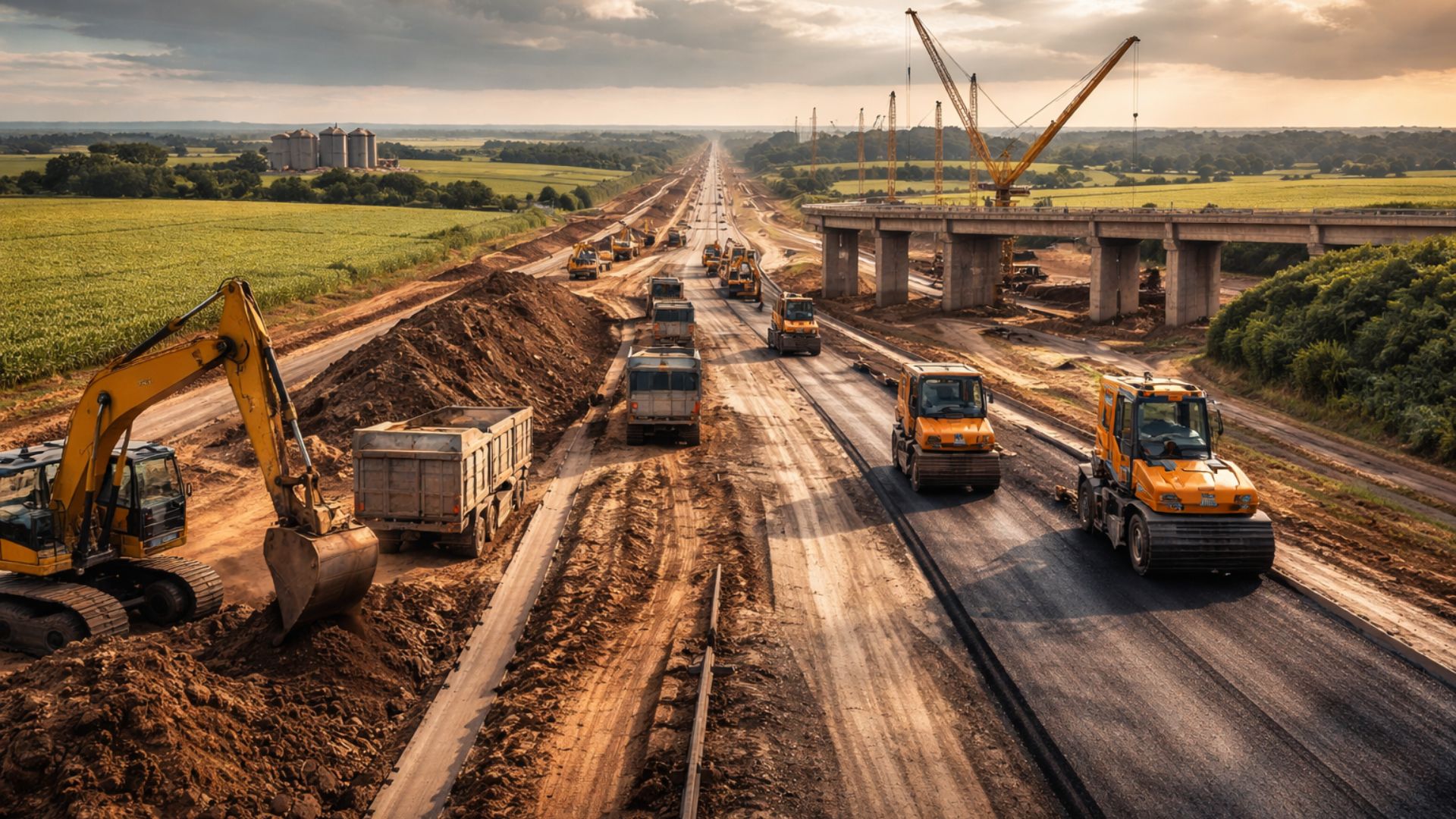


Federal Concession Unlocks Billion-Dollar Investments in Strategic Corridor of the Midwest, Promising Logistics Modernization, Adoption of Electronic Tolling, Accelerated Works, and Direct Impacts on the Flow of Goiás Agribusiness, Road Safety, and Job Creation Throughout Three Decades of Contract.
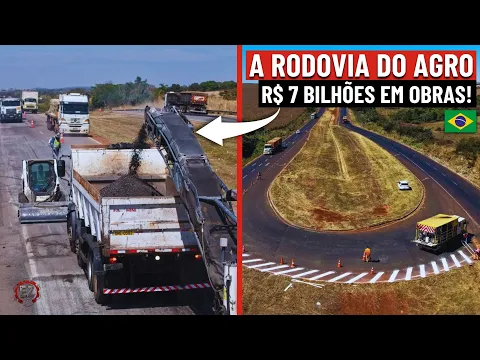
The concession of BRs 060 and 452 in Goiás has entered a new phase after the auction of the corridor known as Green Route, with projected investments of nearly R$ 7 billion over 30 years to modernize 426.2 km between Goiânia, Rio Verde, and Itumbiara.
The change in model, which transfers the management of the stretch to the private sector under federal regulation, targets a sensitive point in the flow of agribusiness.
Reducing risk, time, and cost on a route dominated by trucks and heavy traffic is at the core of the strategy.
-
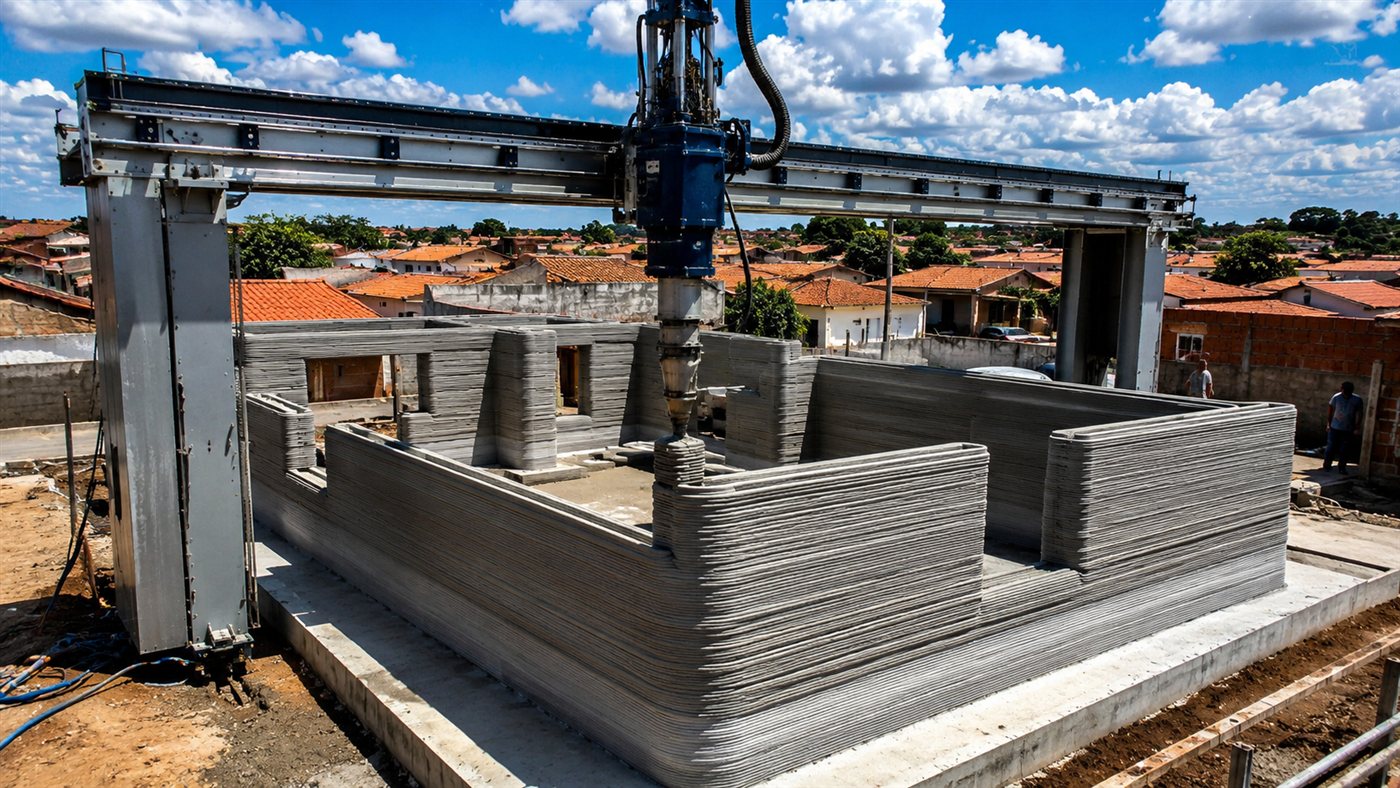
Brazilian Company Uses 3D Printing to Construct House Modules in 48 Hours with Three Operators, Costing $180 to $240 per Square Meter, Ready for On-Site Assembly

-
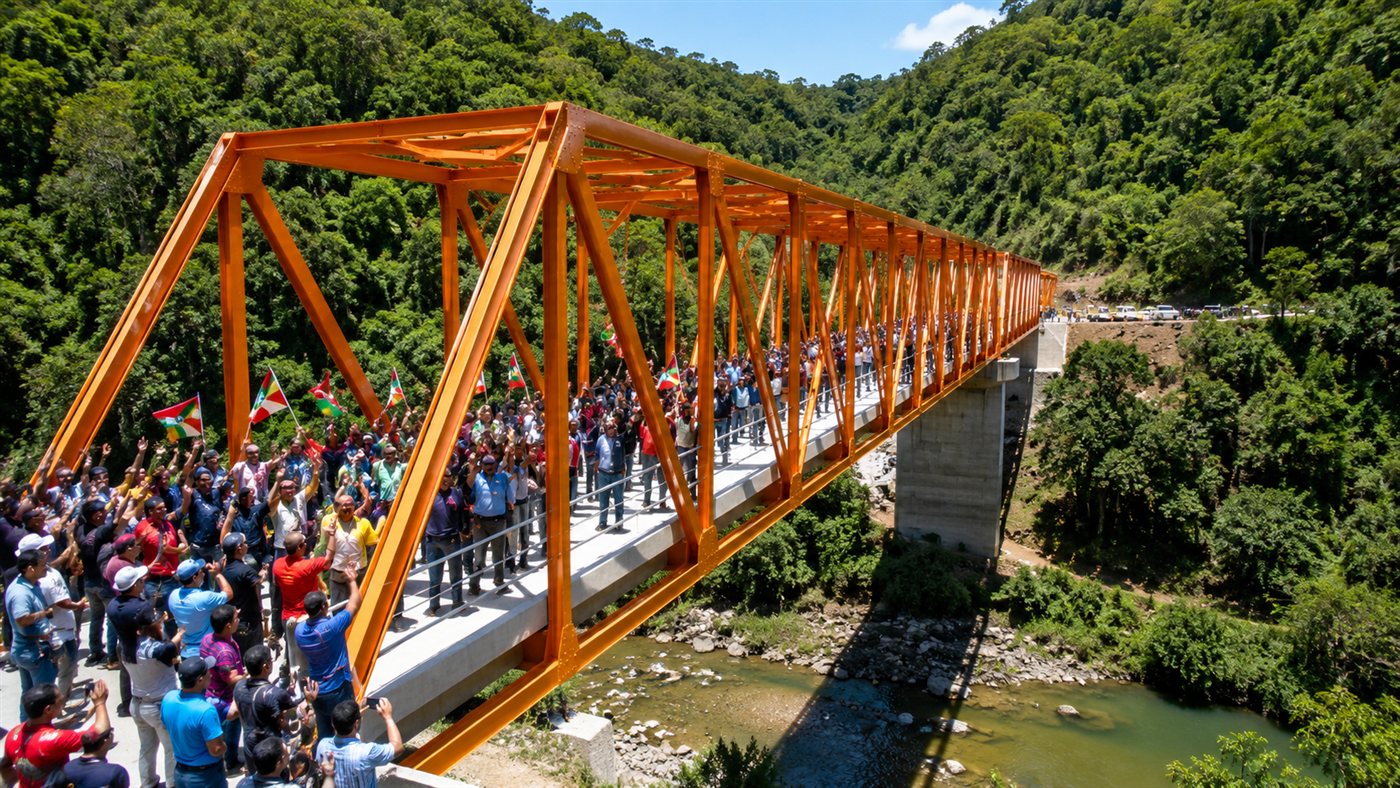
Brazilian Community Raises $1.4 Million, Builds Bridge in 138 Days, and Lets Residents Decide on Surplus Funds
-
Taiwan Unveils 914-Meter “Impossible” Bridge by Zaha Hadid, Cutting Travel Time by 25 Minutes and Withstanding Severe Earthquakes

-
Engineering Feat in Brazil: 6.4 km Tunnel and Powerful Pumps Overcome 200-Meter Elevation to Save São Paulo’s Cantareira Water System




In recent years, the project has been presented as a showcase for technological updates, with plans for electronic tolling in a free flow system, without barriers.
The implementation, however, is contingent on regulatory stages and is expected to take place in 2026, not as something already in permanent operation.
Logistical Corridor of the Midwest and Historical Bottlenecks

Planned to connect production areas to consumer centers and export routes, BRs 060 and 452 form an axis that crosses one of the most dynamic stretches of the Midwest.
With the advance of the agricultural frontier and the intensification of road transport, the infrastructure has begun to face increased demand without proportional gains in capacity and safety.
Over time, the combination of damaged pavement, irregular signage, and segments poorly designed for modern flow has increased transportation costs and raised the risk of accidents.
Geometry and pavement condition issues directly impact transportation efficiency, especially on routes dominated by cargo.
Meanwhile, the region’s economic weight has only increased.
Goiás has established a relevant position in grain production, registering 37.3 million tons in the 2024/25 harvest, according to data released by the state government.
When the outgoing infrastructure does not keep pace with this rhythm, the impact is felt in freight costs, travel time, and delivery predictability.
Concession of the Green Route and New Management Model
The turning point came with the federal concession of the BR-060/452/GO stretch.
The auction took place at B3 in December 2024 and was won by the Green Route Goiás consortium, with a 30-year contract and expectations for an investment package close to R$ 7 billion for modernization and expansion of the road system.

The design of the project includes continuous recovery and maintenance, as well as interventions to enhance capacity and safety.
Duplications and additional lanes in planned segments, safer returns, and overpasses are part of the contractual obligations.
The proposal also incorporates user support, with operational structure geared towards emergencies and permanent assistance on the highway.
In 2025, the concessionaire began to announce that the stretch entered operation with 24-hour services.
Teams and support fleet are expected to reduce response time to incidents and minimize prolonged blockages.
The full operation was announced to begin in October 2025, marking the start of a new assistance routine in the corridor.
Electronic Free Flow Tolling and Connectivity
One of the most cited pillars of the project is the toll without a physical plaza, in the free flow model, in which cameras and sensors identify vehicle passage.
The tolling is expected to start in 2026, after validations and parameters to be approved by the regulatory agency.
Another bet is connectivity along the route.
In 2025, a partnership was announced to bring 4G coverage to the 426.2 km of the corridor.
The infrastructure meets communication and safety demands as well as technology requirements associated with free flow.
Direct Impacts on Goiás Agribusiness

In practice, the most immediate impact for those relying on the route tends to show up in predictability and safety.
Fewer potholes and better signage reduce damage to vehicles, delays, and interruptions.
These factors weigh particularly on the transportation of grains, inputs, and animal protein during harvest and off-season periods.
The logistics are a significant part of the final cost of the product.
Corridors with high truck traffic suffer more quickly when there is excess weight, irregular maintenance, and urban bottlenecks.
The promise of the works package is to reduce critical sections and organize traffic.
This helps to stabilize the travel time between production hubs and road intersections.
There is also an expectation of effects on the job market over the course of the contract.
Direct and indirect jobs related to works, operations, and associated services are anticipated during the concession period.
At the same time, the execution of the schedule and the way the toll is charged are central factors for measuring the perceived cost-benefit for transporters and producers.
The arrival of free flow, if confirmed within the rules, could reduce queues and make traffic more fluid.
The impact on costs depends on rates, applicable discounts, and the actual traffic behavior over time.
With a corridor that concentrates a significant part of Goiás’s outflow and a new management model being implemented, how will truck drivers, producers, and residents of the towns along BR-060 and BR-452 evaluate the balance between works, tolls, and safety gains in their daily routine?




Porque não se investe em ferrovias, como nos EUA e na Europa, para diminuir o número de carretas nas estradas e consequentemente o número de acidentes???
Única coisa maravilhosa seria a duplicação de Rio Verde a Itumbiara!
E a duplicação da BR-364, entre Jataí-GO e Rondonópolis-MT, reivindicada há décadas por políticos e população da região, ninguém escreve uma linha sequer a respeito? 🤔🤷🤦🤦🤦😡😡😡