





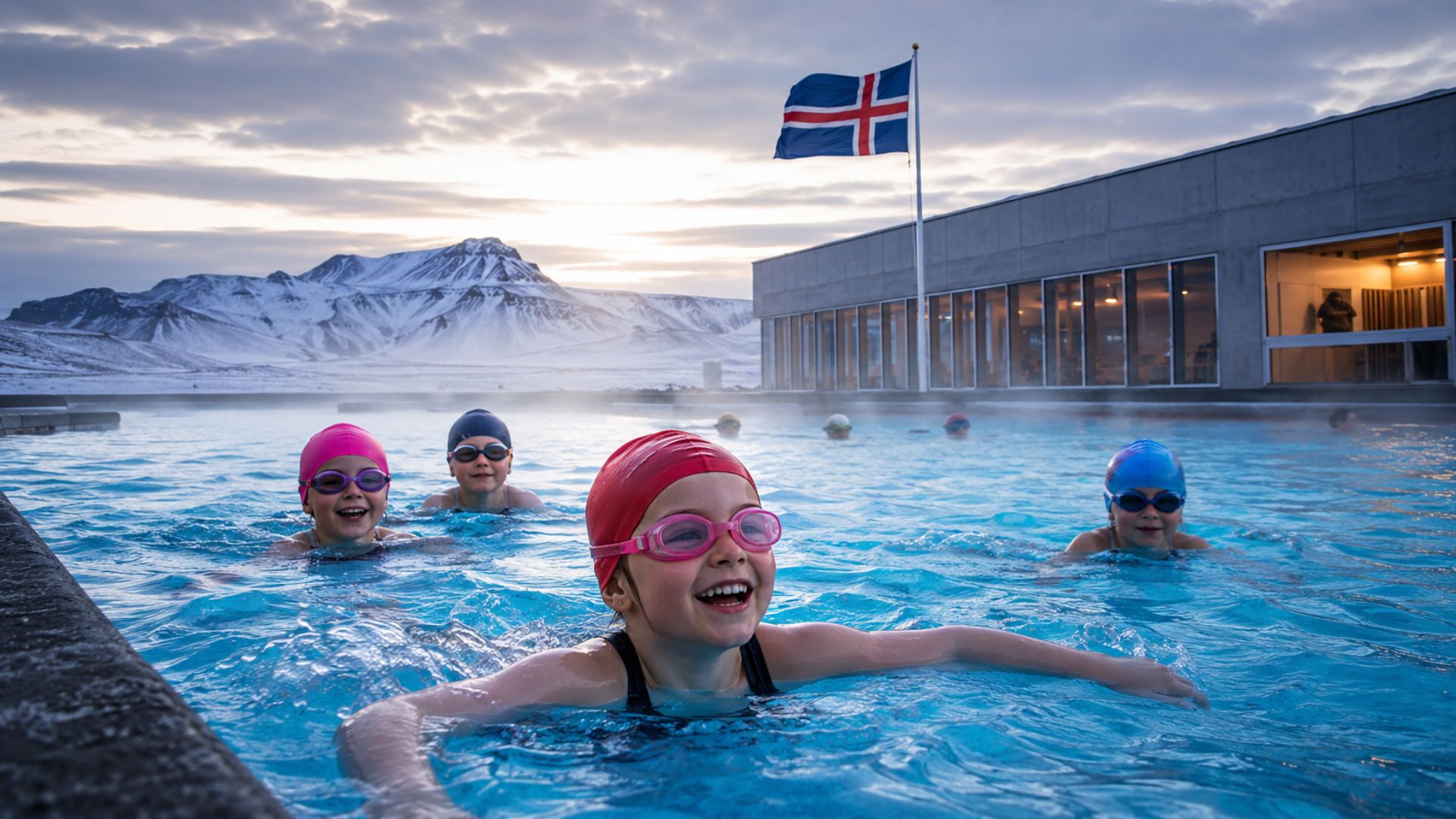

In Iceland, mandatory swimming starts in the first grade and only stops when it reaches five degrees below zero. Behind this routine is the country that has led the World Economic Forum’s gender equality ranking for 15 years, with almost equal parental leave for mothers and fathers.
In Iceland, learning to swim is not optional. Mandatory swimming starts right in the first grade and continues, week after week, until after the tenth year, in a country where pools heated by the earth’s warmth are everywhere. The class is only canceled when the temperature nears five degrees below zero.
But this seemingly extreme routine is just the tip of a societal model. For 15 years, Iceland has led the gender equality ranking of the World Economic Forum, and part of this equality appears in curious details, such as almost equal parental leave between mothers and fathers and benefits where those who earn more receive a little less from the state.
Mandatory swimming and the routine of children in Iceland
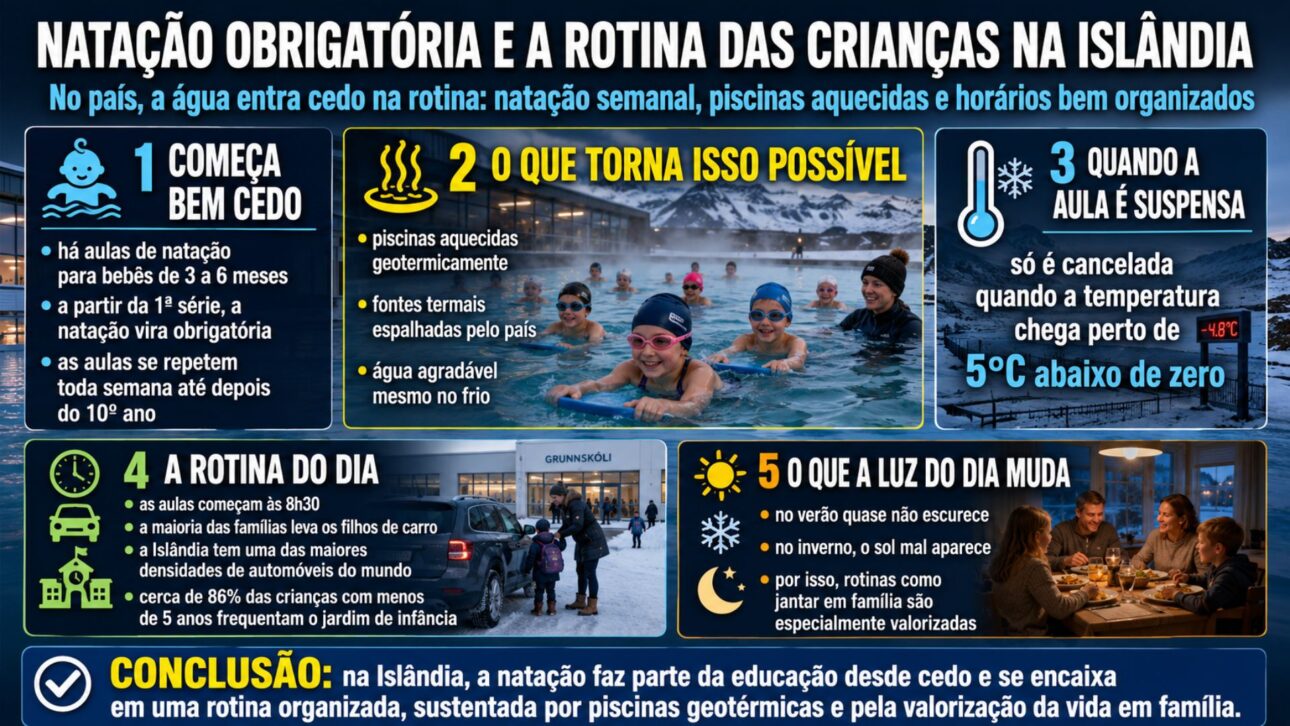
The relationship of Icelanders with water begins early. Swimming lessons are available for babies from 3 to 6 months, and from the first grade, mandatory swimming enters the curriculum and repeats every week until after the tenth year.
-
Hospital Cook Discovers 1,700-Year-Old Pot of 52,503 Roman Coins Using Metal Detector in Field

-
Salvador’s Acarajé Vendors Turn Used Frying Oil into Income by Selling it for Biodiesel Production
-
Volunteer Revives Dead Lake in Bengaluru Overnight, Doubling Water Capacity and Attracting Kingfishers and Herons
-
1909 Train Car Once Destined for Abandonment Transformed into Luxury Accommodation in the U.S. After $3,000 Restoration



What makes this possible are the geothermally heated pools and hot springs scattered across the country, which keep the water pleasant even in the cold.
The class is only suspended when the temperature approaches five degrees below zero.
The rest of the day is also timed. Classes start at 8:30 AM and most families drive their children, as Iceland has one of the highest car densities in the world.
About 86% of children under 5 attend kindergarten. As summer hardly gets dark and in winter the sun barely appears, maintaining routines, like family dinners, becomes especially valued there.
Gender equality that starts at home
The big backdrop is gender equality. According to the World Economic Forum, Iceland has ranked first globally for 15 years, having closed about 92.6% of the gap between men and women.
This index evaluates the gender balance in four areas: participation in positions of power, income, education, and health.
In practice, almost half of the parliament is made up of women, and the law requires companies to pay equal salaries for equivalent roles.
For Icelanders, however, gender equality starts at home. In a typical family, consisting of Margrét, a social educator, and Hjalti, a physiotherapist, both work full-time and equally share childcare and household chores, without arranging who does what.
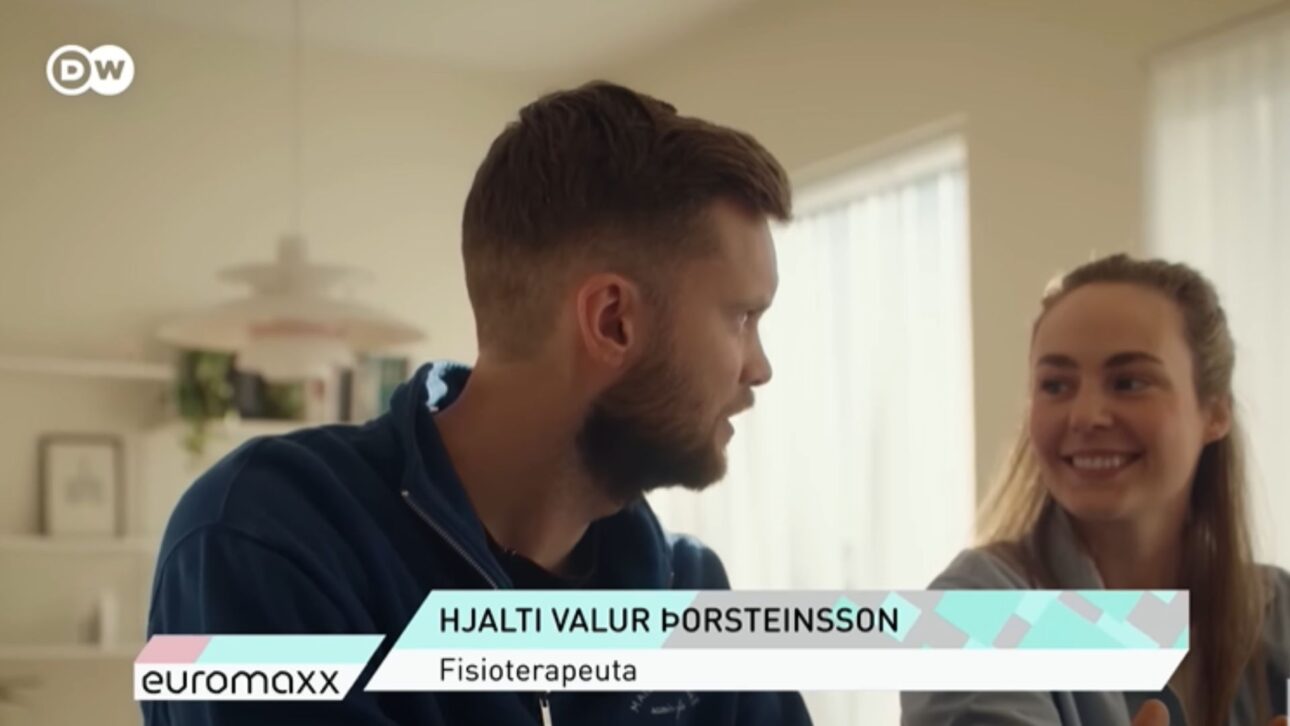
As they themselves summarize, the division simply happens. In some kindergartens, the so-called Hjalli method reinforces this culture, encouraging boys and girls to challenge gender stereotypes.
Parental leave and the benefit where those who earn more receive less
Public policies support this arrangement. Iceland was a pioneer in adopting a parental leave almost equally divided: both parents are entitled to about six months and receive around 80% of the salary, with the mother usually taking the weeks that cannot be shared.
Moreover, kindergartens are heavily subsidized by the state, and parents pay only a small fee, allowing both to work outside.
There are also direct benefits. Families receive about 2,400 euros per year per child, plus an additional 900 euros for children under 7 years old.
The curious detail, mentioned at the beginning, is that the benefit is designed progressively: those who earn more end up receiving a little less from the state.
Not surprisingly, with the generous parental leave and support for early childhood, almost 90% of women of working age are employed in Iceland.
An admired model, but far from being a perfect paradise


Despite the numbers, it is important not to treat the country as a finished paradise. Leading the World Economic Forum ranking does not mean the absence of problems: about 25% of Icelandic women report having experienced rape or attempted rape, and many cases end up being filed away.
Iceland’s own president, Halla Tómasdóttir, states that no government does enough as long as there is gender violence, pointing out flaws in the Judiciary and culture.
The country aims to eliminate gender inequality by 2030, and the UN considers it to be on the right track.
In the end, what stands out the most is the serenity of everyday life. Margrét and Hjalti say they have the same wish for their two children: that they be, above all, good and happy people, not necessarily disciplined.
They try not to be too strict and resolve things through conversation. Perhaps it is precisely this calmness in the face of small daily decisions, combined with gender equality policies, that makes raising children in Iceland so different.
Mandatory swimming in the ice, shared parental leave, and assistance that gives more to those who have less: Iceland shows a very different way of organizing family life.
Tell us in the comments what you think Brazil could learn from this model of gender equality and if you would have your children swim even in the cold.


