Portuguese
  Spanish


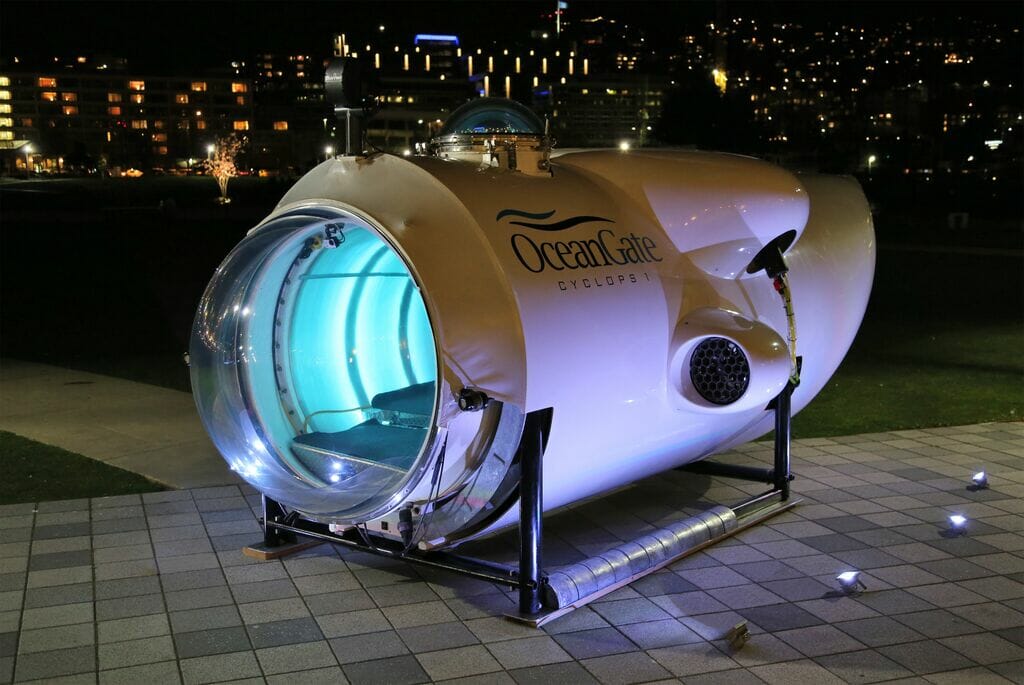

A Bold Dive Into Innovation Results In Tragedy, Revealing Fundamental Flaws In The Approach And Management Of Innovation.
The appetite for the unknown has always challenged humanity. In the case of OceanGate, this thirst for unprecedented discoveries, however, cost the lives of five brave explorers. The company, known for manufacturing the Titan submersible, aimed to transform ocean exploration into an “innovative” experience accessible to a few. However, what was promised as a breakthrough for humanity turned into a catastrophe of overwhelming proportions.
Bold Navigation In The Sea Of Innovation
Founded by Stockton Rush in 2009, OceanGate made a name for itself by enabling researchers and explorers to venture into the uncharted depths of the oceans. With the first successful expedition to the Titanic wreck in 2021, the company seemed to be on the right path. However, along with the potential for extraordinary discoveries came enormous responsibilities.
Concerns about the safety and effectiveness of the Titan submersible existed from the beginning. Although it was described as the “lightest and most economical deep-diving submersible,” its revolutionary technology lacked robust safety protocols. In 2018, the Marine Technology Society’s Manned Underwater Vehicles Committee had already warned the company’s CEO about the potential severe consequences. These warnings, however, were ignored until the third expedition culminated in unimaginable tragedy.
-
99Food Under Investigation by Brazilian Consumer Protection Agency for Lack of Price Transparency, Faces Potential $2.8 Million Fine

-
Race for data centers in Brazil increases pressure on critical energy

-
Growth without profit has become one of the most costly management mistakes in Brazil.

-
Anvisa blocks batch of antibiotic after unexpected discovery in sealed vial and also suspends clindamycin with impurities and saline solution used in intravenous application




The Rush For Innovation: A Double-Edged Sword
In the frantic pursuit of innovation, OceanGate neglected a vital precaution: sufficiently testing its revolutionary product. The unchecked drive to stand out and profit can lead companies to tread hasty and sometimes dangerous paths. It is essential to remember that while innovation is the driving force of growth and progress, it must be implemented with prudence.
In the case of the Titan, crucial tests that could predict long-term impacts were overlooked. A fundamental consideration omitted was the extreme pressure under which the submersible would operate—comparable to the weight of the Eiffel Tower. Furthermore, the Titan was built with carbon fiber instead of traditional titanium, a decision that should have required a series of additional tests and experiments.
These examples underscore the importance of the innovation funnel process, which involves a thorough analysis of ideas, risks, and potential returns. This structured and cautious approach can prevent catastrophic failures and unnecessary losses.
Responsible Innovation: The Path To Credibility
The mistakes of OceanGate echo those of the Boeing 737 MAX 8, where inadequately tested software resulted in an aviation tragedy. Both cases reinforce the importance of rigorously testing innovative products and services before implementation.
It is not enough to innovate; it is crucial to ensure the safety and effectiveness of the products or services in question through a robust governance process. Only then can a company truly become innovative, safe, and gain credibility in the market. The tragedy of OceanGate should serve as a grim reminder that unchecked innovation, without proper care and testing, can have devastating consequences.
Credits: Alexandre Pierro is a master’s student in innovation management and engineering, a graduate in mechanical engineering, nuclear physics, and co-founder of PALAS, a pioneering consulting firm in innovation ISO in Latin America.