Portuguese
  Spanish


Learn How The New Agreement Between Invepar And The City Hall Of Rio Guarantees The Continuity Of The Concession And The Toll Value On The Yellow Line
Invepar and the City Hall of Rio de Janeiro formalized, in June 2025, an agreement that ensures the maintenance of the Yellow Line concession.
The contract will be maintained until the originally anticipated end.
The toll value has been set at R$ 3.80, with annual adjustments linked to the IPCA-E.
The agreement seeks to end old disputes and guarantee legal security for both users and the concessionaire.
The agreement brings predictability to the operation of the road.
-
Amazonas Updates Flag After Over 40 Years to Represent All 62 Municipalities in Historic Legislative Decision

-
Going to travel and leave your pet alone? Brazilian city creates strict rule, targets temporary abandonment, and can fine dog and cat owners up to R$10,000.
-
Traffic jammed between BH and Nova Lima may get significant relief with the Viaduto Ferradura, a R$ 48 million project that promises to connect MG-30 and MGC-356 without passing through the Belvedere junction.

-
Rio Pinheiros catches the attention of those passing by the bike path with less strong odor, more capybaras and birds on the banks, a reduction of up to 55% in organic matter, and a record removal of trash in São Paulo.




Agreement Details Strengthen Legal Security Of The Concession
According to information confirmed by the concessionaire and the municipal administration, the new agreement includes the mutual settlement of outstanding issues involving the 9th and 11th Addenda.
Additionally, it also includes the attempted takeover provided for in Complementary Law No. 231, sanctioned in 2019.
The understanding was recently submitted for homologation by the Federal Supreme Court (STF).
One of the main objectives is to preserve the continuity of service delivery.
The Carioca expressway is strategic for urban mobility. Thus, the agreement eliminates legal uncertainties that could compromise investments and the operation of the concessionaire.
The pact provides for the maintenance of the fare at R$ 3.80, with annual updates according to variations in the IPCA-E index.
This ensures predictability for users and financial viability for the operation of the Yellow Line.
City Hall’s Commitment Provides For Revocation Of Law And Municipal Decree
Another important point of the agreement is the City Hall of Rio de Janeiro’s commitment to revoke, within 30 days, Complementary Law No. 231/2019.
Furthermore, the corresponding regulatory decree will also be revoked.
This step is essential to ensure the full validity of the agreed terms. It will also end the legal discussions related to the attempt to resume the concession.
Official sources from the City Hall highlighted that the revocation will help restore contractual balance.
It will allow Invepar to focus efforts on the continuous improvement of the infrastructure and services of the Yellow Line.
On the other hand, representatives of the concessionaire emphasized that the agreement ends a period of instability. It reaffirms the company’s commitment to urban mobility in Rio.
History Of The Dispute And Impact On Users Of The Expressway
The dispute for the concession of the Yellow Line gained relevance in 2019 when the City Hall enacted Complementary Law No. 231.
The measure aimed to take over the concession of the road.
At that time, Invepar legally contested the measure, claiming contractual violation and economic-financial imbalance.
Since then, various lawsuits and negotiations have occurred.
In 2025, the parties reached the current agreement. Users of the road celebrated the outcome.
Now, they have greater predictability in their commuting costs and stability in the operation of the Yellow Line.
Experts in administrative law emphasize that homologation by the STF provides additional legal security.
This is a crucial aspect to attract private investments in urban infrastructure in the country.
Continuity Of The Concession Ensures Benefits For The City Of Rio De Janeiro
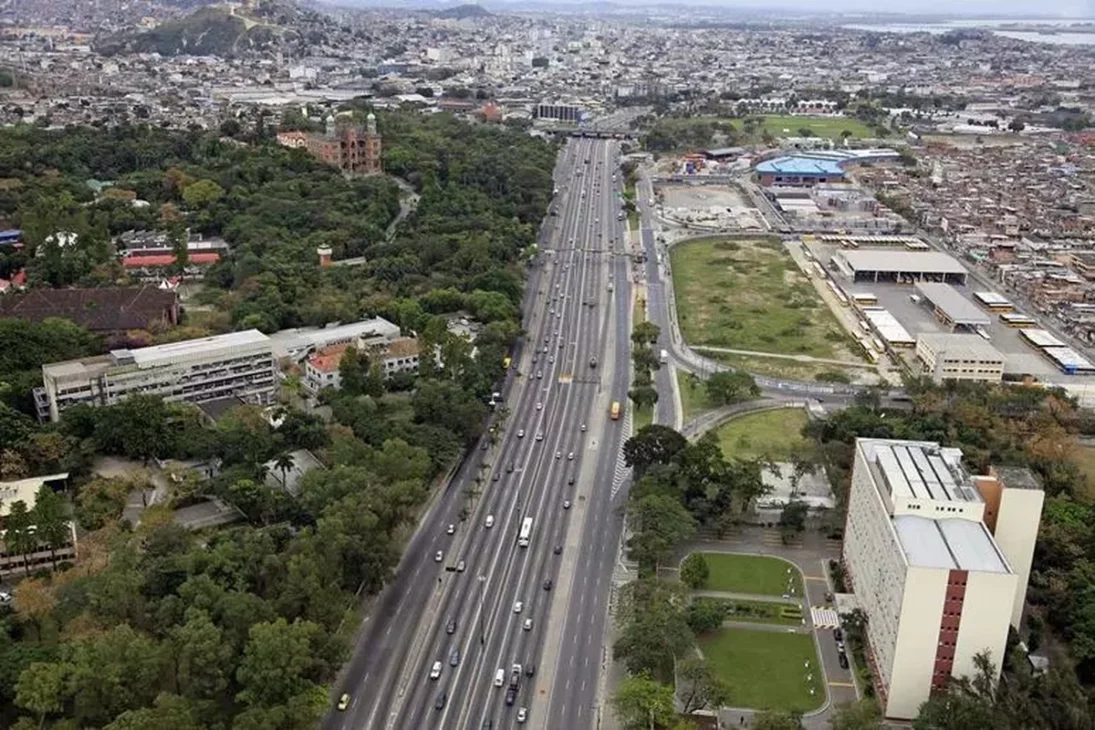
The maintenance of the Yellow Line concession by Invepar, therefore, ensures an essential route for the daily flow of vehicles until the end of the contract.
The 5% reduction in the fare, or 20 cents, represents a certain “relief” in people’s pockets.
Furthermore, the agreement allows for the continuation of investments in maintenance and modernization of the expressway.
Sources close to the negotiations state that, with this, the dialogue between the parties has become more constructive.
Consequently, this is expected to boost future public-private partnerships in other areas of urban mobility in Rio.
Will the city of Rio see a new cycle of modernization in its transport infrastructure in this way?