Portuguese
  Spanish




Court Decision in João Pessoa Prohibits Energisa from Collecting Retroactive ICMS Charges on Solar Energy and Requires Double Refunds to Consumers, Along with a Fine of R$ 50 Thousand for Collective Moral Damages.
The Court of Paraíba ruled in favor of consumers using solar energy, prohibiting Energisa from collecting retroactive charges related to ICMS on the Distribution System Usage Fee (TUSD). The ruling, issued by the 4th Civil Court of João Pessoa, responds to a lawsuit filed by the Public Ministry of Paraíba (MPPB) and represents a milestone in defending the rights of distributed generation users.
According to the decision, signed by Judge José Herbert Luna Lisboa, the company committed irregularities by attempting to charge amounts for the period between September 2017 and June 2021, claiming supposed tax adjustments. The judge classified the charge as illegal and abusive, highlighting that it violated the Consumer Defense Code and regulations from the National Electric Energy Agency (Aneel).
Energisa is Required to Refund Amounts and Suspend Sanctions Against Consumers
In the ruling, Energisa was prohibited from registering consumers in restrictive credit registries, such as SPC and Serasa, and is also prevented from cutting off energy supply due to non-payment related to this charge. The company must refund double the amounts paid unduly and pay indemnification of R$ 50 thousand for collective moral damages to the State Consumer Defense Fund.
-
Over 60 Tractors Take to the Streets in Lopera as Solar Parks Compete with Olive Groves, Affecting 13,000 to 100,000 Trees According to Conflicting Reports

-
Brazil’s Vitória Airport to Launch Solar Plant Covering Area of 10 Soccer Fields, Boosting Clean Energy and Cutting Costs
-
Switzerland Converts Train Tracks into Solar Power Plants with Removable Panels to Generate Energy Without Using Additional Land
-
Surge in Solar-Powered Homes in Brazil Leads to Grid Strain and Connection Restrictions in Three States




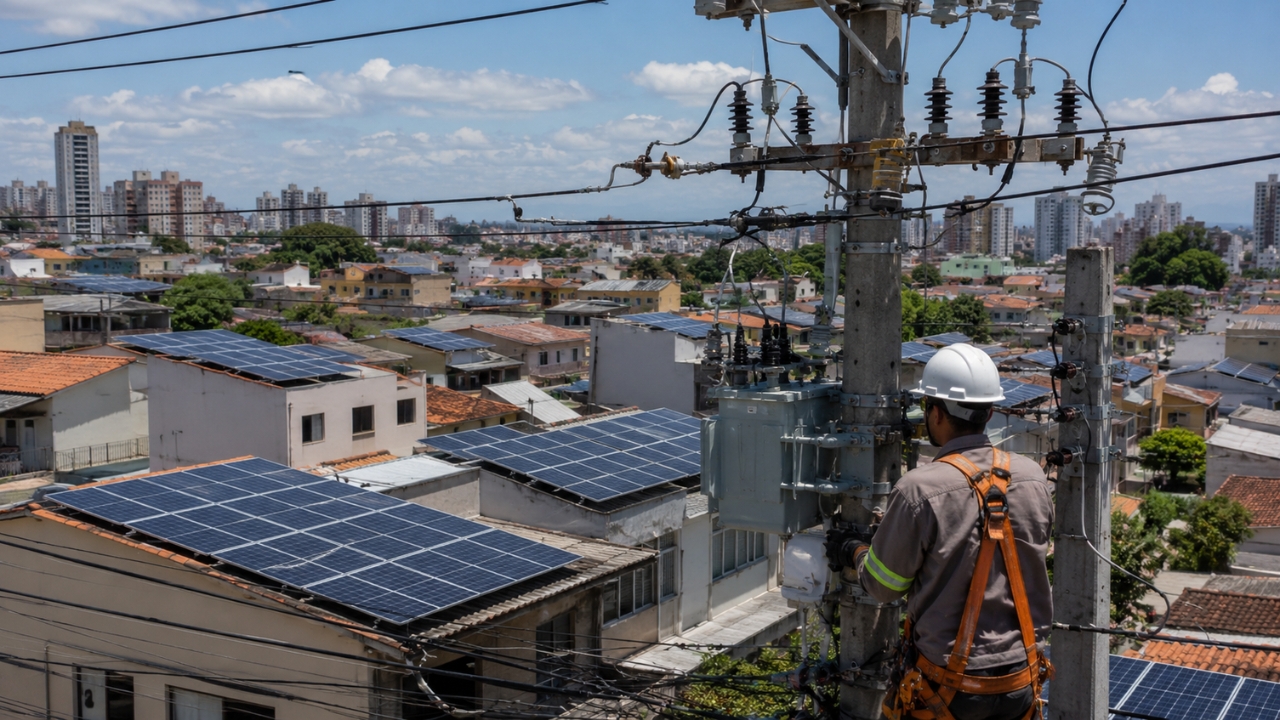
The judge emphasized that the company’s practice exploited the vulnerability of customers, who were caught off guard by additional invoices and opaque calculations. The decision reaffirms the importance of transparency and good faith in consumer relations, especially in a strategic sector like solar energy, which is rapidly growing in the country and involves thousands of small producers and households.
Error Acknowledged by the Company Itself Prompted Action by the Public Ministry
The case originated in 2021, when Energisa itself acknowledged a misinterpretation regarding the ICMS exemption on energy generated and offset by photovoltaic systems. The company attempted to pass on the amount of R$ 16.7 million to consumers through retroactive charges without clearly detailing the criteria used for the calculations.
Prosecutor Priscylla Maroja, responsible for the MPPB action, argued that the company’s measure violated basic principles of justice and transparency. “The charge was abusive and violated rights guaranteed to consumers, who cannot be held responsible for administrative or tax errors of the company,” she defended.
The substantive decision confirms the injunction granted in August 2024 and maintains the permanent prohibition of the charges. Despite the favorable outcome for consumers, an appeal is still possible by Energisa.
Solar Sector Celebrates Decision and Reinforces Importance of Legal Security
Representatives of the solar energy sector considered the decision a significant victory, as it reinforces the need for legal security and regulatory stability for those investing in distributed generation. Experts point out that measures like this strengthen consumer confidence and prevent setbacks in one of the most promising sectors of the Brazilian energy matrix.
With the decision, the judiciary reaffirms that administrative errors cannot be passed on to the consumer, especially in a context of transition to clean and sustainable sources, where every incentive is crucial for the advancement of solar energy in the country.