Portuguese
  Spanish


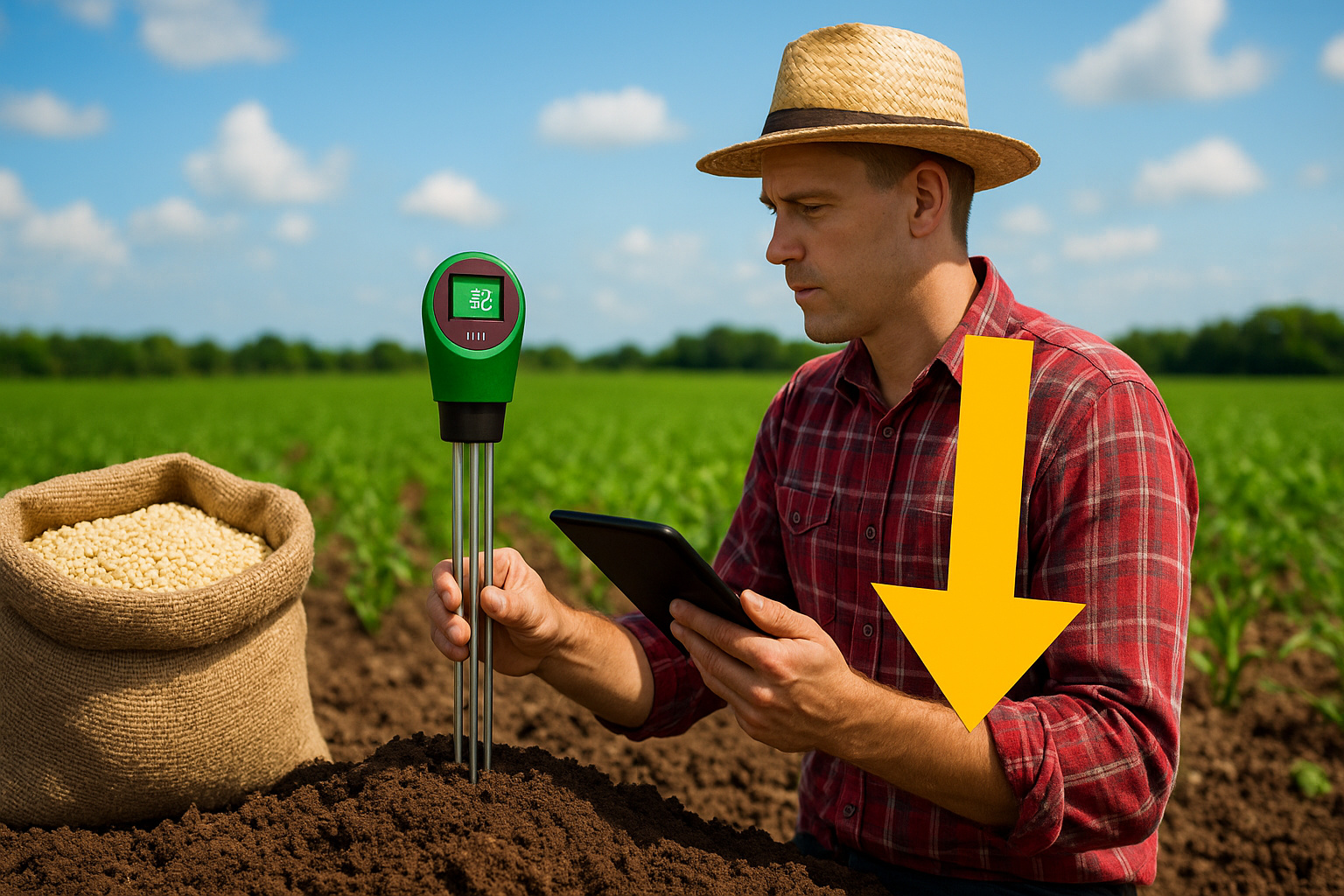

Soil Nitrogen Monitoring Cuts Fertilizer Costs by Up to 30% and Ensures Productivity in Agribusiness.
Revolution in the Field: Technology Reduces Costs and Preserves the Soil
Brazilian agribusiness faces an increasingly challenging task: dealing with high prices for nitrogen fertilizers, especially urea. Even after the pandemic, this input continues to trade between US$ 435 and US$ 475 per ton at Brazilian ports.
In light of this scenario, producers are seeking cheap and effective alternatives to maintain productivity without compromising profits.
An invaluable solution arises with real-time nitrogen monitoring in the soil, capable of reducing fertilizer consumption by up to 30%, without compromising quality. The method, already applied on farms across the country, shows that it is possible to combine economy, sustainability, and efficiency.
-
Cashew Becomes Billion-Dollar ‘Superfood’ in Ivory Coast: 1.6 Million Hectares of Monoculture Encroach on Forests as Families Trade Food for Nuts

-
In Rural Brazil, José Sirval Operates a Water-Powered Mill Grinding 125 Kilograms of Corn Daily Using His Great-Grandfather’s Century-Old Monjolo
-
From Market Stall to Agribusiness: Patagonian Fruit Grower Owns 550 Hectares and Processes 18 Million Kilos of Pears and Apples Annually, Exporting Directly to Brazil
-
At 93, Brazilian Farmer Restores 56 Hectares of Forest and Revives Spring in the Amazon, Installs First Climate Tower in the Region


Why Have Fertilizer Prices Become So High?
The high price of nitrogen is no coincidence. According to Stenon, a company specializing in digital soil data, geopolitical factors directly affect costs. The crisis in Eastern Europe, coupled with US secondary sanctions and tensions in the Middle East, strongly impacts imports.
Currently, about 17% of the urea used in Brazil comes from the Persian Gulf, a region marked by instability. This makes the input even more vulnerable to international fluctuations and pressures agribusiness costs.
How Nitrogen Monitoring Transforms Routine in the Field
Case studies and independent analyses prove: specific nitrogen management for each crop is a game changer. By adopting soil sensors that read in real-time, farmers can identify exactly how much fertilizer to apply and when.
This precision ensures savings of 20% to 30% in urea use, maintaining or even increasing the productivity of crops like corn and sugarcane. If applied on a larger scale, just in the state of São Paulo, the impact would be huge: a reduction of 0.28 to 0.42 million tons of fertilizers, resulting in R$ 0.7 to R$ 1.1 billion in savings per year.
Healthier Soils and Reduced Carbon Footprint
In addition to cost reduction, technology promotes soil balance and contributes to more sustainable agricultural practices. Stenon’s CEO, Niels Grabbert, explains:
“Nitrogen is a moving target: applying too early means losing it to the atmosphere; too late, and you lose productivity. The result is a lower cost per sack of sugarcane and corn, healthier soils, and a lighter carbon footprint.”
This approach meets not only economic demands but also environmental and market requirements, which are increasingly geared toward sustainable products.
The Future of Agribusiness Lies in Soil Intelligence
While many still see fertilizers as an unavoidable cost, nitrogen monitoring proves that intelligence in resource usage is the path to a more profitable and competitive agribusiness.
With real-time readings, producers no longer work in the dark and can make quick, informed decisions. Thus, the soil remains fertile, productivity is sustained, and input costs drop significantly.
In the end, the question is no longer “if” producers will adopt the technology, but “when.” After all, saving billions a year while also preserving the soil is a deal that no one can afford to miss.