Portuguese
  Spanish



Innovative Concrete Design That Mimics Nature Improves Crack Resistance by 63%, Promising Greater Durability and Efficiency in Construction
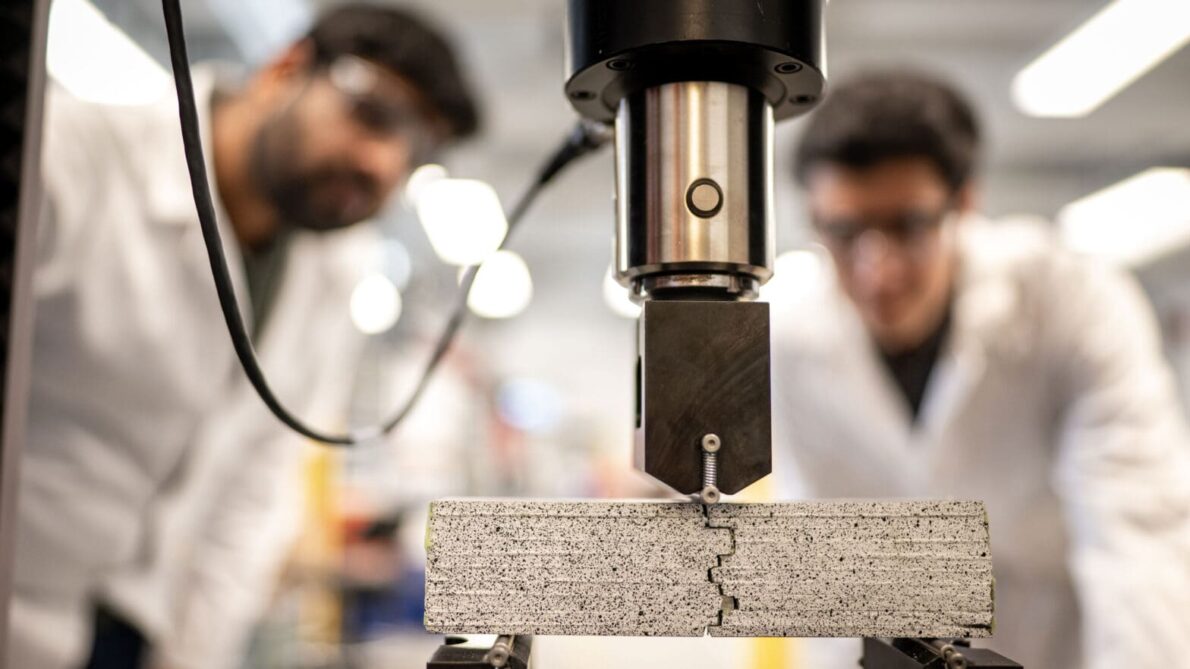
Researchers at Princeton Engineering in the United States are revolutionizing civil engineering by increasing concrete’s crack resistance by up to 63%, using a design inspired by nature. The team, led by Reza Moini, assistant professor of civil and environmental engineering, combined material design innovation with advanced additive manufacturing techniques.
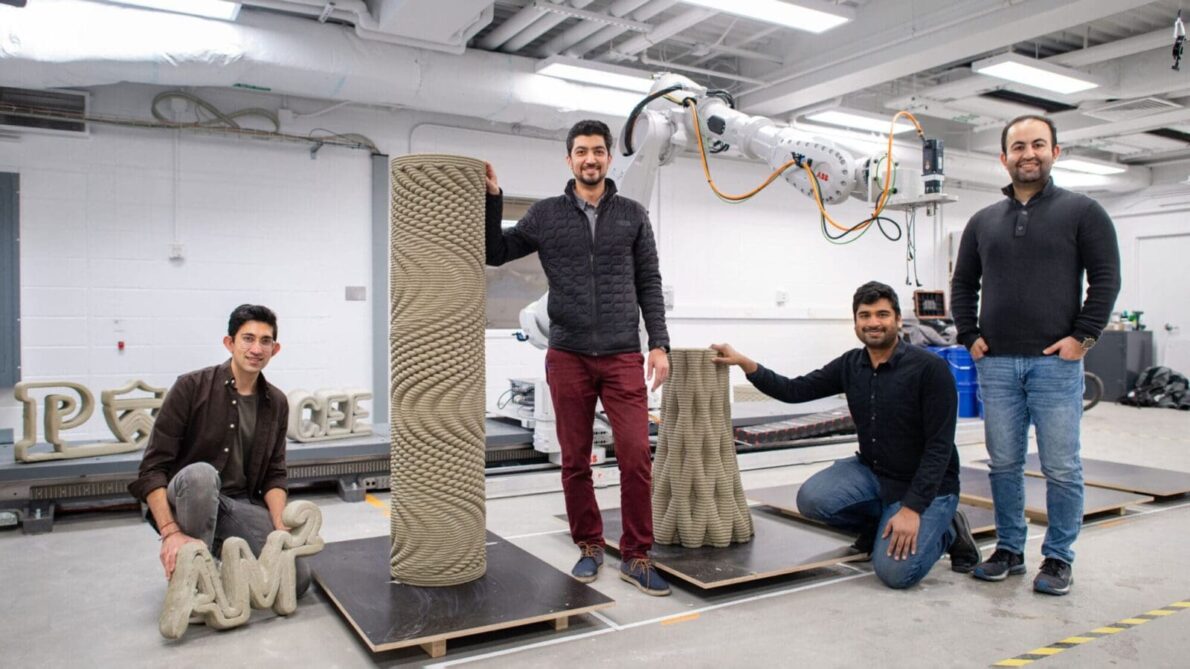
Using industrial robots, they were able to precisely control the deposition of materials, creating a significantly stronger concrete.
Nature as a Source of Inspiration
The study, published on August 29 in the journal Nature Communications, showed that the researchers used inspiration from the scales of a fish species known as coelacanth. The scales of this fish have a double helix structure, which caught the engineers’ attention because this configuration offers high resistance to fractures.
-
Brazilian Fishing Couple Spends 4 Years Building Solar-Powered Floating Home on the Paraguay River, Now a Navy-Approved Vessel with Leisure Area and Tour Demand

-
While the World Opens New Airports and High-Speed Trains, Brazil Rushes to Complete Projects Stalled for 40 Years
-
Brazil Invests in Massive Waterway to Transport Soybeans by Barge, Reducing Costly Truck Reliance
-
Bridge Rebuilt in Just One Year Reconnects Two Brazilian States


According to Moini, nature often uses smart architectures to combine strength and durability in its materials, and replicating these structures in civil engineering was the starting point for the project’s innovation.
Concrete Design and Manufacturing
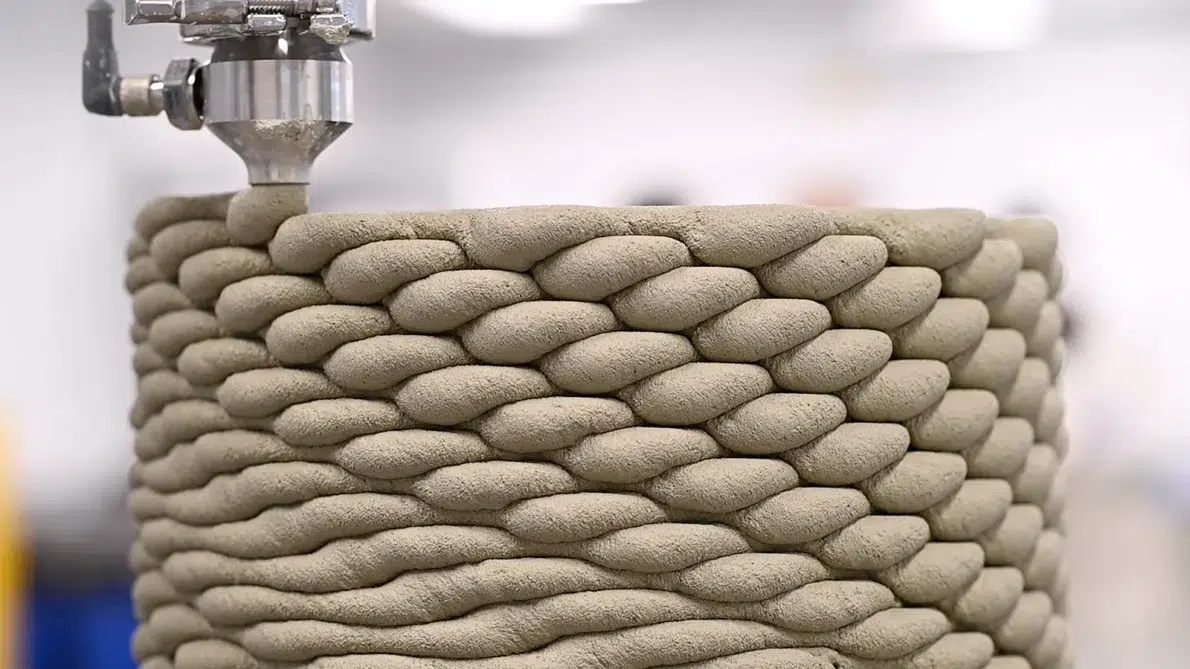
To achieve this superior strength, the team developed a new design, organizing concrete into individual strands, stacked in three dimensions. These strands were strategically connected, creating a double helix arrangement that significantly improves crack propagation resistance. This design technique, called “hardening mechanism,” allows the material to better withstand cracks, preventing them from spreading quickly or predictably. As a result, beams and other structural components become much more resilient.
This innovative approach is also an evolution for civil engineering, as it relies on additive manufacturing techniques, where robots deposit material strand by strand. This enables the creation of complex structures that would not be viable with conventional concrete molding methods. With robotics, researchers can ensure unprecedented geometric precision, essential for maintaining the structural integrity of components like beams and columns.
Role of Robotics in Advancing Civil Engineering
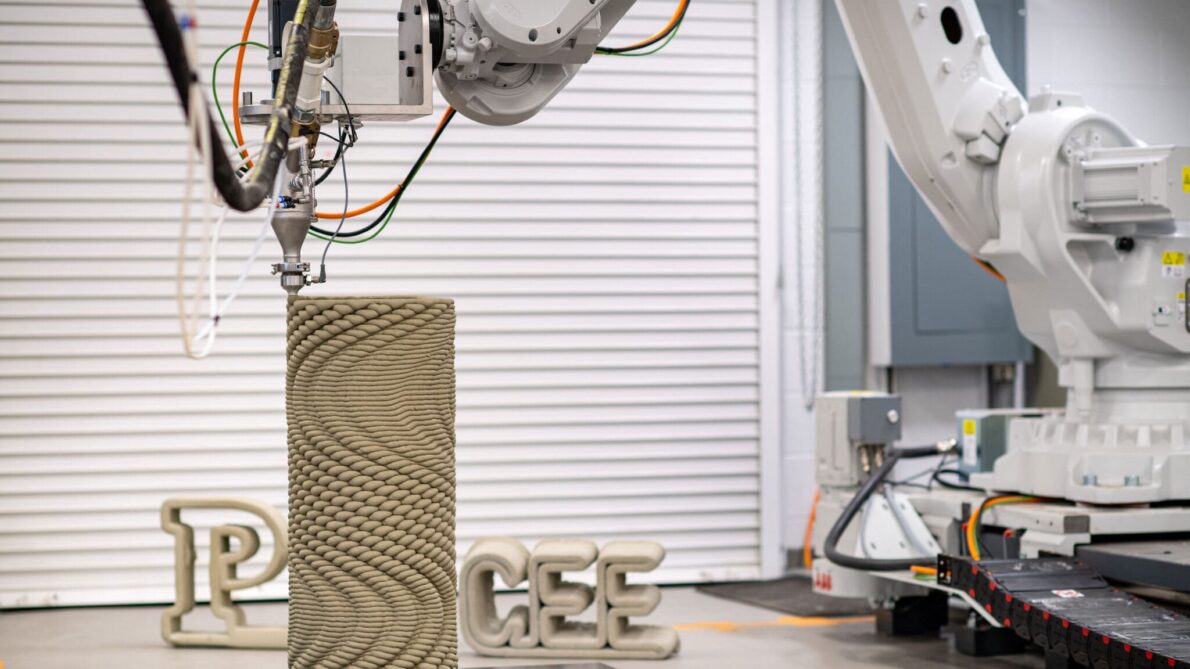
Shashank Gupta, co-author of the study and graduate student at Princeton, highlighted the importance of robotics in the manufacturing process of these components. He explained that to create concrete materials with high geometric fidelity on a large scale, such as in beams and columns, robotic automation is crucial. Without this precision, it would be very challenging to achieve the desired results. Robotics also allows for exact control over concrete deposition, ensuring that architectural forms maintain their integrity throughout the manufacturing process.
Additive manufacturing applied in civil engineering is particularly powerful because it allows designers to explore complex geometries and structures that were previously impossible to implement with traditional techniques. Moreover, at Moini’s lab, industrial robots are integrated with advanced real-time processing systems, enabling the creation of large-scale architectural components that are not only functional but also aesthetically pleasing.
Solutions to the Challenges of Concrete
One of the biggest challenges faced by researchers was that fresh concrete tends to deform under the weight of the upper layers, which could compromise the precision of the structures created. To address this issue, the team developed an advanced control system, where the robot uses two components: concrete and a chemical accelerator. These two materials are mixed in the robot’s nozzle just before extrusion, allowing the accelerator to act on the concrete, speeding up the curing process.
This innovation was crucial in ensuring that the lower layers of concrete did not deform under the weight of the upper layers, maintaining the geometric precision needed for architectural components in civil engineering. The extrusion system, led by Gupta, also allowed for greater control over the final shape of the structures, minimizing deformation and ensuring that both aesthetics and functionality were preserved.
Impacts on Civil Engineering
This innovation has the potential to transform the way concrete is used in civil engineering. By significantly increasing crack resistance and allowing for the creation of more complex and durable shapes, the techniques developed by Princeton researchers open up new possibilities for more ambitious and safer architectural projects. Furthermore, the combination of innovative design and robotic technology offers a sustainable and efficient solution to the challenges faced by the industry.
The use of robots and inspiration from nature to enhance material performance demonstrates how civil engineering can evolve with the adoption of new technologies and manufacturing processes. These advancements not only increase the durability and safety of constructions but also provide greater creative freedom for engineers and architects around the world.