Portuguese
  Spanish


The fate of a retired ship is an impressive scene: launched at full speed against the beach, it becomes scrap dismantled by hand. The recycled steel supplies the construction industry and supports thousands of families, but the price appears in explosions, soil contamination, and workers without adequate protection.
Ships up to 300 meters long and 45,000 tons of steel end up stranded on muddy beaches in India, Bangladesh, and Pakistan. It is in these three countries that more than 90% of the world’s retired ships are manually dismantled, piece by piece, in a billion-dollar recycling industry that coexists with deaths, environmental pollution, and wages of less than 4 dollars a day paid to thousands of workers.
The data was gathered in surveys by organizations such as the NGO Shipbreaking Platform and in studies published in scientific journals, and gained momentum with the entry into force, in June 2025, of an international treaty on the subject. The following report shows how this process works, why it is concentrated in South Asia, and what the economic and human contradiction behind it is, without romanticizing the activity or ignoring the social and environmental weight it carries.
Why so many vessels become scrap
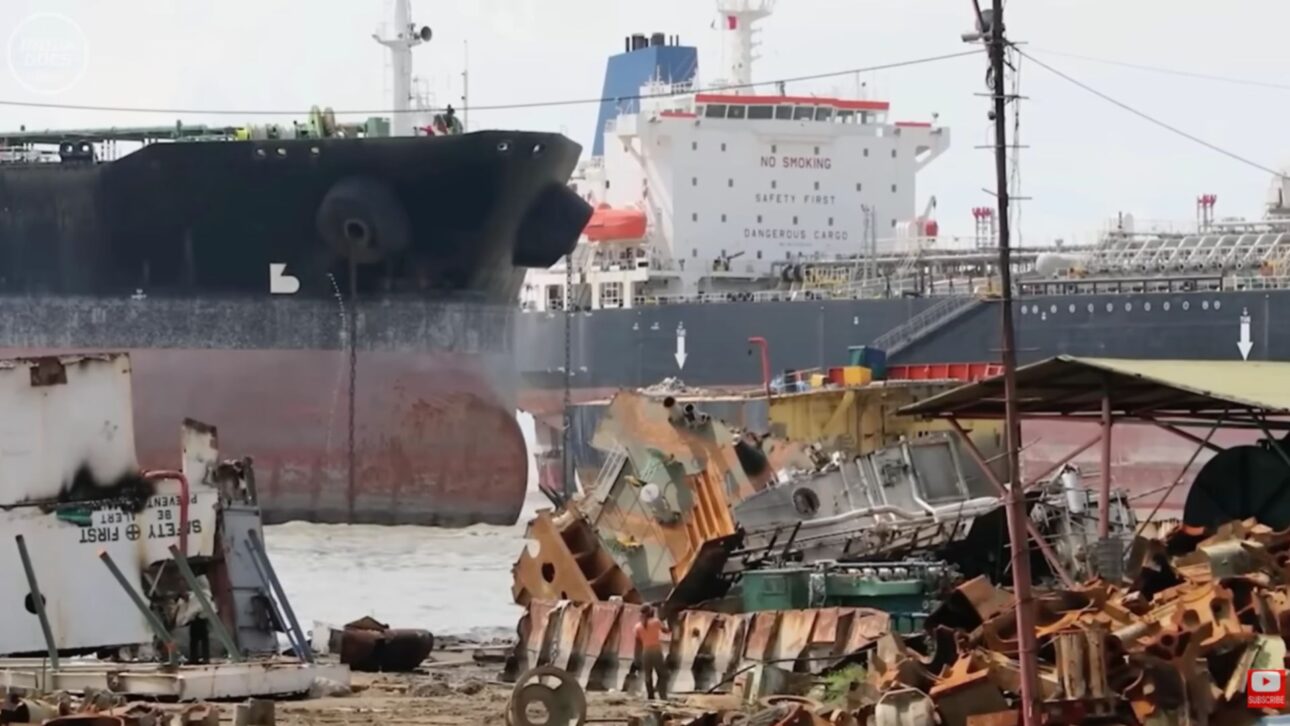
A commercial vessel usually has a lifespan of 20 to 30 years, and from then on, maintenance costs, hull corrosion, and increasingly stringent environmental requirements make its operation financially unviable, leading to sale for dismantling, the most common way to retire these giants of the seas.
-
11-Year-Old Entrepreneur Sells 60 Homemade Sweets Daily, Mastering Cost Calculation, Social Media Promotion, and Client Negotiation Since Age 7

-
Peruvian Mountain’s 5,200 Aligned Holes May Unveil Ancient Indigenous Market for Corn and Cotton
-
The Little-Known Story of a Home-Built Airplane That Promised Freedom but Faced Safety Issues After Numerous Accidents

-
He Didn’t Build a Plane, But Spent Decades Trying to Make Bicycles Fly with Wings and Pedals; Remaining Models Tell This Unusual Story in Germany



The numbers give the scale of the phenomenon.
In 2024 alone, according to the NGO Shipbreaking Platform, 409 commercial vessels were sold for scrap worldwide, with more than 250 of them dismantled on the beaches of Bangladesh, India, and Pakistan.
The international maritime council BIMCO estimates that more than 15,000 ships will need to be dismantled by 2032, driven by the aging fleets built in the 1990s and new emission rules that render old vessels incompatible with current standards.
The three beaches that dominate dismantling
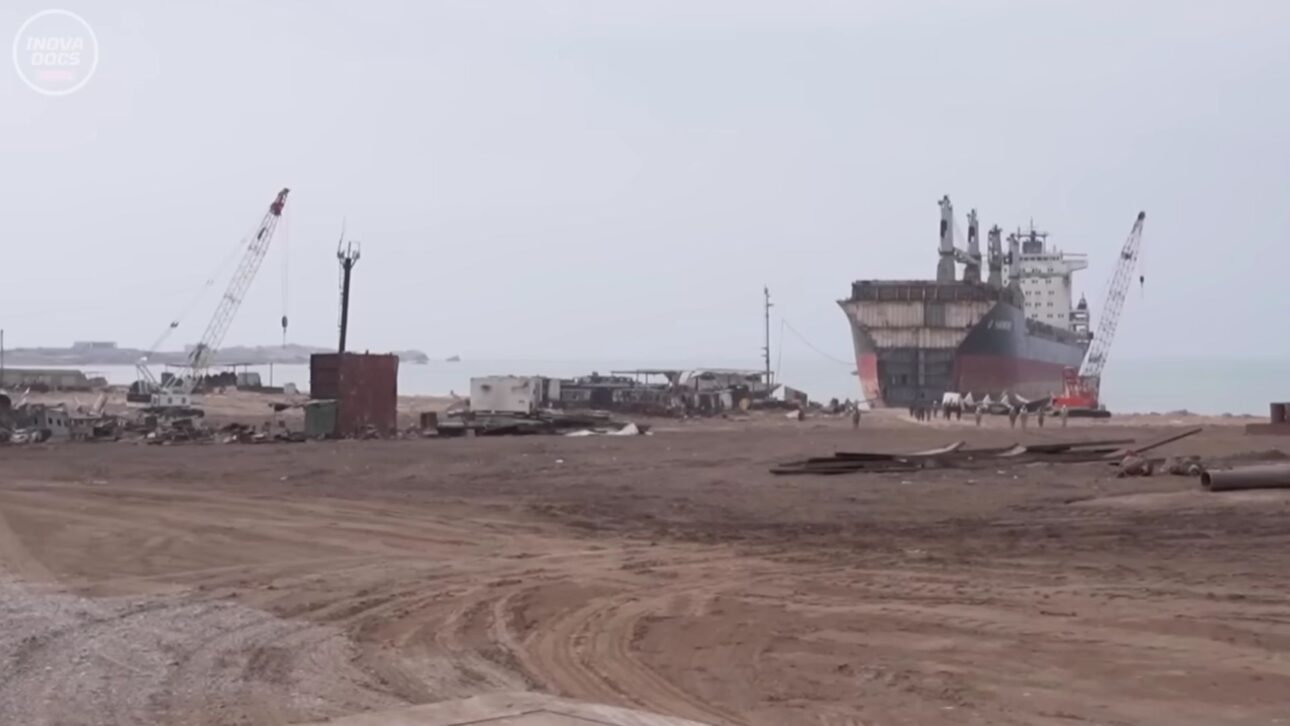
More than 90% of the total volume is processed in three countries, India, Bangladesh, and Pakistan, where the combination of cheap labor, strong demand for recycled steel, and limited oversight makes the operation economically attractive, attracting ships from shipowners worldwide.
In India, the Alang shipyard in the state of Gujarat is considered the largest in the world, occupying a coastal strip of 12 to 14 kilometers and bringing together dozens of companies.
In Bangladesh, the Chittagong region accounts for the largest volume of dismantled tonnage, involving between 70,000 and 100,000 direct and indirect workers.
In Pakistan, the Gadani shipyard, the third largest in the world, has the capacity to process more than a hundred ships per year.
How a ship is dismantled on a beach
The process begins with a bold and calculated maneuver.
The vessel is driven at a speed of 10 to 20 kilometers per hour directly against the beach, and the flat hull penetrates the soft sediment, leaving tens of thousands of tons immobilized by its own inertia, without the need for anchoring, in a technique known as grounding, or beaching.
Before any cutting, pumping systems extract fuel, oil, and ballast water, and the tanks are tested until they are gas-free, a crucial step since most fatal accidents occur when it is neglected.
Then, teams of up to 100 workers cut the structure with torches that reach extremely high temperatures, following the internal grid of beams to avoid the uncontrolled collapse of blocks that can weigh thousands of tons.
The complete dismantling of a ship takes, on average, two to three months.
The human and environmental cost


This is where the activity reveals its harshest face, and it cannot be ignored.
Shipbreaking is considered one of the most dangerous jobs in the world by the International Labor Organization, with workers frequently exposed to toxic substances such as asbestos, lead, and arsenic without adequate protection, and paid less than 4 dollars a day, in conditions of extreme heat and constant risk.
The accident records are alarming: at the Alang shipyard in India alone, more than 500 deaths have been recorded since 1983, many caused by explosions and falls.
On the environmental front, a study published in 2024 in the Journal of Hazardous Materials identified abnormally high levels of arsenic and other heavy metals in the soil, rice, and vegetables grown in the Chittagong region of Bangladesh, pointed out as a direct consequence of the contamination of the shipbreaking beaches.
These are impacts that fall on workers and entire communities.
The contradiction: waste that becomes wealth
Despite all the problems, the activity fulfills a concrete economic function.
More than 90% of the material from a large vessel can be recycled or reused, and the high-quality steel recovered goes to steel mills, becoming input for the construction of buildings, bridges, railways, and urban infrastructure, in addition to supplying a market for second-hand parts and equipment.
This cycle moves significant figures.
The Alang shipyard alone generates hundreds of millions of dollars a year and employs tens of thousands of people, while the global shipbreaking market was valued at about 4.22 billion dollars in 2025, with projected growth.
The contradiction is evident: workers earning less than 4 dollars a day sustain a billion-dollar industry, an imbalance at the heart of the sector’s debate.
The new rules and the challenge ahead
International pressure has begun to translate into concrete regulations.
On June 26, 2025, the Hong Kong Convention came into force, the first international treaty dedicated exclusively to the regulation of shipbreaking, which requires a complete inventory of hazardous materials on board, establishes minimum safety standards, and obliges shipyards to prove the proper disposal of toxic waste, according to the International Maritime Organization.
Even so, organizations like the NGO Shipbreaking Platform criticize the treaty, arguing that its standards are low and could serve to mask dangerous practices.
The European Union maintains its own more restrictive rules, allowing European-flagged ships to be dismantled only in certified shipyards, but its approved list has about 43 facilities, a number considered insufficient given the projected demand.
The gap between requirements and safe processing capacity is, today, the main challenge of the sector.
The story of ships that end up stranded on the beaches of South Asia exposes one of the most difficult contradictions of the global economy: an activity that recycles steel, prevents waste, and supports hundreds of thousands of people, but exacts a high price in human lives and environmental damage.
The entry into force of international treaties is a step, albeit surrounded by criticism and doubts about its real application.
Looking at the final destination of these steel giants is, deep down, confronting uncomfortable questions about the human cost behind the products and infrastructure we use every day.
And you, did you have any idea how the dismantling of these giant vessels works and the human and environmental impact behind it? What do you think should change in this sector? Leave your comment, share your opinion with respect for different views, and help spread the article to those interested in the naval industry, the environment, and workers’ rights.