






 Portuguese
  Spanish


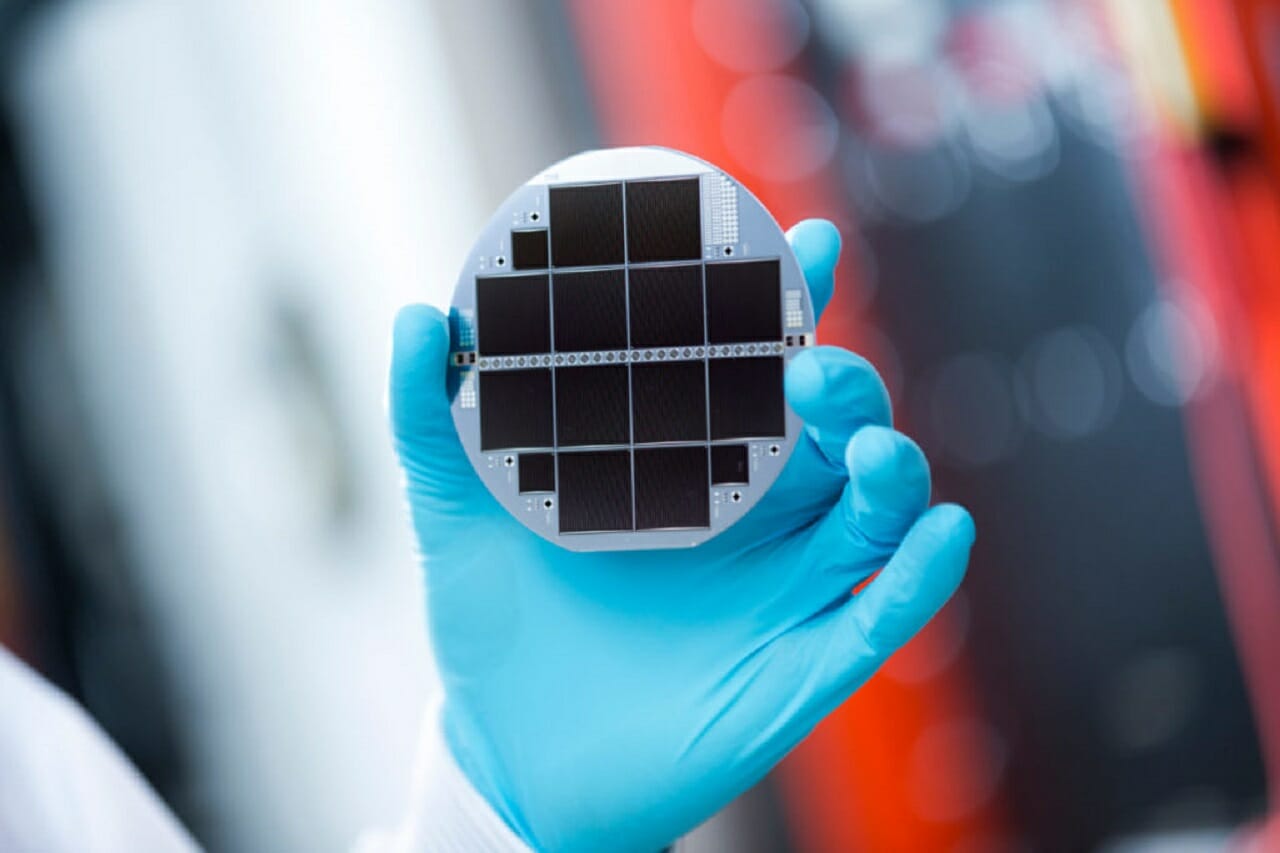

Scientists Develop Silicon Solar Panels That Combine Efficiency And Flexibility. Equipment Promises To Change The Solar Energy Market.
The organic solar cells, developed with plastic, are great promises for the solar energy market, can be manufactured on flexible and transparent bases, making it possible to install them on glass windows or over uneven surfaces. However, it may not be necessary to wait for technological advances for them to become durable enough to reach the market and take the place of the conventional silicon solar panels, which are rigid and have an expensive installation.
Efficiency of The New Solar Panels Is Greater Than 24%
Researchers at the Shanghai Institute of Microsystems and Information Technology in China managed to produce a traditional solar panel made of silicon, with the same solar cells currently on the market, that is flexible enough to merge with uneven surfaces.
The solar panel, at 60 micrometers thick, is as flexible as a sheet of paper and maintains the same efficiency even when rolled up. The only cost for the modification was a slight decrease in the efficiency of converting solar energy into electrical energy compared to the original solar panel, but it remained above 24%.
-
World’s Largest Engie Solar Plant in Brazil Highlights Billion-Dollar Energy Waste Issue: Company Considers Batteries and Bitcoin Mining to Avoid Wasting Production

-
Air Products Cancels $2.9 Billion Clean Hydrogen Megaproject in Louisiana, Shuts Down Arizona Unit, Highlighting High Costs of U.S. Energy Transition
-
Over 60 Tractors Take to the Streets in Lopera as Solar Parks Compete with Olive Groves, Affecting 13,000 to 100,000 Trees According to Conflicting Reports

-
Green Hydrogen Projects in Northeastern Brazil Stalled for 18 Months Awaiting Government Decree, Delaying Billions in Investments


Wenzhu Liu and his team started with a standard silicon cell wafer 160 micrometers thick and from there used concentrated alkalis to etch the wafers down to a minimum of 60 micrometers thick without losing functionality. However, a sequence of challenges arose. After the reduction in thickness, the silicon solar panel becomes so polished that it reflects about 30% of the incident light as it is bent, which significantly reduces its efficiency.
Solution Found By Scientists for The New Solar Energy Panels
In this way, the team of researchers did the opposite work, using another more diluted compound to create surface grooves, obtaining micro-scale patterns that resemble pyramids.
The reflectivity disappeared, then the panel lost its flexibility, as it cracked very easily. According to Liu, for several years scientists have struggled to balance light reflection and flexibility, which explains why the vast majority of efficiencies obtained from flexible crystalline silicon solar cells have been relatively low.
The scientist then focused on studying the emergence of cracks using high-speed cameras and discovered that the cracks always begin at the edges of the pyramids. With this, he then used a mixture of acids to remove the texture from the edges, and the wafers immediately regained their flexibility.
More detailed analyses showed that the smooth region dissipates the mechanical stress of the bend, allowing the textured region to form a network of micro-cracks instead of experiencing a drastic fracture at a single point. The team plans to start deploying their flexible panels to cover aerospace structures, such as airplane wings, drones, and research balloons.
Brazil Also Develops Organic Solar Panel
The organic solar panel, which features organic solar cells, is seen as the third generation of solar cells, meaning it is at the top from a technological standpoint.
The new solar panel is developed in a completely different way compared to common panels, being made with a plastic film, where carbon-based inks are printed, allowing the plastic film to have layers, obtaining electrons at the top, with a positive charge on top and negative at the bottom. The equipment provides several benefits, as it is a plastic film that uses carbon-based inks, extremely flexible, low-cost, and transparent.





