Portuguese
  Spanish


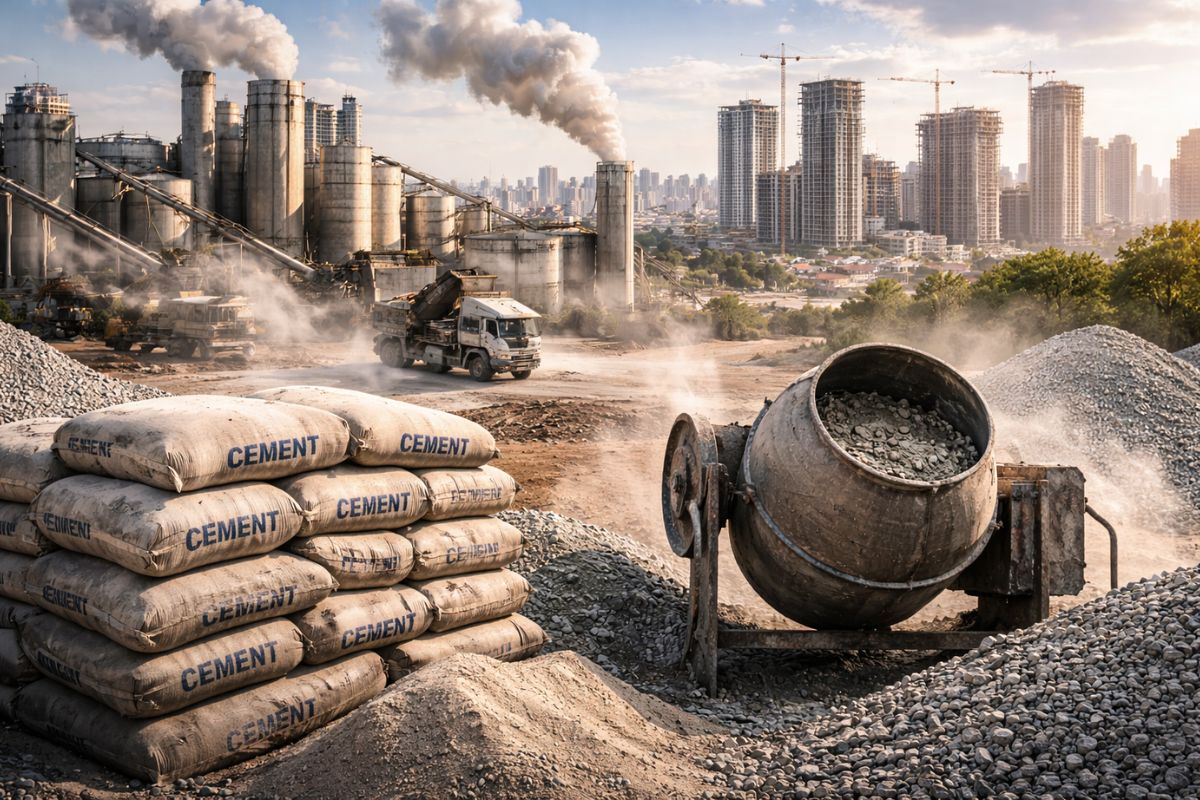

Concrete Raised Cities And Even The Pantheon, But Today Accounts For 8% Of CO2 And Needs To Be Reinvented To Save The Climate
Concrete is the most widely used material in the world after water, supporting global infrastructure and, at the same time, placing the cement and concrete industry at the center of the decarbonization debate until 2050.
Concrete is everywhere, but it rarely takes center stage in climate conversations. The basic fact is straightforward: the cement and concrete industry accounts for about 8% of global CO2 emissions, transforming a simple and cheap material into a massive climate challenge.
The paradox is that concrete is also part of the solution. It builds affordable housing, roads, dams, and entire cities, including in places that need infrastructure resilient to climate extremes. That’s why reinventing concrete has become a necessity to preserve its best qualities without continuing to push the planet towards greater warming.
-
Tiny House on Wheels Available for Under $30,000: Towable Cabin with Metal Frame and Glass Wall Offers Compact Living Anywhere

-
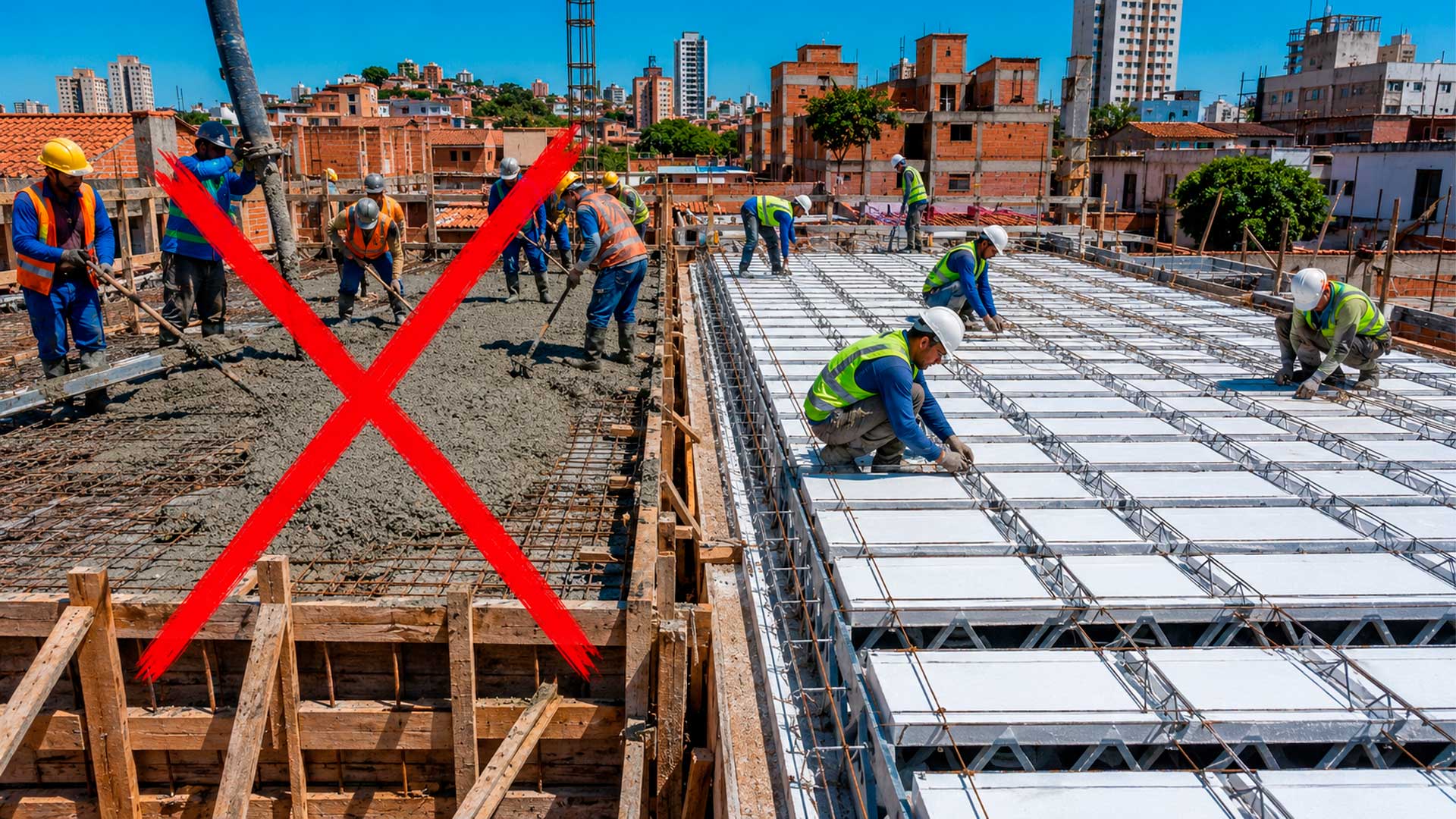
Innovative Precast Concrete Slabs with EPS Transform Construction Costs in Brazilian Homes

-
Luxury Building in Brazil’s Coastal City Sparks Urban Growth Debate with Viral Video and Apartments Selling for Up to $1.7 Million

-
Two-Bedroom Home Built in a 40-Foot Shipping Container Delivered and Ready for Same-Day Living in São Paulo Countryside




The Pantheon Proves The Strength Of Concrete And Explains Why It Dominates The World
The foundation begins with an impressive example: the Pantheon has stood for nearly 2,000 years, surviving invasions and the fall of the Roman Empire.
The reason pointed out is a super material, concrete, which successfully combines strength, durability, and low cost.
This combination explains why concrete has become the foundation of modern cities and current living standards. It is the kind of solution that works at scale, which is why it spread so quickly and came to be used in practically everything.
The Origin Of Concrete And The Roman Secret That Vanished For Centuries
The Romans mastered engineering that mixed wet lime and volcanic ash to bond stones and bricks, creating an efficient mortar for concrete. The foundation highlights that with the fall of the Roman Empire, the secrets of this volcanic material concrete were lost.
Only in the 19th century, with Joseph Aspdin, did Portland cement emerge, the precursor to the modern industry. It was made by heating limestone and clay in a kiln and then grinding it into a fine powder. This step paved the way for the industrial concrete we know today.
How Concrete Is Made And Why Cement Carries The Emissions
Modern concrete continues to follow the same logic of simplicity: cement, water, and aggregates like sand and gravel.
The foundation explains that cement is the ingredient that provides strength, but it is also the primary source of emissions.
At very high temperatures, calcium carbonate from limestone and silicon dioxide from clay combine to form calcium silicates. However, this reaction also releases CO2, which warms the planet.
Then, when cement meets water, the ions form crystals that fill gaps and “glue” the material.
The result is an artificial rock that is strong and durable for little money. That’s why concrete is the most used material in the world after water.
Why Concrete Became A Global Climate Problem

The foundation points out two main drivers of concrete emissions. The first is the CO2 released by the chemical reaction of the process.
The second is the burning of fossil fuels to heat furnaces to about 1,400 degrees Celsius, a temperature necessary for making cement.
The text also provides a figure that illustrates the impact: to make a ton of concrete, over 600 kilograms of carbon dioxide can be released into the air.
When this is multiplied by global scale, concrete becomes one of the so-called “climate killers.”
Why We Cannot Simply Stop Using Concrete
The foundation anticipates the obvious question: if concrete is so polluting, why not abandon the material? The answer is that the wealthy world has been building with concrete for over a century, and low-income countries have the right to build affordable, durable, and safe housing and infrastructure.
Moreover, alternatives to concrete are not always better. Sustainable wood can replace part of the concrete and still sequester CO2, but building entire cities with wood would increase the pressure on forests that are already at risk. Swapping one problem for another doesn’t solve the game.
The Plan To Reduce The Concrete Footprint By 2050 And The Pieces Of The Puzzle


The foundation describes a plan revealed in October 2021 to reduce the CO2 footprint of concrete by 2050. Among the objectives cited is to improve the efficiency of cement production by 11%.
Other fronts mentioned include increasing the use of renewable energy to heat furnaces, using alternative fuels, and utilizing waste from industrial processes as inputs.
Technologies for capturing CO2 from the process and increasing the recycling of construction and demolition waste are also included.
There is also a part that depends on design and architecture: more efficient buildings, with a longer lifespan, and renovations instead of demolition. If the building lasts longer, the city needs less new concrete over time.
Carbon Capture: The Toughest Promise On The Concrete Path
The foundation treats carbon capture as the big question mark. The technology exists, but it is still not cheap or widely scalable. This raises a practical doubt: how to capture enough carbon by 2050 if tests in factories are just starting now.
The Global Cement and Concrete Association appears in the foundation as responsible for the plan and sets a goal: by the end of the decade, they want 10 cement factories equipped to capture carbon for reuse or storage.
At the same time, the foundation emphasizes that the industry has not yet fully detailed how it intends to stop polluting, promising to disclose details.
Good News: Signs That Concrete Can Change
Despite the uncertainties, the foundation lists concrete advances. A British company captured CO2 from a cement factory in France and transformed it into materials that can be used in construction.
In Sweden, a pilot study showed that cement can be made with electricity, without fossil fuels, although this increases the demand for clean energy.
In Norway, the foundation mentions a cement factory scheduled to open a carbon capture facility in 2024, with the potential to cut the industry’s emissions in half.
The logic behind these initiatives is to make low-carbon concrete cheaper, which requires policy, investment, and research.
Public Pressure, Politics, And Market: Why Concrete Depends On Collective Decision
The foundation is clear in stating that public voice matters. The more attention the cement and concrete industry receives, the more pressure there is to find cleaner solutions.
According to experts cited, part of the path involves incentivizing changes through carbon taxation and subsidies for new technologies.
Concrete is one of those climate problems that almost nobody discusses in daily life, but it needs accelerated transformation to reduce greenhouse gas emissions. And the most important thing is that solutions already exist, even if they are not yet mature at a full scale.
In your opinion, what should come first to truly change concrete: carbon capture in factories, electrification of furnaces, or designs that make buildings last much longer?