Portuguese
  Spanish



Lithium Mining: Unprecedented Data Reveals Consumption of Up to 673 m³ of Water per Ton and Decline of Flamingos in Atacama
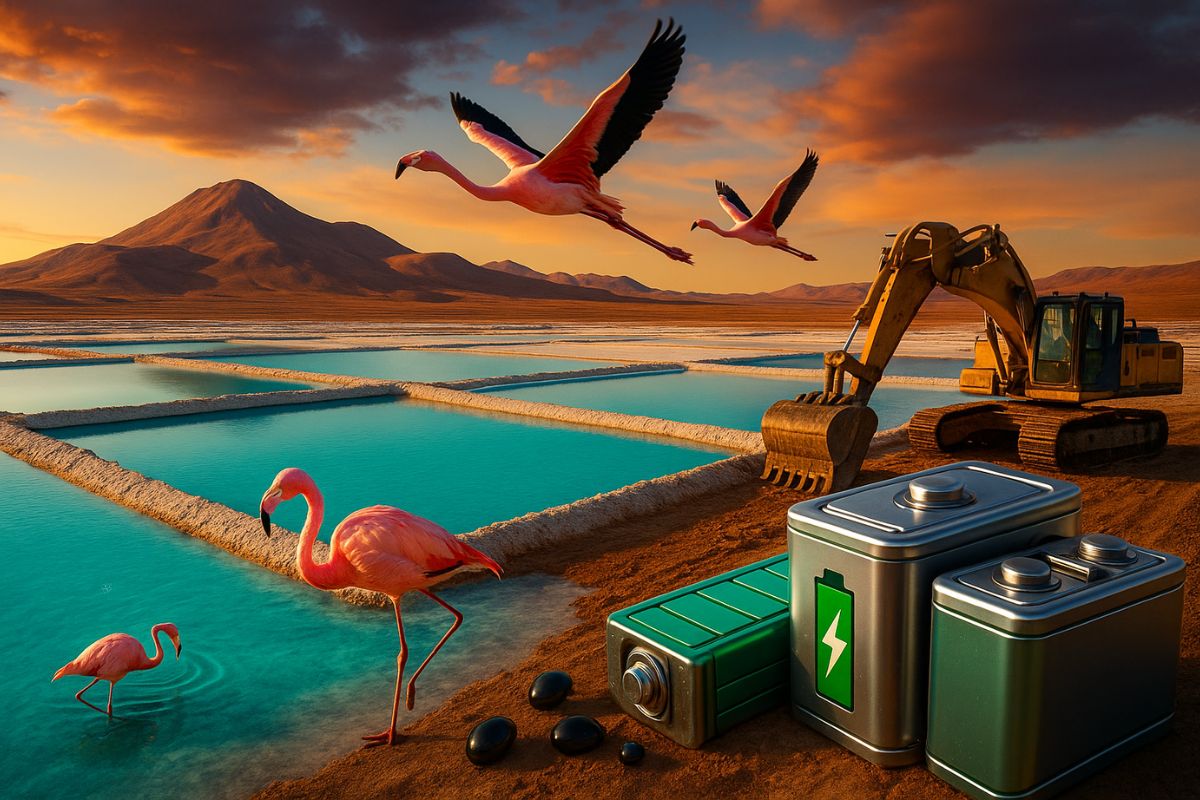
The green lithium, seen as a pillar of the global energy transition, is far from being environmentally neutral. According to data compiled by the journal Nature Reviews and reports from mining companies, extraction in the salt flats of South America requires hundreds of cubic meters of brine and fresh water per ton produced, in one of the driest regions on the planet.
In addition to water pressure, researchers have already identified direct impacts on flamingo populations in Atacama, Chile.
Although the mineral is strategic for electric car batteries and energy storage systems, experts warn that the production chain needs to be revised.
-
Mexico’s Giant Crystal Cave: A Deadly 58°C Underground Palace with 11-Meter Crystals Formed Over Nearly a Million Years

-
China Dominates Over 90% of Rare Earth Refining, Prompting Global Concerns: Canada and Japan Launch Billion-Dollar Plan to Reduce Dependency and Safeguard Batteries, Semiconductors, and Defense

-
Ancient Mines in Spain Reveal Tools and Metals That May Explain Bronze Age Trade with Scandinavia
-
XCMG Launches 240-Ton Mining Truck in Brazil, Promising Increased Productivity with Lower Fuel Consumption


The intensive consumption of water resources, combined with the advancement of mining in ecologically sensitive areas, reveals that “clean energy” also carries environmental contradictions.
How Lithium Extraction Works in Salt Flats
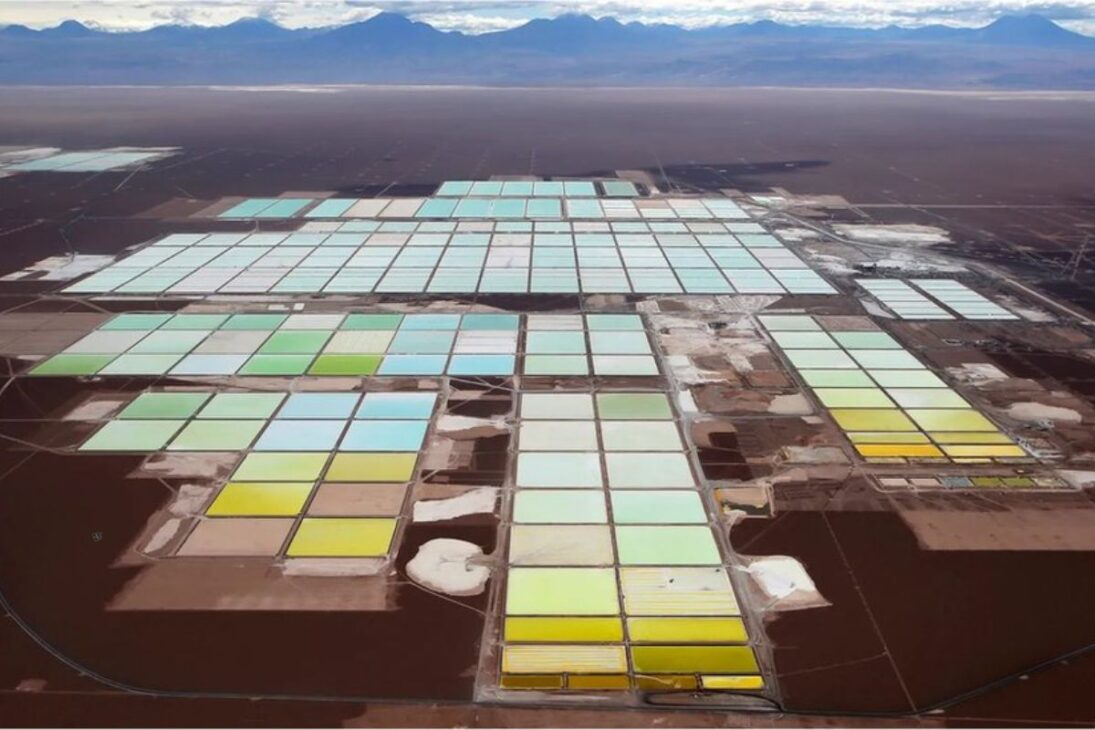
More than 90% of this water evaporates, leaving concentrated salts that undergo chemical processing.
Mining companies argue that brine is not equivalent to fresh water, but studies show the interconnection between saline aquifers and fresh water aquifers, which compromises surface lagoons and ecosystems in the area.
In Atacama, the largest local producer, SQM, informed the U.S. SEC that it extracted 39.6 million m³ of brine in 2023, equivalent to 1,256 liters per second.
A year earlier, it was 31.7 million m³, which shows a surge in water exploration in one of the driest deserts in the world.
How Much is Consumed per Ton of Lithium
Recent research revealed concrete numbers regarding the water impact of production.
In the Olaroz project (Argentina), the evaporation process requires 51 m³ of fresh water and 537 m³ of brine per ton of lithium carbonate.
In Fénix/Hombre Muerto, where the direct lithium extraction (DLE) method is used, 135.5 m³ of fresh water and 319.6 m³ of brine are needed per ton.
That is, even though DLE reduces the amount of brine used, it may increase the consumption of fresh water, an even scarcer resource in the region.
The choice of technology depends not only on industrial efficiency but also on local water availability.
Impacts on Biodiversity

Long-term research in the Salar de Atacama indicated a reduction of 10% to 12% in the populations of Andean flamingo and James’s flamingo in just 11 years.
The combination of climate change and mining activities has reduced water levels in lagoons used as habitats for these birds.
According to ecologist Jorge Gutiérrez, “lithium mining is lowering water levels and increasing disturbances for flamingos.”
This data reveals that the impact goes beyond the physical environment, directly affecting Andean biodiversity.
The Promise and Limits of Direct Extraction
The direct lithium extraction (DLE) is presented as a “more sustainable” alternative. It eliminates evaporation ponds and allows for the partial reinjection of brine.
However, analyses published in Nature Reviews indicate that the method still consumes fresh water, demands energy, and generates chemical waste.
Its effects vary depending on the geology and chemistry of each salar, which prevents it from being classified as a definitive solution.
Companies in the sector are trying to improve their image with environmental goals.
SQM promised to reduce brine extraction by 50% by 2030 and cut 65% of the consumption of fresh water by 2040.
Albemarle has set a goal of reducing fresh water usage intensity by 25% by 2030.
The data shows that each ton of lithium extracted from the salt flats requires hundreds of cubic meters of water resources, in regions where water is a scarce commodity.
The expansion of this activity threatens local communities and native species, such as the flamingos in Atacama.
Do you believe that the benefits of green lithium in the energy transition outweigh the environmental impacts in the Andean salt flats? Share your opinion in the comments — we want to hear from those who are closely following this dilemma.