





 Portuguese
  English
  Spanish
 3 min of reading


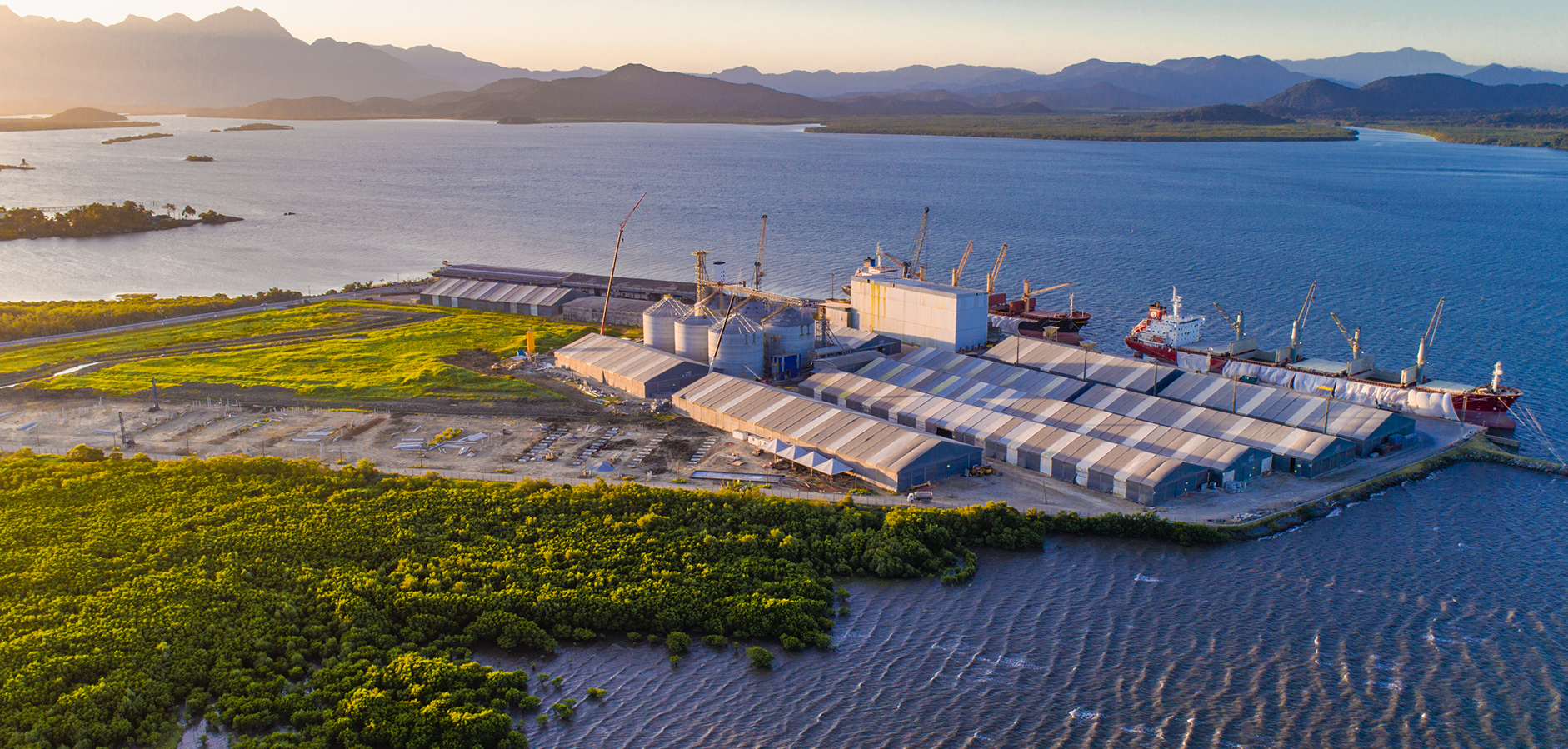
According to the President of Porto Ponta do Félix, Gilberto Birkhan, the operation enabled an increase in the movement of grains and cereals through the terminal.
Porto Ponta do Félix, located in Antonina, on the coast of Paraná, carried out an unprecedented operation on Wednesday (08): its first cabotage navigation for the shipment of wheat. The cereal produced in Paraná and marketed by Coamo Agroindustrial Cooperative had Ceará as its final destination and was shipped in 15 thousand tons.
Cabotage is a type of maritime transport that involves navigation along the coastlines and internal ports of a country. It is widely used for the fast, safe, and efficient transport of goods and passengers between major domestic destinations.
The president of Porto Ponta do Félix, Gilberto Birkhan, emphasized the importance of the operation for increasing the movement of grains and cereals through the terminal. He explained that maritime transport is an excellent option when the distance between origin and destination exceeds 1500 kilometers, as cabotage navigation is still underutilized in Brazil.
-
It is now official: Correios and AliExpress join forces to speed up deliveries throughout Brazil, enhance package tracking, and strengthen the digital logistics infrastructure that supports the rapid growth of e-commerce in 2026.

-
The truck that “bent physics” in the Monte Carlo case: report indicates impossible route between São Paulo and Mato Grosso, R$ 4 million in recorded refueling, R$ 3 million advanced, and suspicion of entries without real correspondence.
-
The Panama Canal stores water in Gatún and Alhajuela lakes to maintain 38 daily crossings and prevent a drought linked to El Niño from once again stalling ships, raising freight rates, and putting pressure on global supply chains as occurred in 2023 and 2024.

-
ANTT authorizes new electronic tolls without barriers on highways in Paraná and Goiás, expands free flow toll collection, and introduces drivers to a new rule that may result in a fine if the toll is not paid on time.



Cabotage Navigation
Until the previous year, it was mandatory for ships that carried out cabotage in Brazil to be of Brazilian flag. However, with the implementation of the Cabotage Law, this requirement was abolished, and foreign ships were authorized to operate in the country gradually.
The Cabotage Law revoked the requirement that only ships of Brazilian flag could carry out cabotage operations in the country. Thus, the use of foreign ships for this modality is being gradually allowed.
Birkhan highlights that the new regulations should encourage navigation in Brazilian coastal waters, increasing the number of available vessels and reducing costs in the industry. Porto Ponta do Félix has authorization issued by the federal government to operate goods in cabotage traffic.
Porto Ponta do Félix is expecting a 65% increase in cargo movement this year. Thanks to its capacity to move and store different types of cargo, such as fertilizers, bagged sugar, salt, malt, wheat, wood pellets, and food, the terminal is multipurpose.
The president of Porto Ponta do Félix, Gilberto Birkhan, stated that there have been significant investments to customize the service according to client demands and to increase the diversity of items moved.
What Is Cabotage and How Does It Work in Brazil

New Investments
Porto Ponta do Félix will have new warehouses in the coming months, resulting in a gradual increase in storage capacity from 280 thousand tons to 520 thousand tons, an increase of 85%.
The increase in static capacity at Porto de Antonina has opened opportunities in various segments. Within the operations plan, the cabotage of wheat and the importation of soda ash, a sodium-based product used in the food industry, are among the highlights.
To ensure safety during the berthing of ships, investments have been made in new maritime fenders, equipment that dampens the impact between vessels and port structures. According to Birkhan, who is responsible for the port, these improvements aim to attract more ships to Antonina, all to meet international safety standards.
Porto Ponta do Félix
Porto Ponta do Félix is a private company that manages the Multipurpose Port Terminal of Antonina, under a concession from the Administration of the Ports of Paranaguá and Antonina — APPA. The lease contract was granted in 1995, and the docking pier was inaugurated in 2000 for the export of refrigerated products, forest products, and steel.
In 2009, FTS Par took over the management of the company, initiating a new phase in the guidelines of the lease contract, focusing mainly on converting the terminal’s purpose to general and bulk cargo.










Be the first to react!