Portuguese
  Spanish



Judge Authorizes Resumption of Orsted’s Wind Farm Construction, Allowing Advance of Strategic Clean Energy Project.
The construction of wind farms in the United States has gained prominence in recent decades, primarily because the global demand for clean and renewable energy sources has increased significantly.
Additionally, projects like Revolution Wind, from the Danish company Orsted, represent not only a technological advance but also a political and environmental milestone in the country.
Recently, a federal judge authorized Orsted to resume the construction of its wind farm, which had been halted during the Trump administration.
-
Brazil filled the Northeast with wind turbines but now faces the side effect of 705 giant blades reaching the end of their lifespan by 2032 just in Rio Grande do Norte, while the world projects 43 million tons of waste by 2050.

-
Brazil has filled the Northeast with wind turbines, but now it faces the side effect of 705 giant blades reaching the end of their useful life by 2032 just in Rio Grande do Norte, while the world projects 43 million tons of waste by 2050.
-
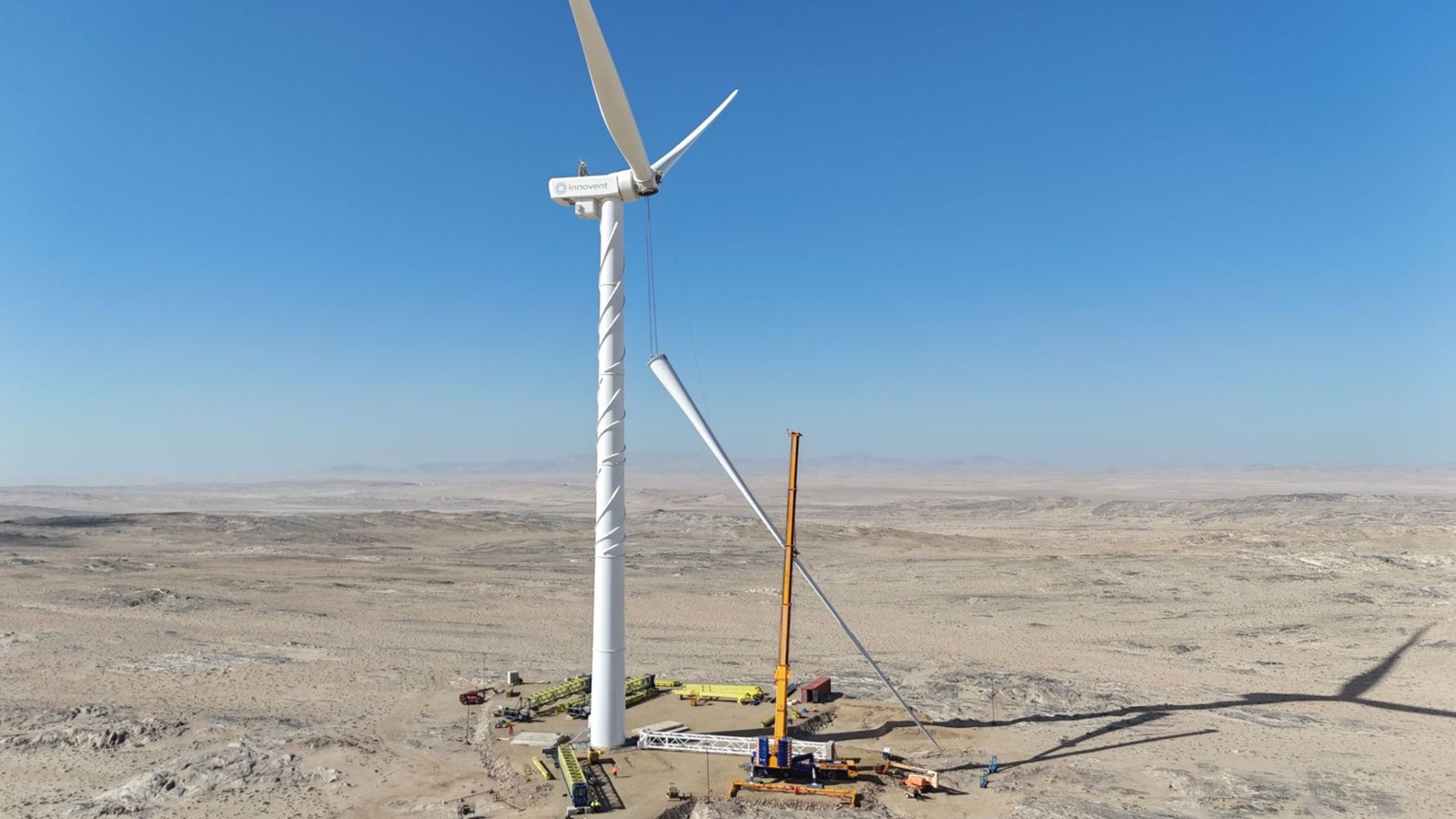
Wind farm in Namibia will have wind turbines assembled without giant cranes and is expected to avoid 200,000 tons of carbon dioxide per year when it becomes operational.

-
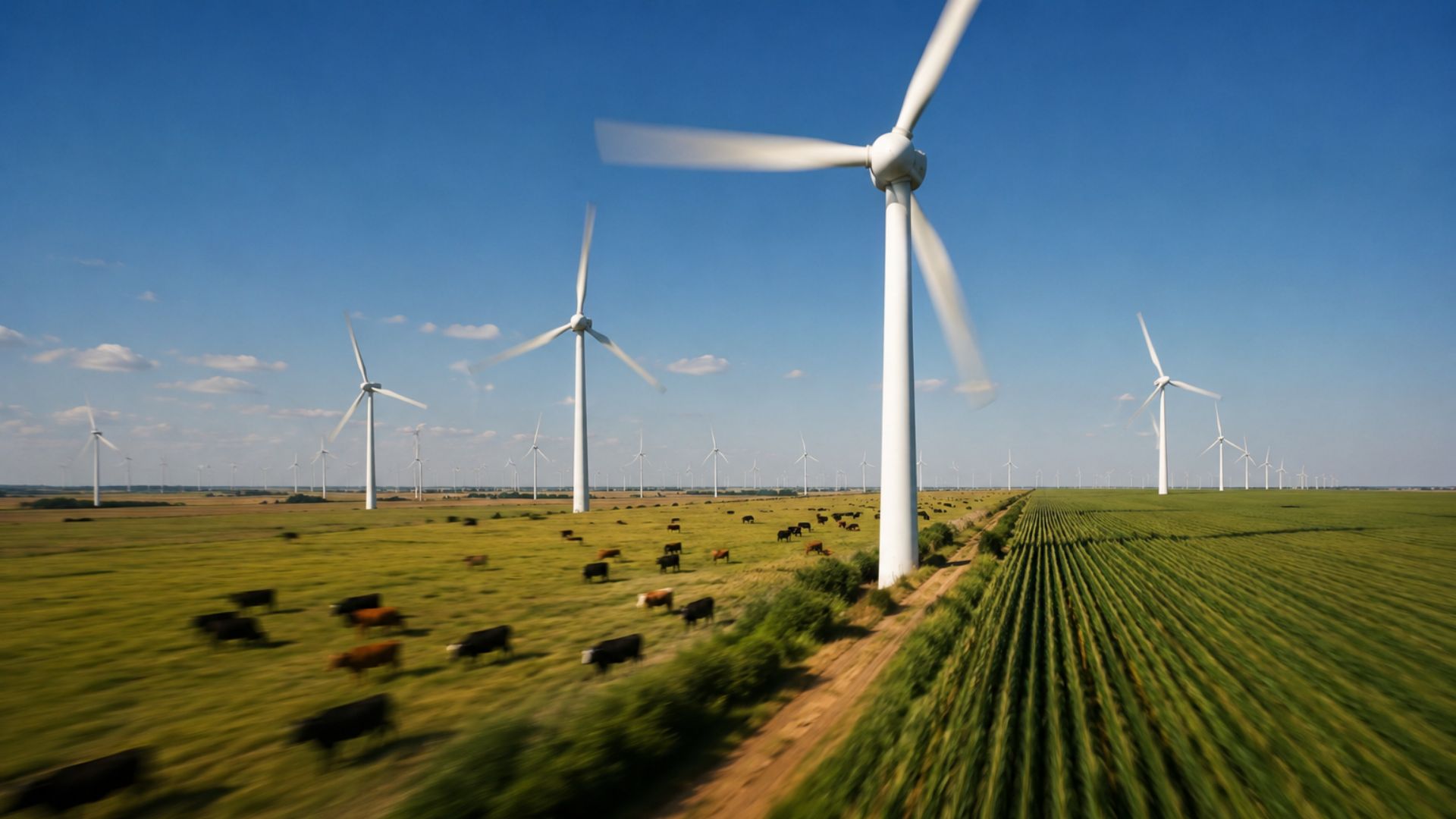
Taller than the Statue of Liberty, thousands of wind turbines are being planted in the middle of U.S. fields, creating two-story farms where corn and soybeans grow below while the wind turns into electricity above.


Thus, this episode highlights the historical and regulatory challenges that the renewable energy industry faces and consequently shows the importance of consistent policies for sustainable development.
Historically, wind energy has gradually grown in the United States, especially as concerns about pollution and climate change began to gain attention from the late 20th century.
In the 1980s, federal policies encouraged the installation of wind turbines in strategic regions; however, the sector still relied on subsidies and had limited reach.
Over time, technological advancements reduced production costs and increased the efficiency of turbines.
Thus, the construction of wind farms has become a viable alternative not only environmentally but also economically.
Furthermore, offshore wind energy began to receive special attention, as coastal regions offer more consistent winds and greater generation potential.
However, this type of project requires detailed studies of environmental impact, maritime logistics, submarine cable infrastructure, and integration with the national power grid.
Therefore, these historical challenges show that wind farm construction demands a long-term vision and robust planning.
The Revolution Wind Project and Its Challenges
The Revolution Wind project exemplifies this development.
Located off the coast of Rhode Island and Connecticut, the wind farm was 80% complete when the Department of the Interior issued a stop order during Donald Trump’s presidency.
As a result, the suspension of construction generated significant backlash, especially because the project had all the necessary permits and required substantial investments in technology and infrastructure.
Therefore, the interruption drew attention to the role of political decisions in the dynamics of renewable energy, thereby illustrating how the regulatory environment directly influences the speed of new project deployment.
With the favorable court decision, Orsted will be able to restart construction, prioritizing safety and maintaining the planned schedule.
Wind farm construction projects require meticulous planning, detailed environmental studies, and robust investments in logistics and labor.
Thus, interruptions can increase costs and affect local communities that would benefit from job opportunities and regional development.
Additionally, the resumption of Revolution Wind demonstrates that international investments in renewable energy can thrive in the United States, provided they adhere to rigorous licensing and environmental study standards.
Policies and Regulatory Obstacles
It is important to understand the historical context of opposition to wind energy in the United States.
During the Trump administration, various government initiatives limited the growth of offshore wind energy, precisely because there were concerns about costs, reliability, and environmental impacts.
The Secretary of the Interior, Doug Burgum, stated that he saw no future for offshore wind energy under his leadership.
Therefore, these political decisions affected ongoing projects, such as Revolution Wind, and highlight the need for a stable regulatory environment for the success of wind farm construction.
Despite the obstacles, wind energy remains one of the most promising energy sources of the 21st century.
In addition to reducing greenhouse gas emissions, the expansion of wind farms diversifies the energy matrix and strengthens national energy security.
Moreover, the advancement of projects like Revolution Wind drives technological innovation, stimulating research in more efficient turbines, durable materials, and advanced transmission systems.
Thus, the construction of wind farms becomes an investment not only in infrastructure but also in knowledge and scientific development.
Regulatory stability, coupled with long-term incentives, ensures that renewable energy projects thrive.
Consequently, the experience of Revolution Wind shows that predictability in legislation and licensing processes is just as important as the technology used, allowing companies to plan robust investments and generate lasting positive impacts.
Economic and Regional Impacts
The construction of wind farms generates direct and indirect jobs, from engineers and technicians to logistics chain professionals and equipment suppliers.
Additionally, cities and states receive taxes and royalties, which can be reinvested in education, healthcare, and public services.
Therefore, the court decision that allowed Orsted to resume construction benefits not only the energy sector, but also regional development and the economy of coastal communities involved in the project.
Moreover, the resilience of the renewable energy industry in the face of regulatory obstacles illustrates a global trend. The search for clean energy sources is becoming a priority for governments, companies, and civil society.
While some governments may adopt temporary restrictive policies, the demand for sustainable solutions tends to grow.
Thus, the experience of Revolution Wind demonstrates that well-structured projects, with all environmental and legal permits in order, overcome political and administrative barriers, ensuring that the construction of wind farms continues to evolve.
Additionally, wind farms generate opportunities for academic research, with universities collaborating on environmental impact studies, turbine efficiency, and energy integration.
In this way, this interaction between industry and academia strengthens knowledge and creates an innovation ecosystem focused on sustainability.
Sustainability and Technological Innovation
Wind energy projects significantly contribute to environmental preservation.
By partially replacing energy generation from fossil fuels, winds farms reduce air pollution and mitigate the effects of climate change.
Moreover, the construction of new wind farms, such as Revolution Wind, raises awareness about the importance of sustainability, inspiring other regions to invest in clean energy and promoting a culture of environmental responsibility.
The case of Orsted and Revolution Wind also highlights the need for consistent, long-term public policies.
Offshore wind energy requires large-scale investments, detailed planning, and coordination among different levels of government.
Consequently, regulatory instability can compromise the financial viability of projects and the achievement of national clean energy goals.
For this reason, court decisions that protect already approved projects ensure that technological and environmental progress continues.
Furthermore, the construction of wind farms stimulates the national supply chain, from manufacturers of towers and blades to companies specializing in maintenance and maritime logistics.
Thus, this multiplier effect creates skilled jobs and strengthens the local industry, increasing the positive impact beyond clean energy generation.
Conclusion: The Future of Wind Farm Construction
Therefore, the court decision that allows Orsted to resume the construction of the Revolution Wind wind farm represents a significant milestone in the trajectory of renewable energy in the United States.
The project shows how well-structured initiatives, backed by adequate regulation and complete licenses, overcome political challenges and contribute to a more sustainable future.
By advancing with construction, Orsted strengthens the wind industry and reinforces the importance of clean energy, regional economic development, and environmental preservation.
Additionally, the history of Revolution Wind demonstrates that wind farm construction involves technical planning, economic viability, environmental regulation, and political support.
Each successful project reinforces accumulated knowledge and paves the way for new initiatives, making wind energy increasingly relevant to the global energy matrix.
Thus, with decisions like the recent court authorization, the renewable energy sector in the United States proves that, despite adversities, the future of clean energy is promising.
The construction of wind farms will continue to play a crucial role in the global energy transition.