Portuguese
  Spanish


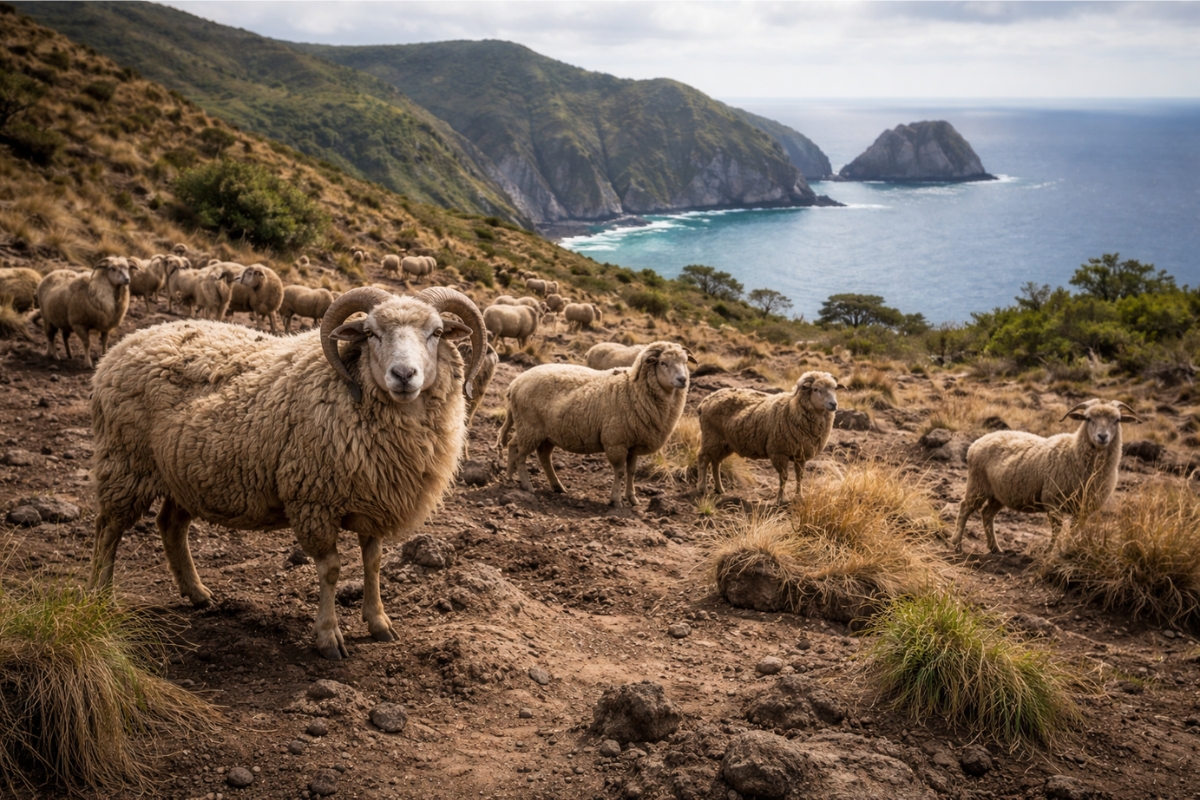


Mexican Authorities Removed 1,800 Sheep on Socorro Island in the Pacific to Contain Erosion and Invasives and Unlock Native Habitat Recovery
The scene may seem simple, but it changed the island from within. A flock taken to graze ended up abandoned and spent decades without human management, turning into a dominant herbivore.
Over time, the sheep altered the vegetation, soil, and space for native species. When the decision was made to eliminate the flock, the impact was immediate on the recovery pace.
A Pacific Island Became an Unintentional Laboratory
On oceanic islands, just a few large animals can change everything. On Socorro, in the Mexican Revillagigedo archipelago, the sheep went feral for about 140 years.
-
US Navy Sinks USS Oriskany with 230 kg of C-4, Creating World’s Largest Artificial Reef in 37 Minutes

-
U.S. Dumped Tanks, Jeeps, and Coca-Cola into the Pacific in 1945 After British and French Lowball Offer, Creating “Million Dollar Point”
-
WHO Warns of Unnecessary Interventions in Natural Births Worldwide, Advocates for More Human-Centered Care, Reigniting Debate on Medicalization

-
World War II American Bombs Discovered in German City Prompt Evacuation of 20,500 Residents




During this period, continuous grazing and trampling opened clearings and pushed the ecosystem into a new balance. The island started to coexist with a “dominant” that did not exist there before.
Body, Wool, and Instinct Changed with the Island
Without shepherds, dogs, and fences, the flock began to live on its own. Harsh climate, scarce food, and poor soil created constant pressure to survive.
This scenario favored gradual changes in body, wool, and behavior. Sheep that are more efficient in limited resources tend to perform better, as do coats that handle heat, humidity, and tough vegetation better.

The Scientific Dilemma Between Preserving and Eliminating
According to the study “Ecosystem Implications of Conserving Endemic Versus Introduced Island Species”, scientific article on island conservation, a difficult impasse arises.
On one hand, eliminating the flock paves the way for recovering what was native. On the other, a population that changed over decades also becomes a type of natural experiment, valuable for understanding rapid adaptation in extreme environments.
The Damage to Habitat and the Advance of Invasives
On Socorro, the prolonged presence of the sheep destroyed about one-third of the original habitat. Overgrazing reduced native plant cover and opened space for invasive species.
The change in vegetation affected the entire chain. By losing shelter and food, some local wildlife became more exposed, and the restoration of the island began to be treated as a priority.
The Eradication Between 2009 and 2012 and the Turnaround in Soil
The final decision was for total removal. On Socorro, about 1,800 sheep were eliminated from 2009 to 2012, using aerial and ground methods, assistance from trained dogs, and the use of decoy animals called Judas sheep.
Between 2008 and 2013, satellite images and field measurements indicated recovery of vegetation cover and improvement in soil indicators, including reduced extreme compaction and progress in properties related to organic carbon.
The island showed that, even after prolonged damage, there is resilience when grazing pressure is removed. The effect is direct and changes the map of priorities in the Pacific.