Portuguese
  Spanish


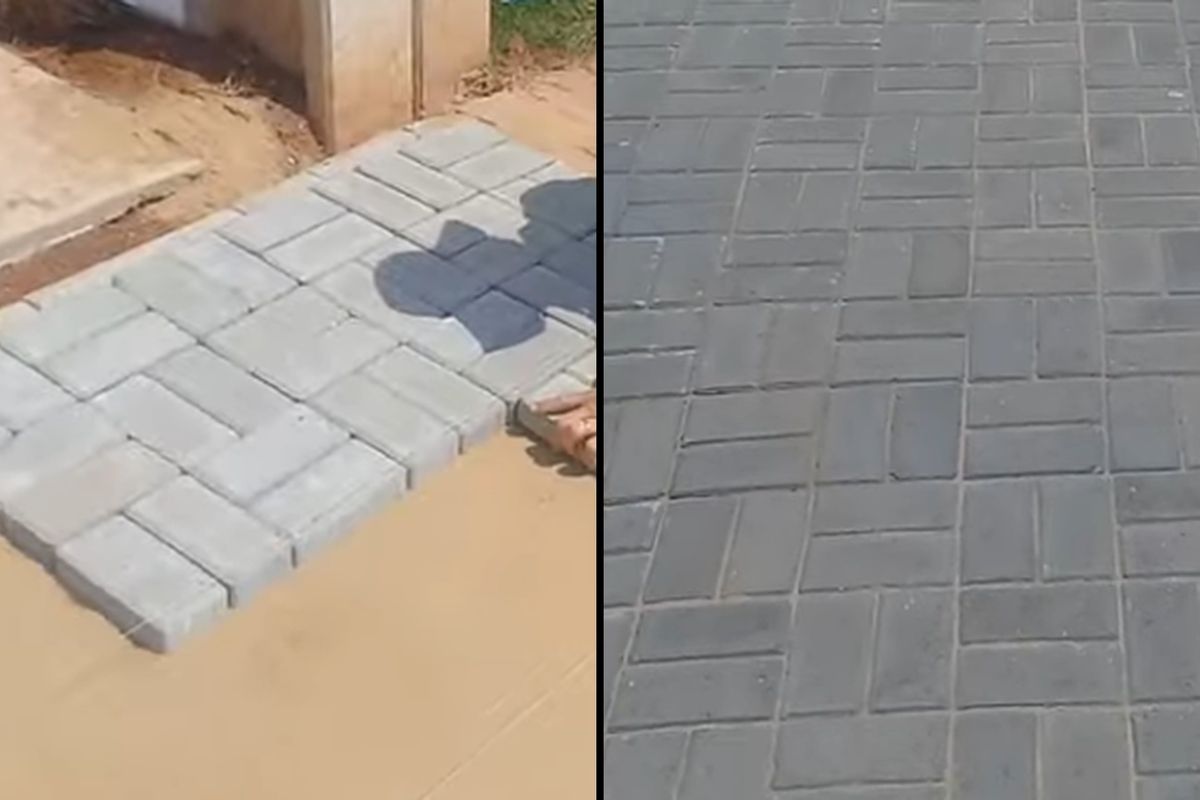


On The Irmãos a Obra Araraquara Channel, Mason João Batista Details Sifting and Spreading Sand, Locking Joints, and Compacting with a Vibratory Plate for a Straight and Neat Finish
The mason João Batista, from the Irmãos a Obra Araraquara channel, concludes the work with the detail that stands out the most in the final result: the sidewalk. In the step-by-step process, the mason explains that the interlocking block only looks good and firm when the base is well prepared, with guides on the edges, well-leveled sand, and controlled alignment from the start.
In addition to the sidewalk, the mason also builds the garage entrance ramp, where any level or line error is highly noticeable. The goal is to follow the condominium’s standards since the street is interlocked, and the sidewalk needs to match the standard, with locked finish, clean visuals, and safety in circulation.
Setting the Guide: The Boundary That Closes the Interlocking
The service starts with the setting of the guide, which acts as the edge reference. The mason shows that the guide is where the block will touch to “close” the end of the sidewalk, preventing the last row from lacking support or creating gaps on the sides.
-
Couple Converts 1925 Detroit Bank into Home, Earns $40,000 Annually on Airbnb

-
Tired of Seeing People Sleep in the Cold, London, Canada Opens First Modular Shelter for Homeless with 60 Cabins, Heating, Meals, and Dog Area
-
Brazil’s $1.3 Billion, 870-Meter Immersed Tunnel to Be Latin America’s First of Its Kind, Featuring Special Public Facilities and Information Center
-
Brazilian Innovator Develops Concrete Blocks from Recycled Plastic, Eliminating Mortar and Reducing Construction Costs


This detail is crucial because the interlocked system works by fitting and locking. If the edge is not firm and well positioned, the assembly loses cohesion, and the finish tends to be irregular, especially in corners and areas where they meet.
Guide and Leveling: Where the Sidewalk Gains the “Perfect Plane”
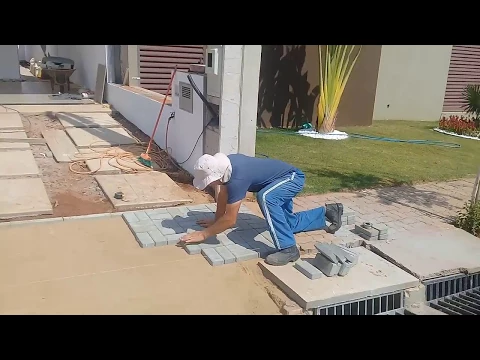

With the guide in place, the mason moves on to the sand base. He spreads more sand and levels it to set up the guide, which serves as the height and slope reference for the section. This is where the work “starts right,” because the block does not correct a crooked base.
The mason emphasizes this point in practice: if the base is out of level, the interlocking block reveals it immediately, with steps, bulges, and differences in height between pieces. Therefore, he works on the leveling carefully before starting the setting.
Garage Ramp: Sand Ruler and Two Lines to Keep the Block in Place
On the ramp, the mason prepares the sand ruler to leave the surface ready to receive the blocks. Then, he uses two lines as alignment guides. This reference prevents the interlocking design from “running” to one side and ensures that the pieces remain straight until the end.
The fit of the material is good, and the pieces “marry” well, but the mason makes it clear that a good fit does not resolve poor alignment. The first row needs to be correct because it pulls the rest.
Setting the Block: Firm Fit and Pattern Repetition
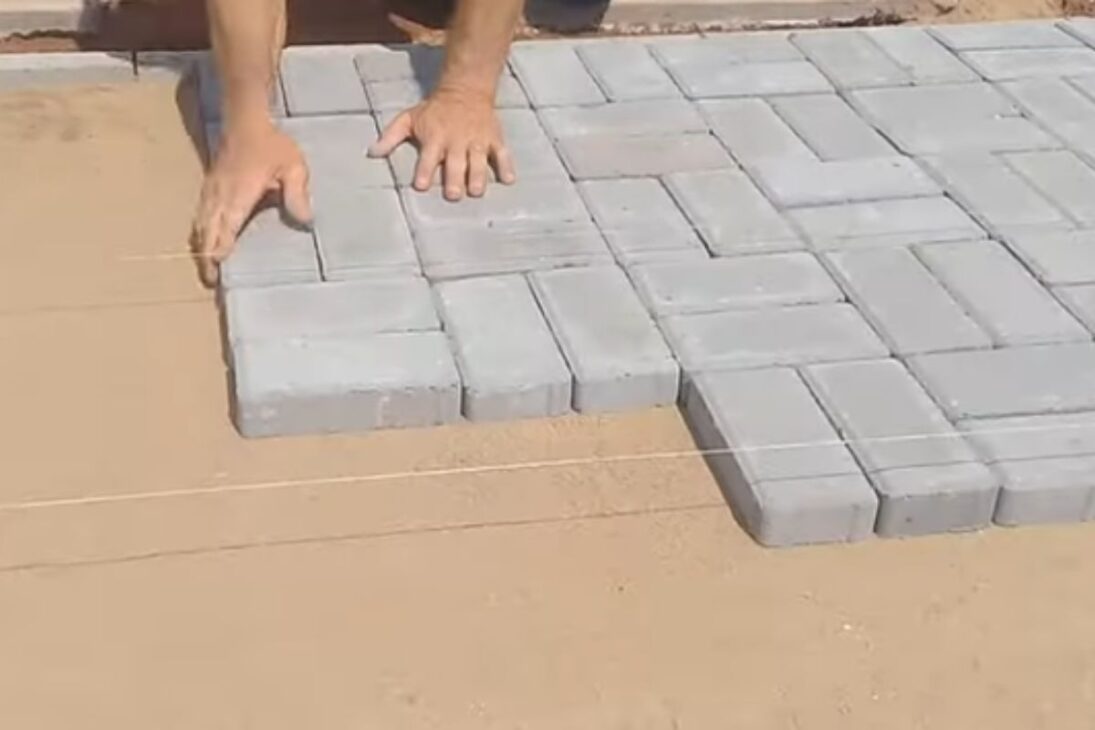
With the guide ready and the lines defined, the mason begins setting the interlocking block, positioning piece by piece. The logic is to maintain the pattern, control the joints, and ensure that the design is consistent along the section.
At this stage, the focus is on consistency. When the pattern is maintained, the finish remains “locked” and visually clean, without improvised cuts and without “teeth” in the alignment.
Sift and Sweep: The Sand That Locks the Joints and Provides Stability
After setting, the mason proceeds to the stage that many underestimate: sifting the sand and sweeping it over the interlocked area to fill the joints. He uses coarser sand to fill the gaps and form the lock between the blocks.
It is this well-filled joint that holds the system. Without a filled joint, the interlocking becomes loose, loses stability, and allows for movement, which undermines the finish and the durability of the work.
Vibratory Plate: Compaction with Excess Sand to Avoid Damaging the Floor
With the joints filled, the mason uses the vibratory plate. He explains the most crucial detail of the process: leaving plenty of sand in front of the machine. This makes the plate “move” easily and reduces direct friction with the block.
According to him, if there is not enough sand, the vibratory plate can damage the pieces, as well as requiring more effort from the operator. Therefore, the recommendation is to keep excess sand in the path of the machine, compact gently, and only then adjust any excess, repeating the sweeping if necessary to complete the joints.
Closure and Finish: Neat Profile on the Sidewalk and Ramp
After compaction, the mason shows the finished sidewalk, with the interlocking locked and the profile aligned. The difference is noticeable in the appearance and feel: firm sidewalk, filled joints, and meticulous finish, the kind that “closes” the work with a look of a job well done.
In your opinion, what makes the most difference in the result of the interlocking: the leveling of the guide, the filling of the joints with sand, or the correct passage of the vibratory plate?